Paris · Architecture
The Lower Chapel
Sainte-Chapelle · Paris, France
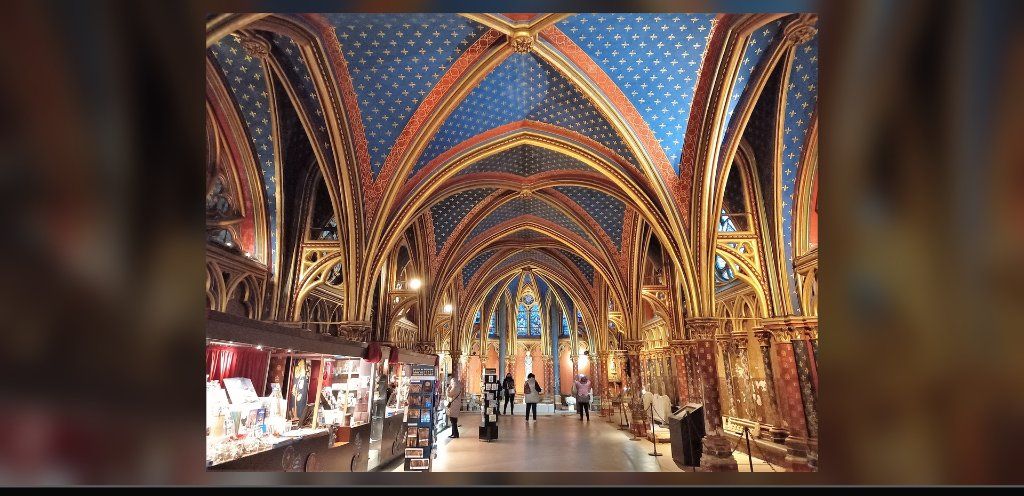
One thing before we step through the door. In the 13th century this site was the royal palace of the French king, which makes Sainte-Chapelle a private chapel the king built in the courtyard of his own home. The Île de la Cité is also where Paris began 2,000 years ago, so we are standing in the heart of the heart of Paris.
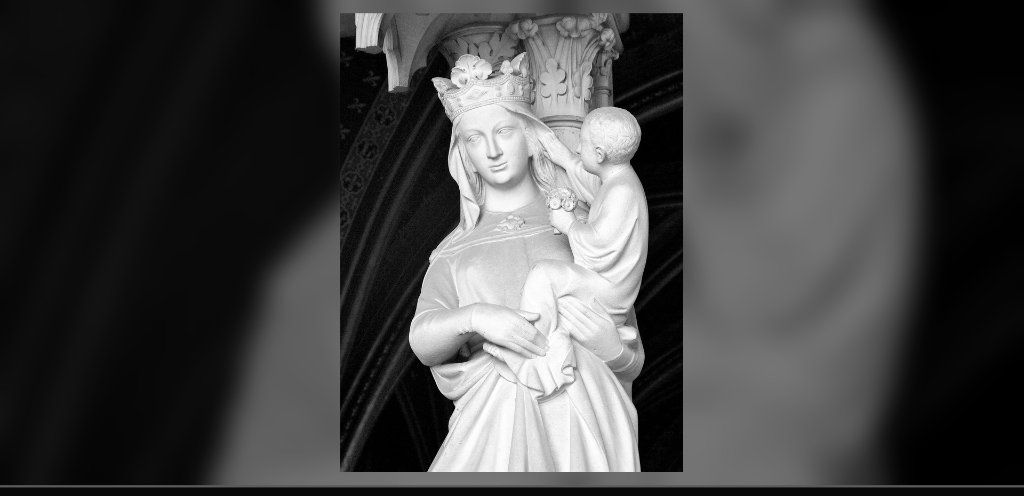
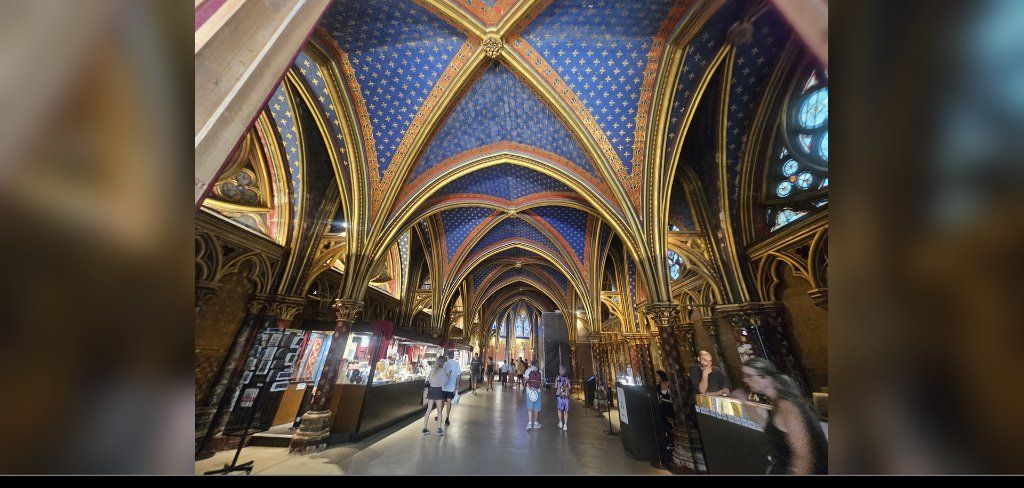
Pass through the main door and you enter a space that's darker and lower than you might expect: the Lower Chapel. It is dedicated to the Virgin Mary, and the large statue of Mary on the central pillar as you came in is its patron saint. If the Upper Chapel is dedicated to the Crown of Thorns, and so to Christ's Passion, the level below is dedicated to his mother, Mary, as if a mother were holding her son up. What's more, some say the building's true patron was Louis IX's mother, Blanche of Castile. From Mother Mary to Mother Blanche, two mothers' hearts seem to overlap in this space.
Who worshipped here in the 13th century? Some 70 people: attendants, servants and guards who worked at the palace. While the royal family prayed upstairs, they held their own modest Mass down here.
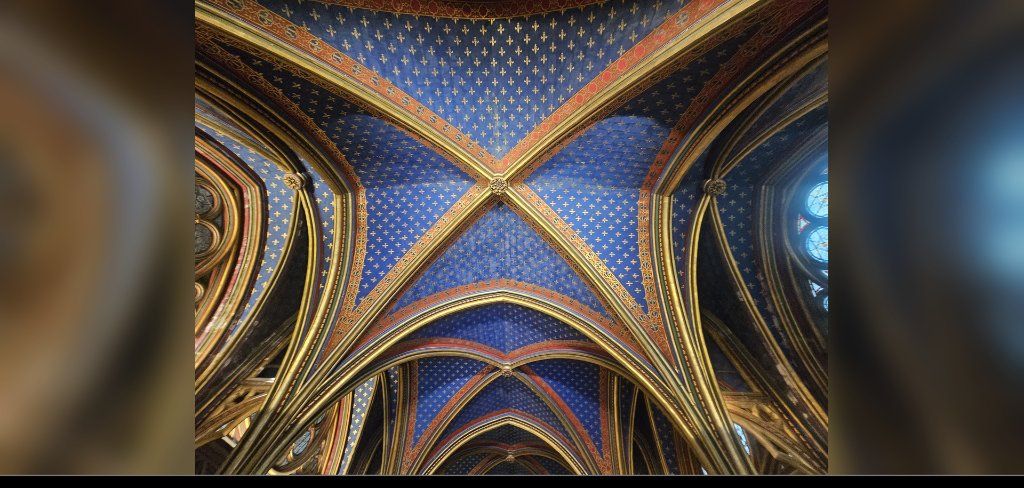
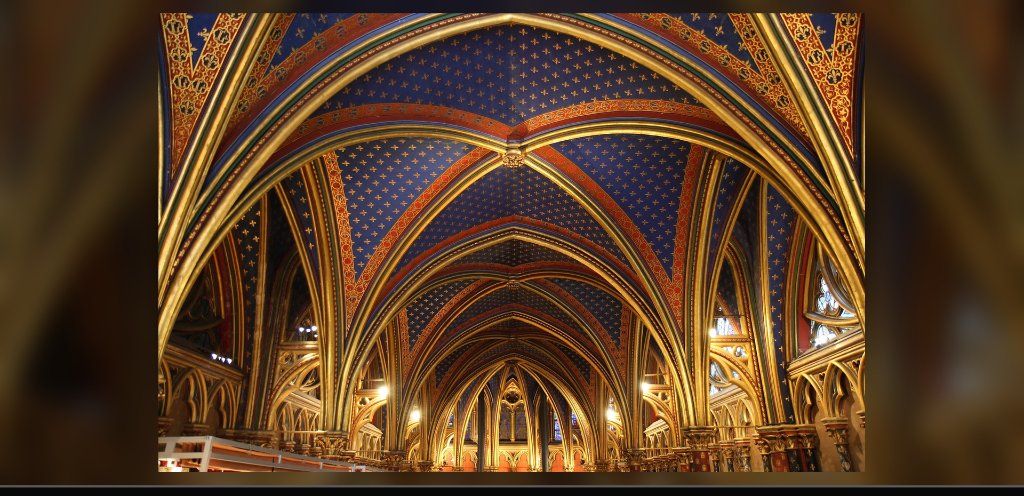
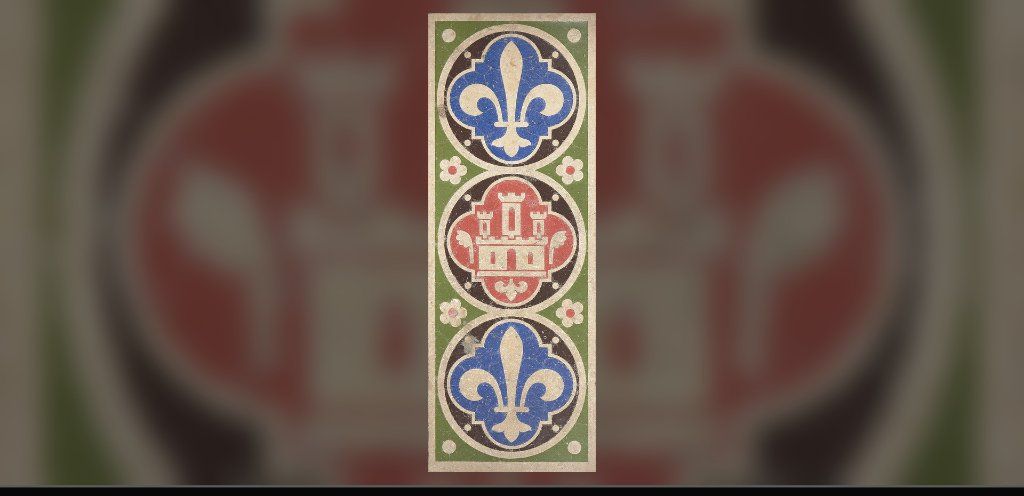
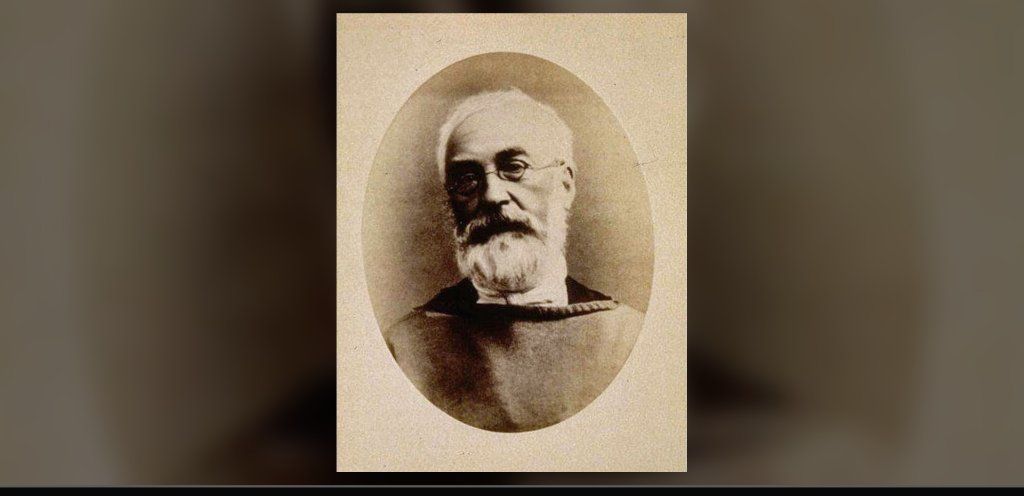
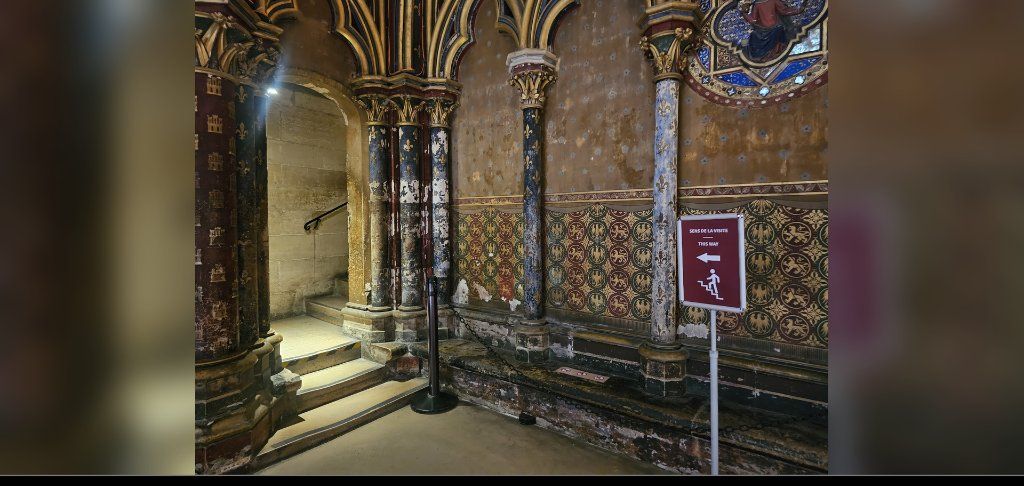
Start with the ceiling. Golden stars are scattered across a deep, dark blue, like a midsummer night. Look closer and they aren't stars at all but little golden fleurs-de-lis, the emblem of the French royal house, strewn like stars. Between them are the castles of Castile. Along the side walls are twelve small round medallions, each showing one of Jesus's twelve disciples. But neither the medallions nor the ceiling are 13th-century originals. A great flood in 1690 swept through the Lower Chapel and destroyed almost all of the original decoration. During the 19th-century restoration, the painter Louis Steinheil repainted it from 1845, using 13th-century illuminated manuscripts as reference.
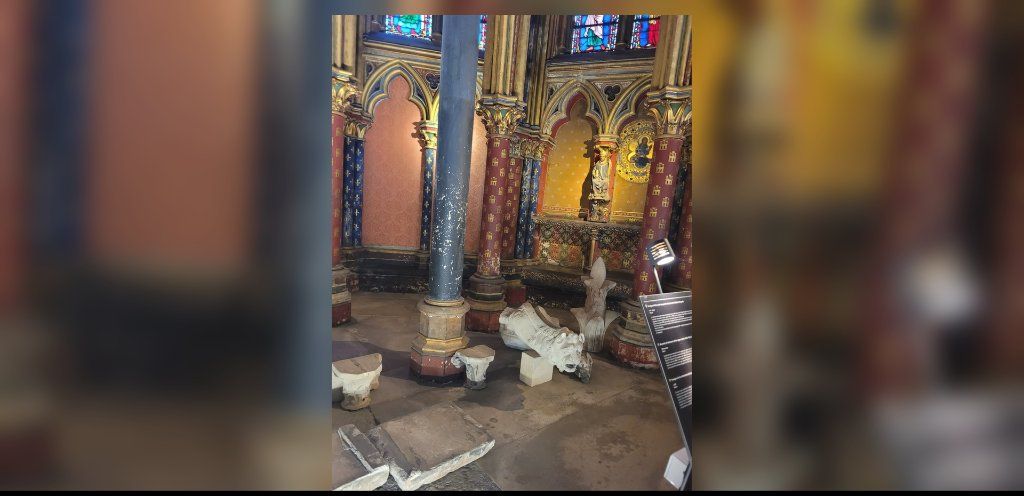
Now let's go to the thick columns holding up this space. They stand as densely as trees in a forest, and they are the real stars of the building, supporting everything above. Compared with the slender, graceful, reed-like columns of the Upper Chapel, these are heavy and sturdy, because they carry the whole weight of the floor above. It was the solid skeleton down here that made the lightness upstairs possible.
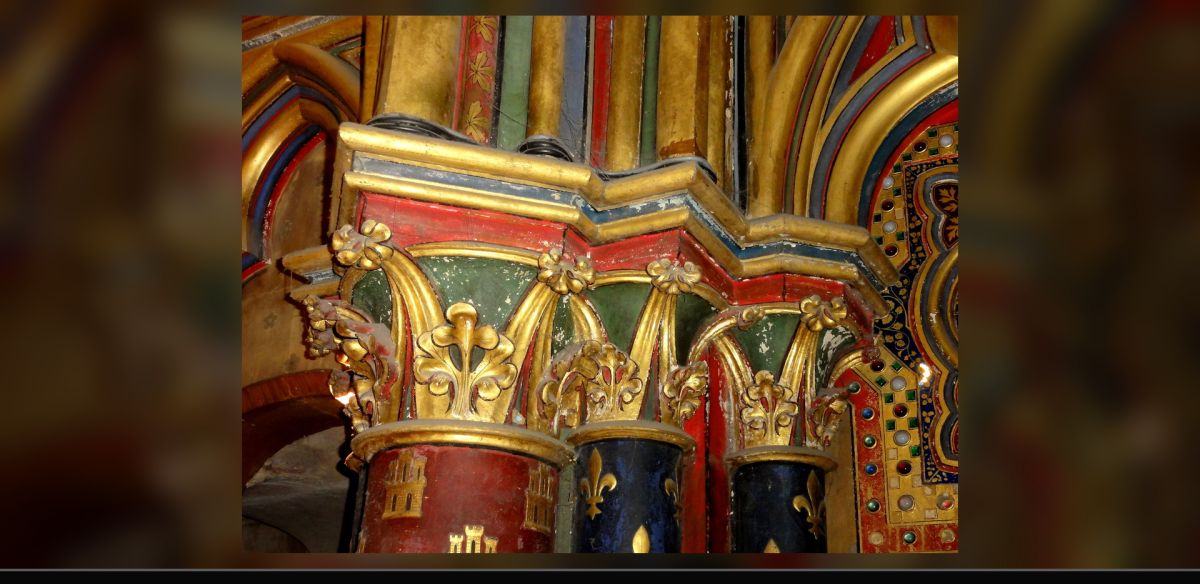
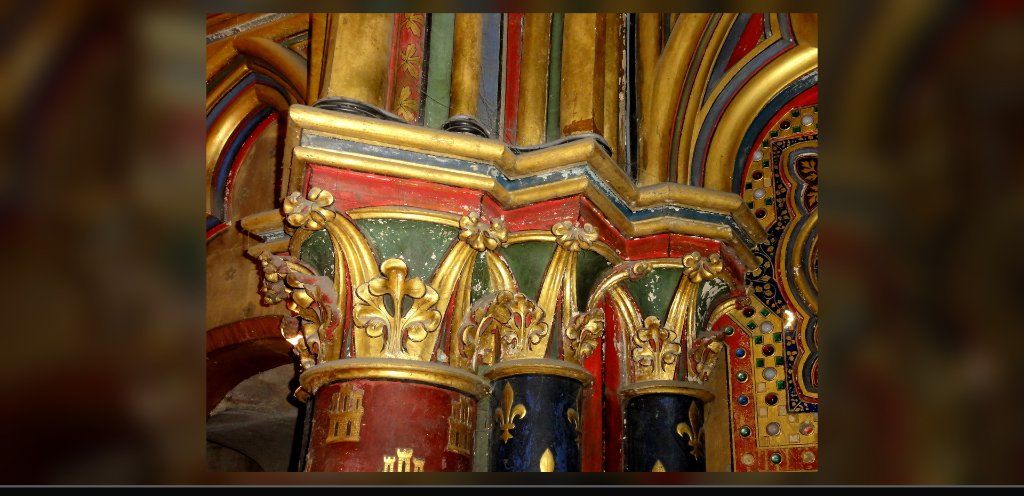
And the columns aren't just thick. At the top, where the ceiling begins, each has a decorated capital, called a chapiteau in French. They are extremely intricate, full of leaves, stems and flower buds, so much so that scholars call them a "13th-century botanical encyclopaedia of the Île-de-France". There are about 140 capitals in the Lower Chapel alone, and every one is different. Anonymous 13th-century sculptors spent days apiece carving 140 different plants: the oak leaves, grapevines, rosebuds, clover and ferns that grew around Paris 800 years ago.
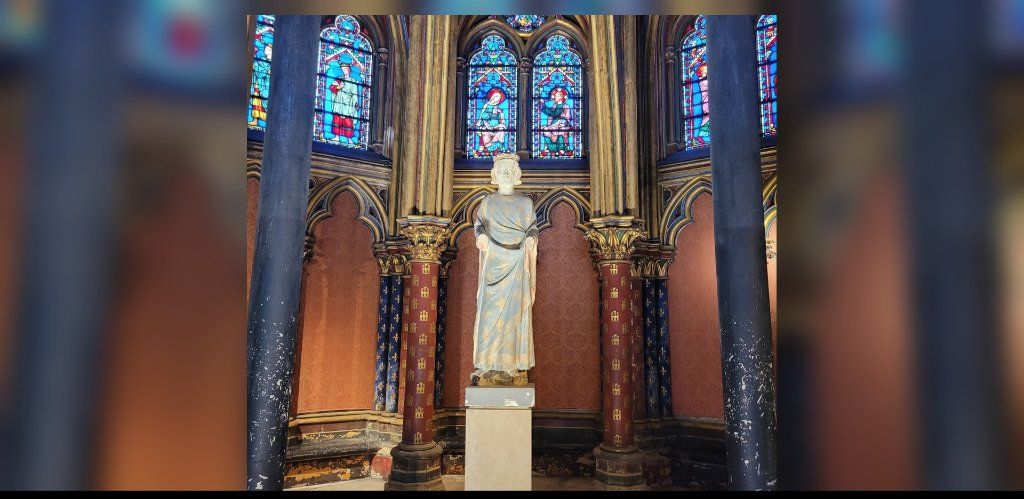
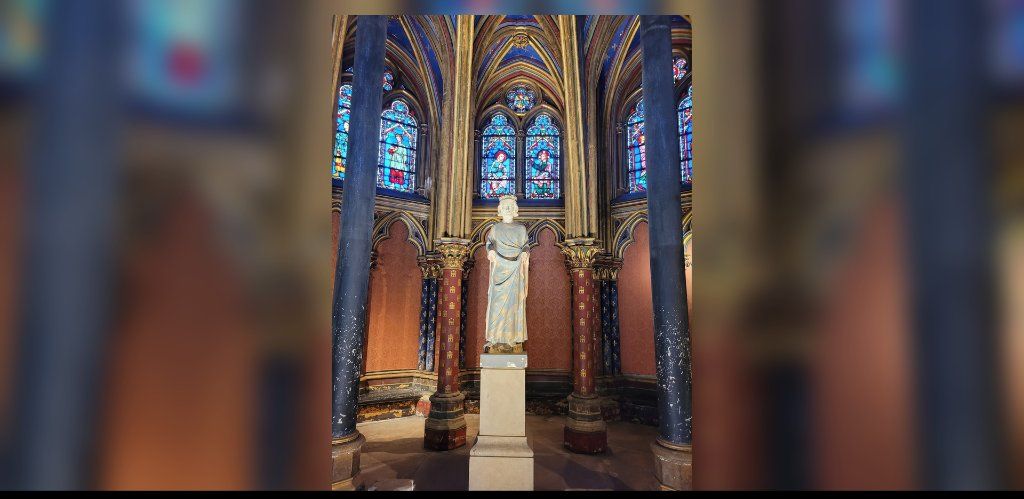
At the far end of the Lower Chapel is a deep, semicircular recess. A white marble statue stands there with a kind face and a raised hand: Saint Louis, the hero of our story. Made during the 19th-century restoration, it is beautifully done. He wears no showy royal robes or glittering crown, just the appearance of an ordinary saint, gently raising a hand to welcome us. When Louis IX was alive, people called him "le prud'homme", a prudent, wise man.
Above the doorway next to it is a painting, part of an original 13th-century mural that survived the flood of 1690. It shows the Annunciation, when the angel Gabriel tells Mary she will conceive the Son of God.
Now let's climb the spiral staircase in the corner, back near the entrance we came in by, to the second floor.