Paris · Painting
Why He Mixed Egg Into Oil Paint: Toulouse-Lautrec's Jane Avril Dancing
Musée d'Orsay · Paris, France
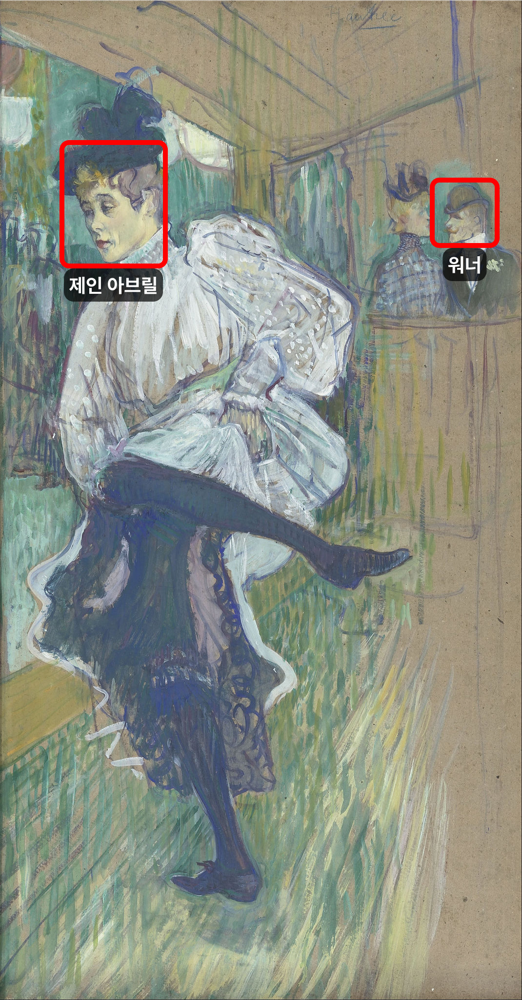
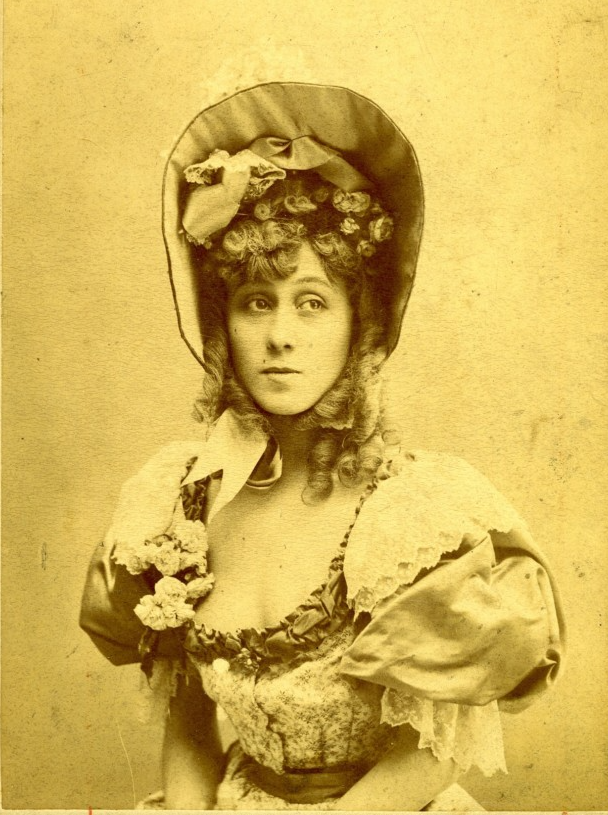
The composition here is simple. Jane Avril, mid-dance, dominates the foreground, drawn larger than anything else in the frame; behind her stand a man and a woman. The woman's identity is unknown, while the man is a theater producer named Warner. The two of them stand still, looking at each other, and that stillness makes Jane's dynamic movement pop all the more sharply by contrast.
Toulouse-Lautrec had a remarkable gift for capturing the fleeting instant of a dancer in motion, and this painting is no exception — it catches the exact burst of power behind Jane Avril kicking her leg into the air. How he managed to finish a painting exactly at the moment the dance was happening is hard to call anything other than pure talent, though the particular paint he used partly explains the dynamism as well. Toulouse-Lautrec mixed his oil paint with tempera — paint made by blending pigment with something like egg — which thins the oil paint's density, allowing for the translucent, light touches of color visible here. That technique let him render a dancer's movement with unusual effectiveness.
This painting made Jane Avril enormously popular; she was, at the time, the most sought-after dancer in Paris.
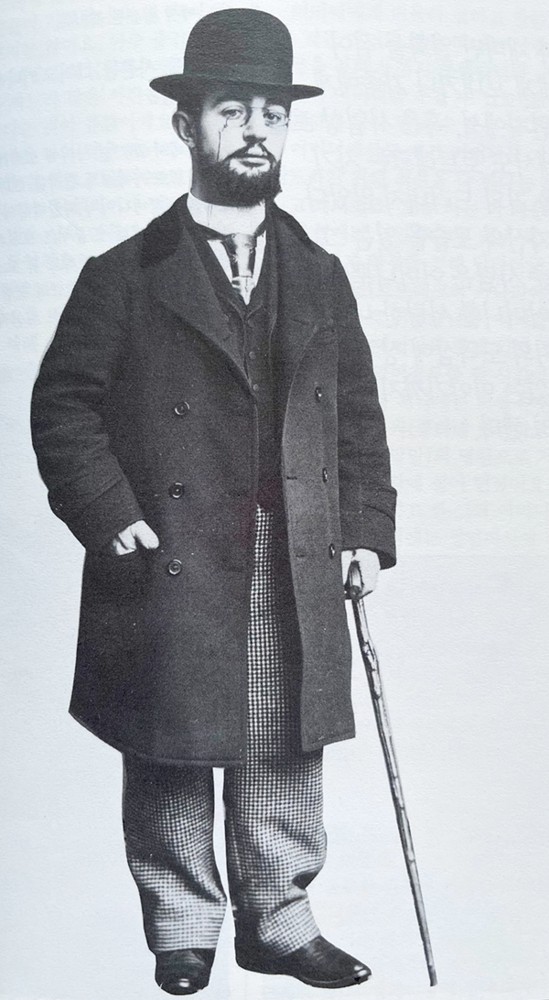
Toulouse-Lautrec himself is worth knowing something about too. Born the son of a count, he broke his legs in a childhood accident that sealed his growth plates shut, leaving him considerably shorter than other adults. That difference drove a wedge between him and his father, though his mother's unwavering support allowed him to pursue an artistic education. He eventually settled in Montmartre, where he built relationships with a number of well-known painters, and as an adult he earned his living painting bar posters and dancers like the one in this painting. The wounds from his childhood never fully healed, though — he spent much of his life immersed in brothels and drink, and died young, at just thirty-six. Even so, the paintings he left behind remain with us still.