Paris · Painting
A Horse That Turns Green: Gauguin's The White Horse
Musée d'Orsay · Paris, France
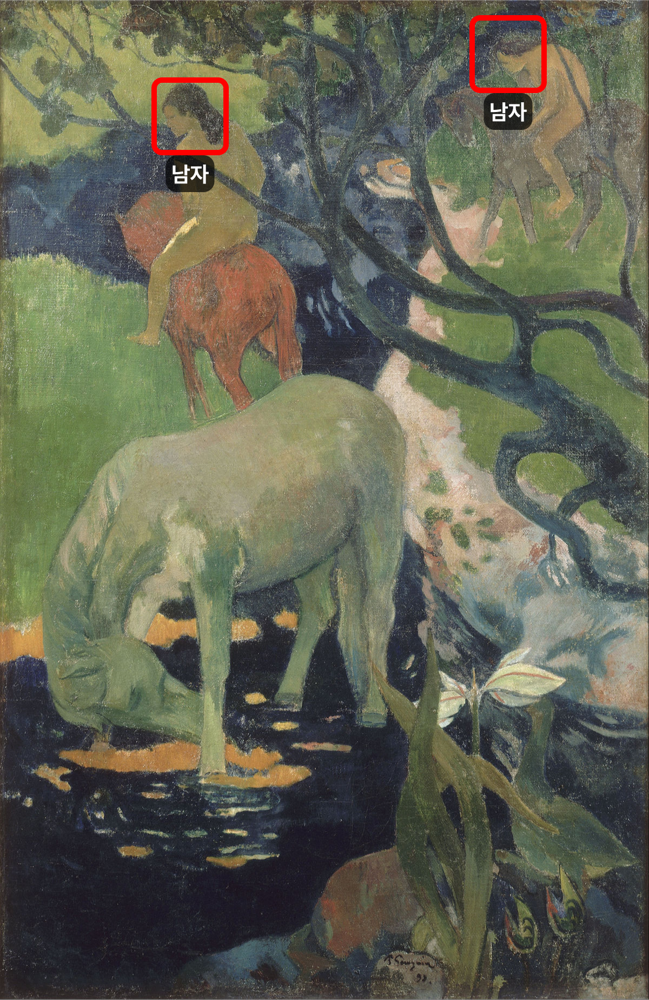
Painted during Gauguin's second stay in Tahiti, this canvas is steeped in the same intense exoticism found in his other Tahitian works. Three horses appear in the scene; two carry men who ride bareback and entirely unclothed. Tahiti may have been far less urbanized than Europe at the time, but its actual residents certainly weren't walking around naked like this — Gauguin painted the men without clothes deliberately, to lend the scene a sense of the primitive.
Below, one horse stands drinking from a stream, and it's presumably this horse that gives the painting its title, The White Horse. Yet the horse itself isn't painted white at all — it's tinged green. That's simply the white body of the horse picking up the reflected green of the surrounding grass.
The man who had originally commissioned this painting apparently refused to buy it once he saw the horse's green coloring, complaining, "You said this was a white horse — why is it green?" Had he gone ahead and purchased it, passing it down through his family, it might have changed his descendants' fortunes entirely.
In truth, almost none of Gauguin's paintings sold during his lifetime. He lived in poverty as a result, and like Van Gogh, he's a painter whose work only gained real recognition after his death.