Paris · Painting
Two Garments, Two Cultures: Gauguin's Tahitian Women on the Beach
Musée d'Orsay · Paris, France
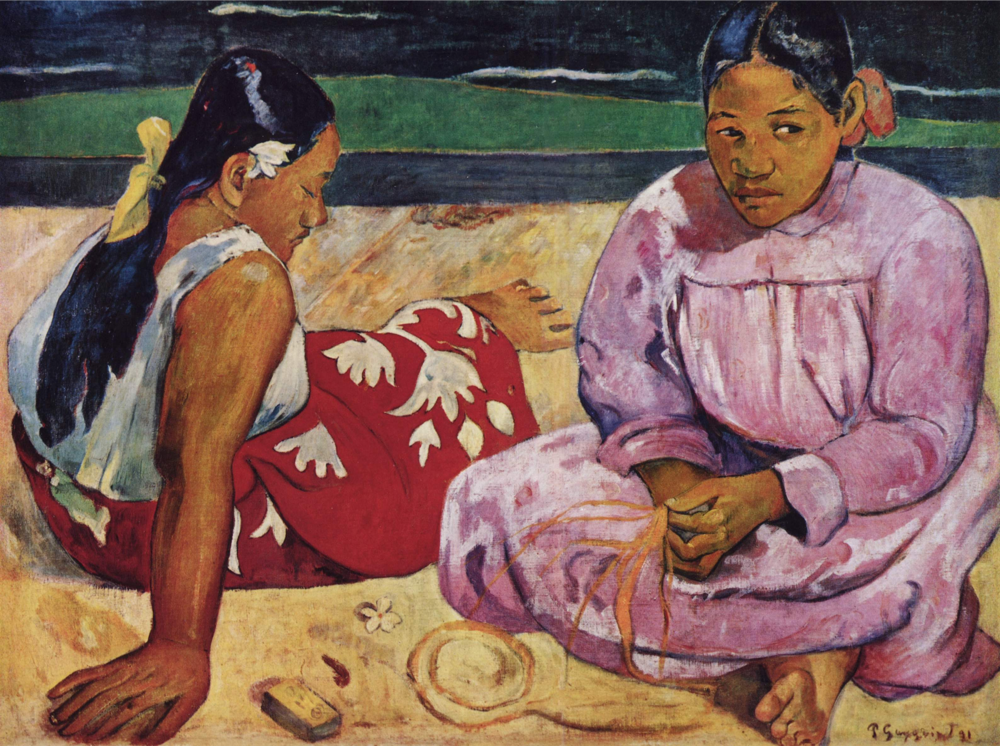
Two women appear in this painting. The one on the left wears a pareo, the traditional garment of Tahiti's native people, while the woman on the right wears a pink dress brought over by European missionaries. The sleeveless, breezy pareo suits the tropical climate perfectly, but the missionaries' dress, besides being ill-suited to the island weather, wraps the body completely due to religious ideas about covering women's skin. Perhaps because of this, the woman in the dress looks particularly uncomfortable. By placing these two women side by side — one in traditional dress, one in an imported garment — Gauguin captured a Tahiti where the old culture and the new coexisted.
The Musée d'Orsay holds several other paintings Gauguin made set in Tahiti besides this one. Gauguin first encountered exotic objects from the South Pacific at the 1889 Paris Exposition, and from that point on he was gripped by an intense longing to live in a new culture surrounded by dense jungle. Eventually he gave up his life in Paris and set off for Tahiti, then a French colony in the South Pacific — a journey that took a full two months by ship. When he finally arrived, Tahiti turned out to be nothing like what he had imagined: already colonized and crowded with white settlers, which left him deeply disappointed. But with no way to return to Paris, he ended up settling there anyway.
It was there that Gauguin began living with a local girl named Teha'amana, who was just thirteen at the time — an act that would plainly be a crime by today's standards. During that period he produced a great many paintings set in Tahiti, this one among them. The girl in the pink dress in this painting is Teha'amana.