Paris · Painting
Two Opposing Movements, Born in the Same Era: Neoclassicism and Romanticism
Musée d'Orsay · Paris, France
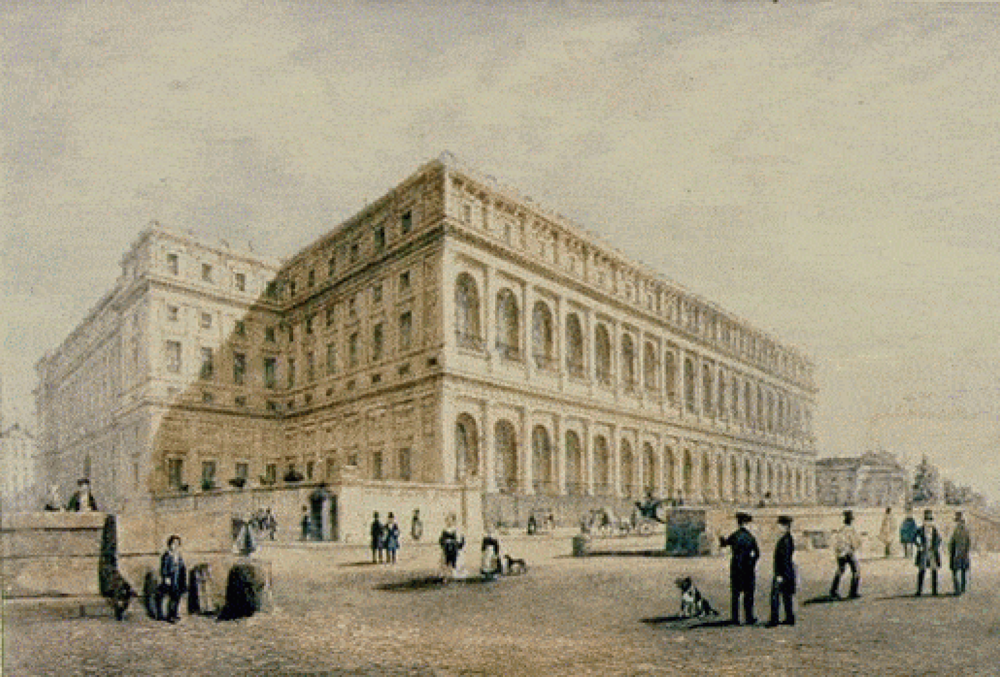
This tour begins in Room 1 on the ground floor of the Musée d'Orsay, home to Neoclassical and Romantic paintings. That placement isn't an accident — the last works you'd see in chronological order at the Louvre happen to be Neoclassical and Romantic, so the curators arranged things here so visitors coming from the Louvre could pick up the thread of art history without a break. If you're visiting Paris, by the way, it's worth seeing the Louvre, then the Musée d'Orsay, then the Centre Pompidou in that order — ancient artifacts through the early 19th century at the Louvre, the mid-to-late 19th century here at Orsay, and 20th-century-to-contemporary at the Pompidou, giving you the full arc of art history from start to finish.
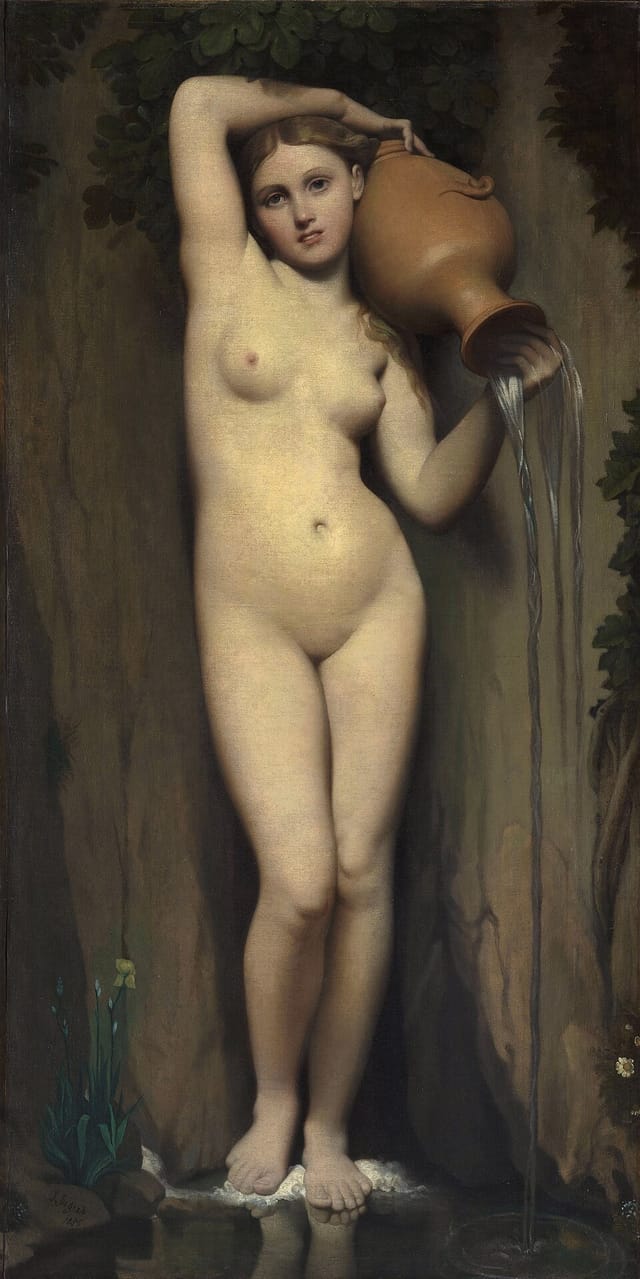
Neoclassicism and Romanticism were in fashion at the same time, yet they stand in almost total opposition to one another.
Neoclassicism emerged from three converging forces. The Rococo style, synonymous with aristocratic excess, collapsed along with the French Revolution, and Neoclassicism rose up partly as a reaction against that very excess. Around the same time, the excavations of Pompeii and Herculaneum in Italy fueled a surge of interest in archaeology, and travel to distant parts of the world became more accessible, renewing fascination with ancient Greek and Roman art. Since the Renaissance had already revived that same classical tradition once before, this new wave came to be called Neoclassicism — a second rebirth, so to speak. Its paintings draw heavily on Greek and Roman mythology and history, favoring proportion, balance, and harmony above all.
Romanticism, by contrast, arose as a reaction against Enlightenment thinking, with its emphasis on reason and rational order — Romantic painters prized emotion and feeling instead. The Industrial Revolution also played a role: as the art market grew and artists gained social standing, painters could increasingly sell work they wanted to paint rather than only pieces commissioned to order. And when the rosy future people expected after the French Revolution failed to materialize — when the new ruling class behaved much like the old one — the resulting sense of disillusionment and emptiness among ordinary citizens fed directly into Romanticism's rise. True to its emphasis on human feeling, Romantic painting tends to be emotional and intense.