Paris · Painting
From Train Station to Museum: A Century of the Musée d'Orsay
Musée d'Orsay · Paris, France
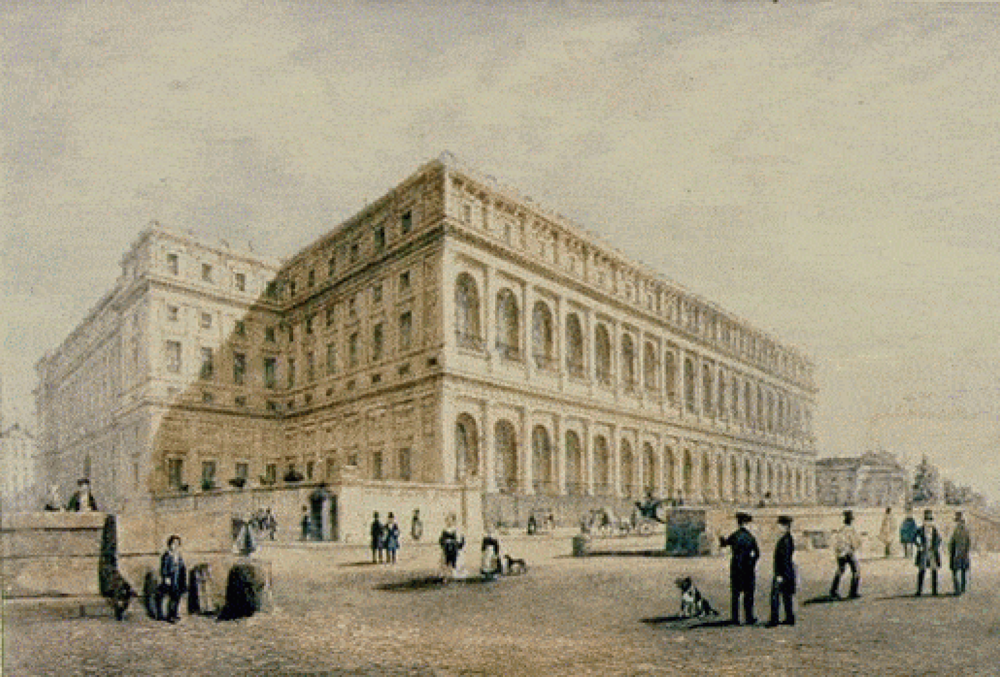
The site where the Musée d'Orsay now stands was once home to the Palais d'Orsay, built in 1804 to house the Court of Audit and France's highest administrative court. The building burned down during the Paris Commune uprising in 1871 and sat as an empty lot for roughly two decades afterward.
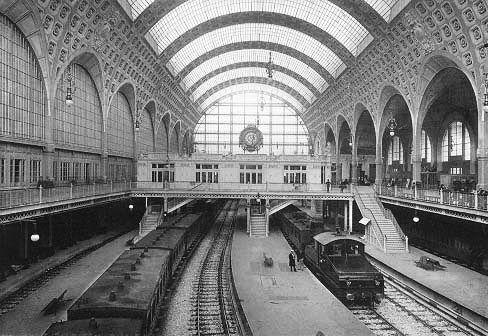
The Orléans Railway Company bought the land and built a train station there ahead of the 1900 Paris World's Fair. At the time, World's Fairs were massive global events that drew crowds from everywhere, and the railway company wanted visitors to be able to reach the heart of Paris easily, so it built the station — and, alongside it, the Hôtel d'Orsay, with around 370 rooms for travelers. Completed after roughly two years of construction starting in the spring of 1898, the Gare d'Orsay was, for its era, remarkably modern and beautiful: since steam trains no longer belched smoke and steam the way older trains did, the roof could be finished in glass instead of being left open to vent exhaust.
As trains grew larger over the following decades, though, the station's relatively small platforms couldn't keep up, and after 39 years in operation, it closed as a railway station. It drifted for a while afterward — used at different points as a detention center, a film set — without ever really finding a new purpose.
The turning point came with the Grand Projet, a major public works initiative under President François Mitterrand aimed at restoring Paris as a cultural capital. Rather than demolish the building, planners kept the original structure intact and reimagined the interior, and in 1986 the former train station reopened as the Musée d'Orsay. That sense of spaciousness and the abundant natural light still come through clearly inside today.
What you're walking through now, though, isn't exactly the 1986 version. The original conversion left some awkward circulation and practical shortcomings for a museum space, so two further rounds of renovation, in 2009 and 2013, brought the building to the form it has today.