Paris · Painting
A Name Born from Mockery: Impressionism
Musée d'Orsay · Paris, France
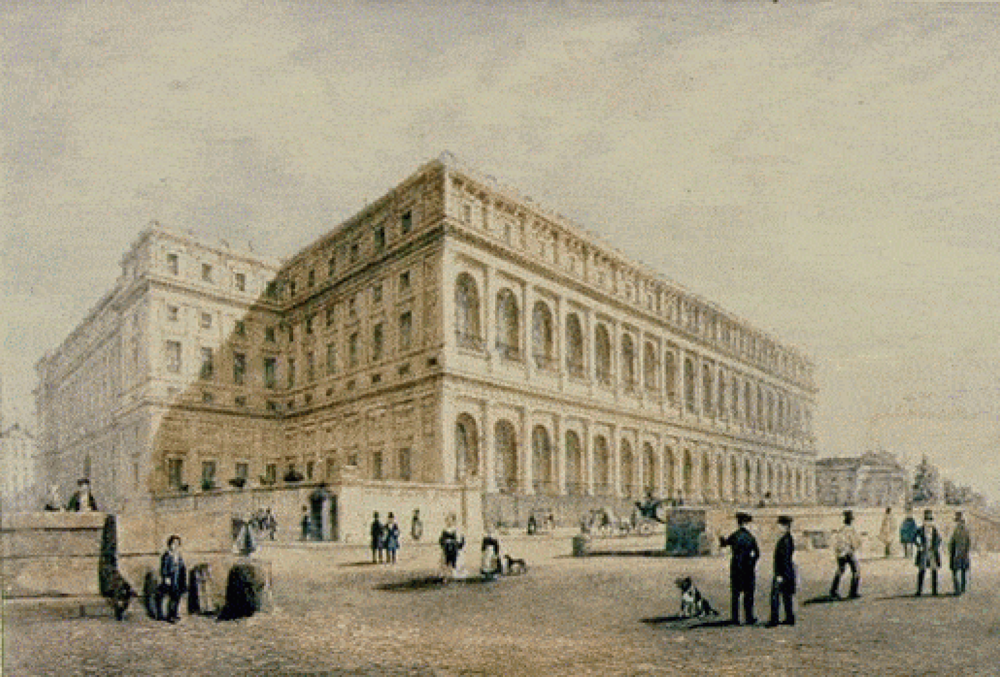
Most of what fills level 5 of the Musée d'Orsay is Impressionist painting. Knowing a bit about the movement before diving into the galleries will make the experience that much richer.
The word "impression" refers to something that leaves a deep mark on the mind. An Impressionist painting, in that sense, is one in which the artist captures a scene from nature or everyday life exactly as it struck them emotionally, in that fleeting moment.
Impressionism emerged from a tangle of causes, but three stand out as especially important.
The first is the state of the art world at the time. Rigid, formulaic painting — history scenes in the Neoclassical mold, or the correct, academy-taught style known as Academicism — still dominated. Movements like the Barbizon School and Realism had emerged in the meantime, but neither managed to break into the mainstream. Against that backdrop, outsider painters kept appearing, and Impressionism grew out of that same current. The Salon, which painters essentially had to pass through to build a career, still favored mainstream work, leaving these outsider styles with little recognition. In response, these painters began organizing their own exhibitions and promoting themselves collectively, which eventually led the state to host the Salon des Refusés — a show of works the official Salon had rejected — and public interest in Impressionism slowly grew from there.
The second factor is the technological change brought on by the Industrial Revolution. By this point, photography already existed, so painting that simply reproduced objects faithfully could no longer compete with the camera. Naturally, painting shifted toward capturing color and texture as they changed under different light. The spread of railways also let painters travel farther afield to paint outdoors, and the invention of the paint tube solved a real practical problem — painters had previously carried pigment in pig bladders, which, if punctured, ruined the whole supply. These technical shifts helped make Impressionism possible.
The third factor is America's economic growth — though this explains Impressionism's rise to fame more than its origins. Impressionist paintings generated plenty of buzz at the time, but the artists themselves remained desperately poor, simply because their work wasn't selling. Then America's economy boomed, producing a wave of newly wealthy people eager to flaunt their fortunes, and art became an obvious vehicle for that. Because the American art scene at the time wasn't considered particularly sophisticated, these wealthy Americans flocked to Paris to buy quality paintings — and the Impressionist works generating buzz there began selling for high prices. That's largely how Impressionism became known worldwide, and it's how a handful of painters who'd once been desperately poor eventually found real wealth.
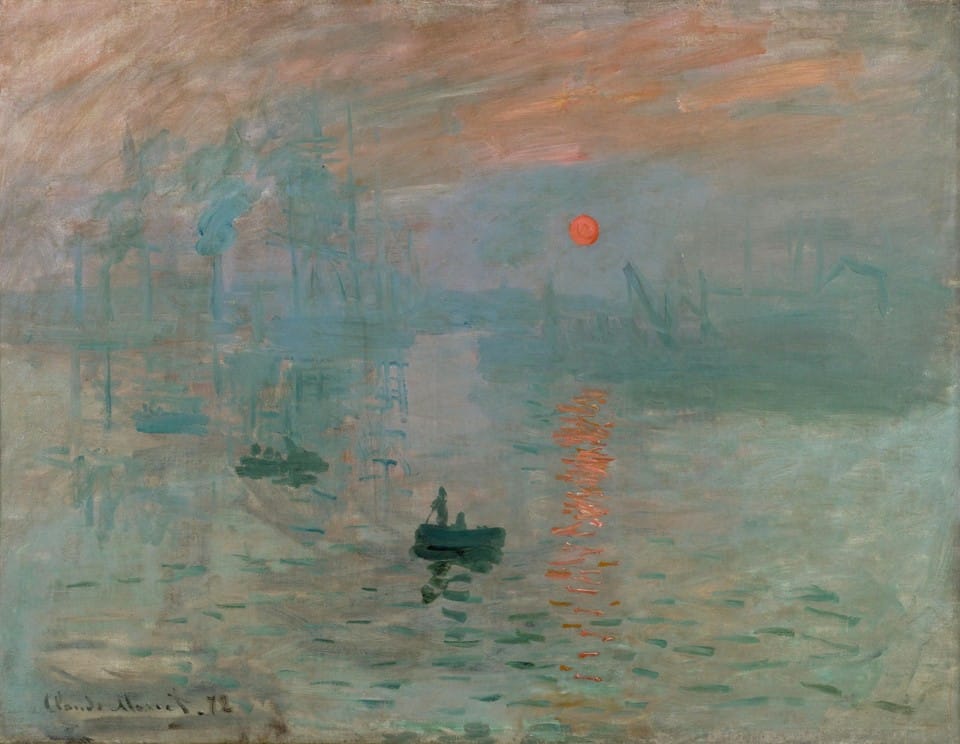
One of them was Monet, generally credited with painting the first true Impressionist work. He captured the fleeting moment of sunrise over the harbor in his hometown and titled it Impression, Sunrise. The term "Impressionism" itself is said to have originated when a critic, viewing this painting — so clearly different from the mainstream style of the day — borrowed the word "impression" from its title to mock it sarcastically. That critic surely had no idea Impressionism would go on to leave such a deep mark on the history of art. Unfortunately, the painting that marked the movement's beginning isn't here at the Musée d'Orsay — it's held at the Musée Marmottan Monet in Paris.