Paris · Painting
A Model Identified Only in 2018: Courbet's The Origin of the World
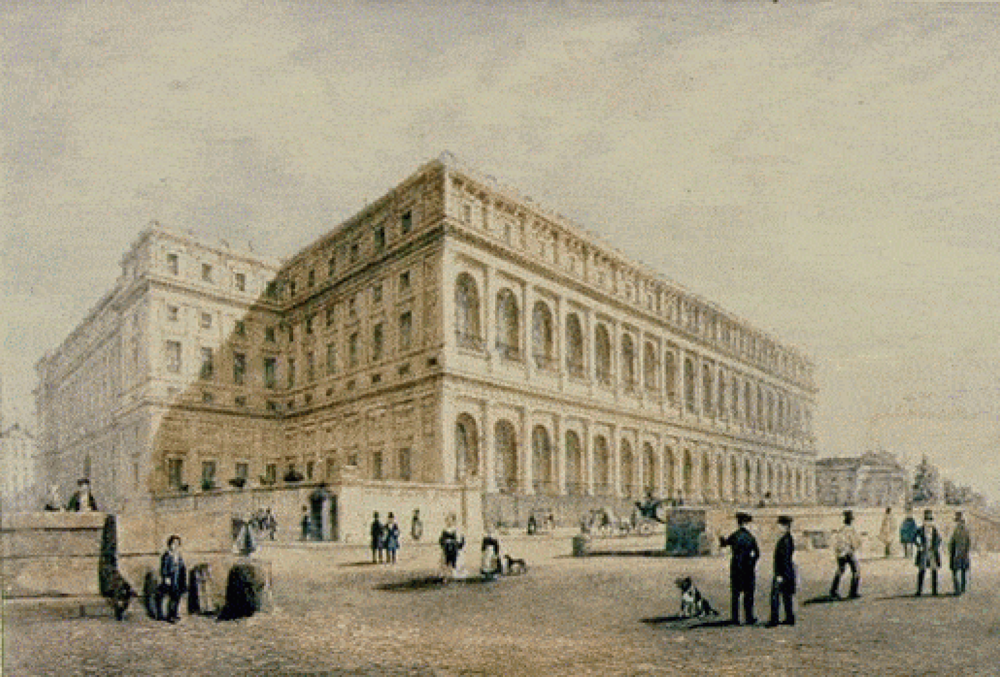
Musée d'Orsay · Paris, France
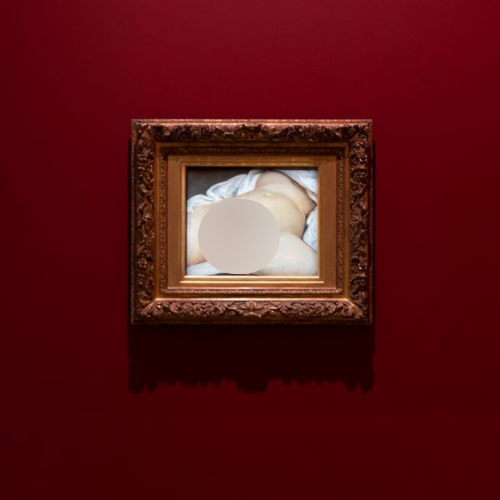
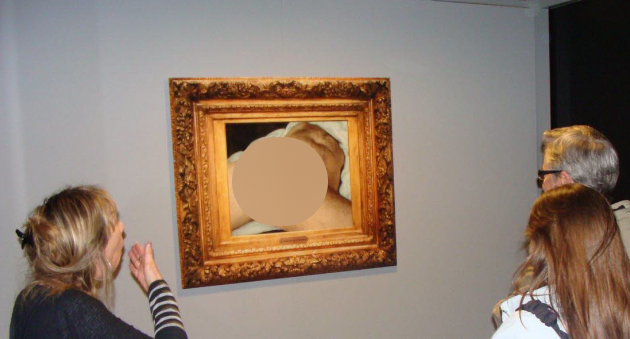
The title alone tells you exactly what this painting is about. It's on a completely different level than any nude we've seen so far, striking enough that it's probably the first thing most people think of when they hear Courbet's name.
The painting was commissioned by Khalil Bey, a Turkish diplomat living in Paris, who asked Courbet to paint it. As a realist, Courbet rendered it as faithfully as he could, and when Khalil Bey received the finished work, he was reportedly far more stunned by its explicitness than he'd anticipated. Nude paintings of the time conventionally left out pubic hair entirely, but Courbet painted even that detail with full realism. In the end, Khalil Bey couldn't bring himself to hang it openly in a living room; he kept it hidden and showed it only to close friends. He later squandered his entire fortune on gambling and women, and the painting changed hands several times before the psychoanalyst Jacques Lacan eventually bought it. Lacan, too, concealed the painting's explicit subject behind another work, showing it only to intimate acquaintances. After Lacan's death, his family donated the piece, and it has been on display at the Musée d'Orsay since 1995.
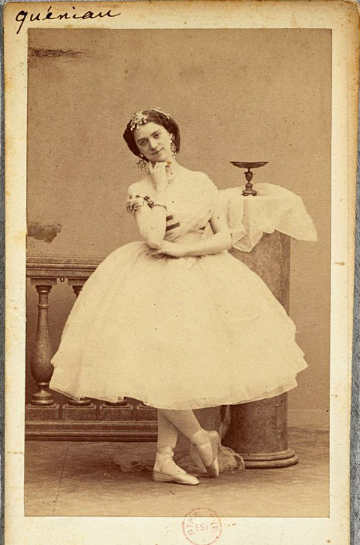
Looking at this painting naturally raises one obvious question: who was the model? For a long time there were many theories, but the model's identity was finally confirmed in 2018. Oddly, it wasn't Courbet scholars who solved the mystery, but researchers studying the famous French writer Alexandre Dumas. While examining letters exchanged between Dumas's son and the novelist George Sand, they discovered that the model was Constance Quéniaux, a dancer with the Paris Opera at the time. Quéniaux was one of Khalil Bey's several lovers — meaning he'd had his own lover's body painted this way, kept it as his private possession, and quietly showed it off to friends.
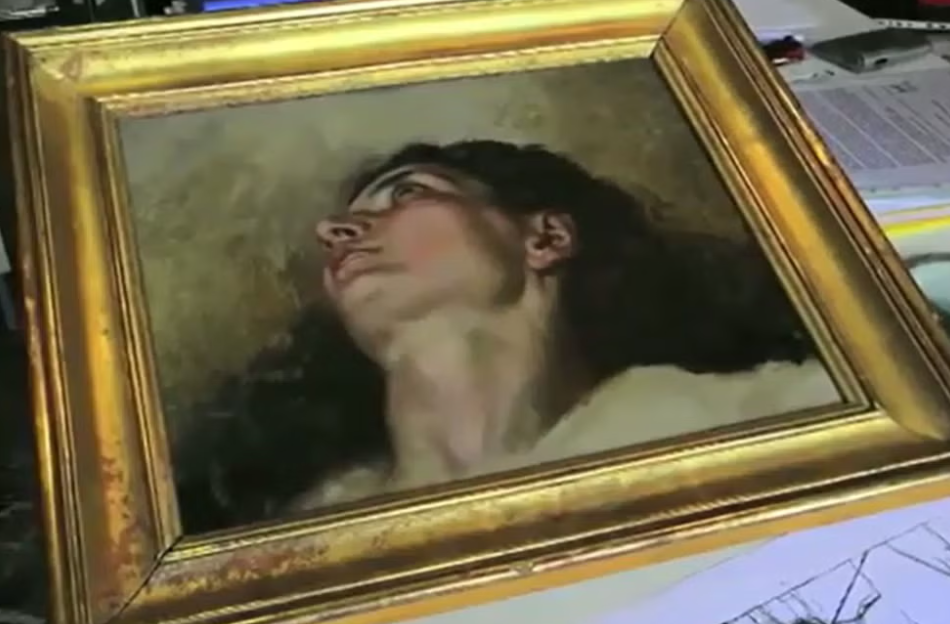
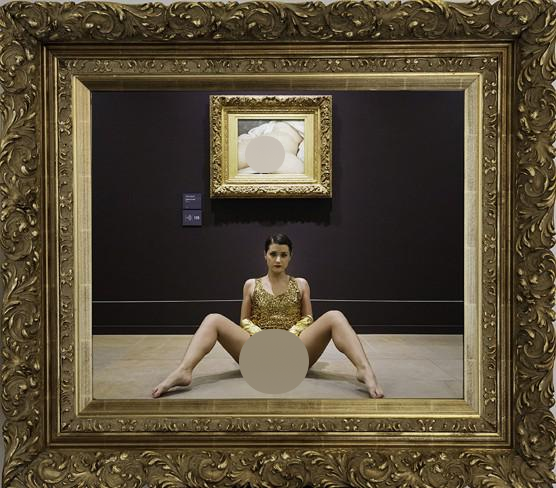
A number of curious stories have accumulated around this painting over the years. In 2010, an amateur antiques collector bought a painting at a flea market that turned out to depict the face of the woman from The Origin of the World. Experts who analyzed the canvas and brushwork concluded it was highly likely the two works had originally been one and the same, though the Musée d'Orsay never issued any official comment on the matter. The artist Orlan also made a parody of the painting titled The Origin of War, and a performance artist once sat in front of the original with her legs spread apart as a piece of performance art. The museum at the time framed the incident not as a question of art versus obscenity, but simply as a breach of its visitor rules, and removed the performer.