Paris · Painting
Water Lilies, Room One
Musée de l'Orangerie · Paris, France
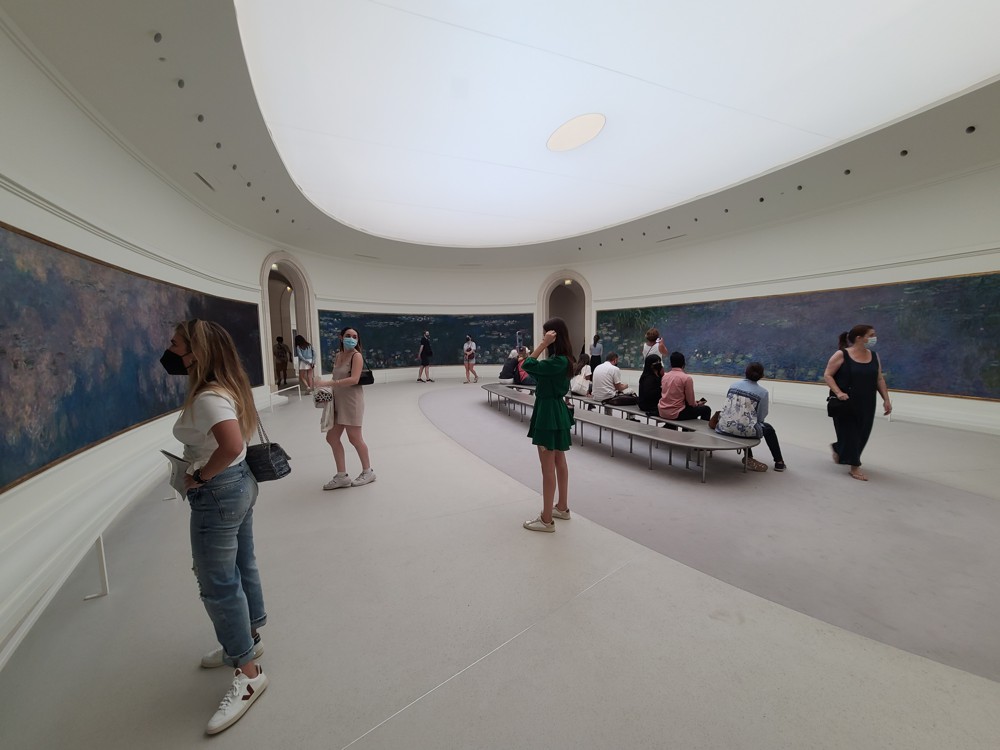
The first room housing Monet's Water Lilies is oval in shape, like the second room beside it, and the two are connected. Together they form something close to the figure of an infinity symbol — a sideways figure eight — because Monet designed the space to express an eternity that transcends time and place. The paintings themselves follow the passage of time: the first room holds water lilies at dusk, the second holds them at dawn, so the sequence cycles endlessly between evening and morning. There's no artificial lighting inside; natural light pours in through skylights instead, shifting constantly with the time of day and the weather, so the paintings themselves look different depending on when you see them. Monet worked all of this out personally with the architect Camille Lefèvre. The space reflects his wish to offer more than a simple viewing experience — an immersive one, where visitors become part of the interplay between the paintings, light, and time.
The water lilies themselves are based on the pond at Monet's home in Giverny. He wanted to capture the fleeting beauty created by constantly changing light, but no single canvas could hold all of that change, so he painted the same subject again and again. His Water Lilies series is said to run to around 250 paintings in total, and the eight on view here at the Orangerie are considered its masterpieces. The dreamlike haze running through all of them has been linked to the cataracts Monet suffered from at the time — his blurred vision seems to have carried over into the paintings themselves. Every one of them is enormous; the longest stretches some 12.75 meters, covering an entire wall. None are framed, which makes them feel continuous rather than broken into separate pictures.
Monet also experimented with technique across these eight works. Looking closely, you can see the willow trunks and branches rendered in long, straight strokes, while the water lilies floating on the pond were built up with thick layers of paint. Because the brushstrokes overlap, the forms blur up close but sharpen again once you step back — an effect Monet calculated deliberately.