Paris · Painting
The Water Garden Where the Water Lilies Were Born
Giverny · Paris, France
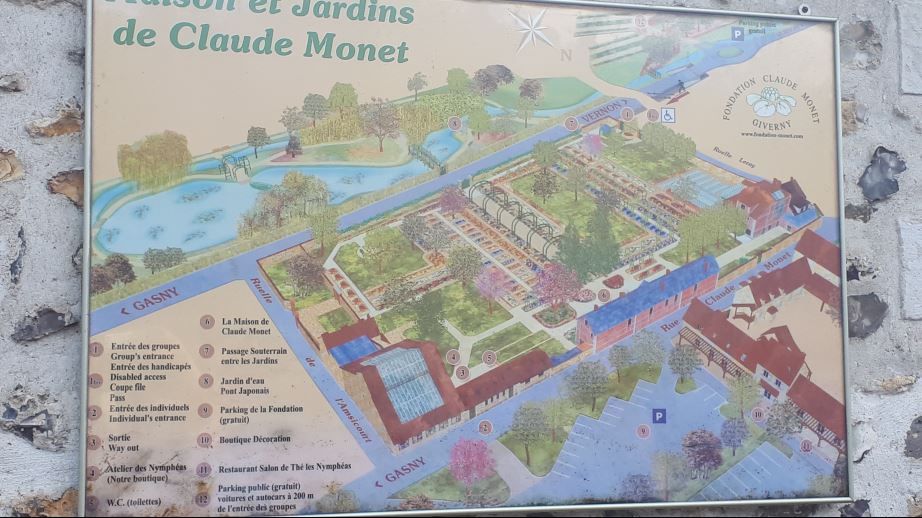
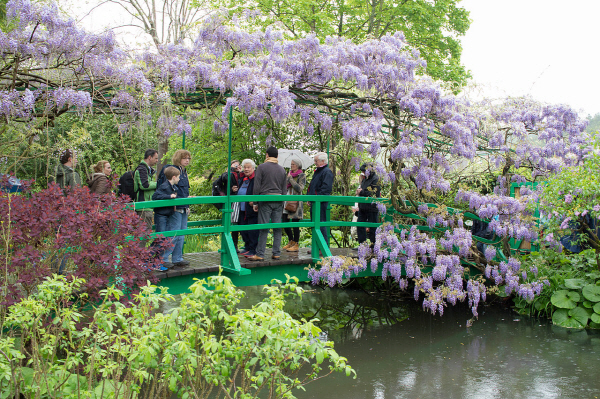
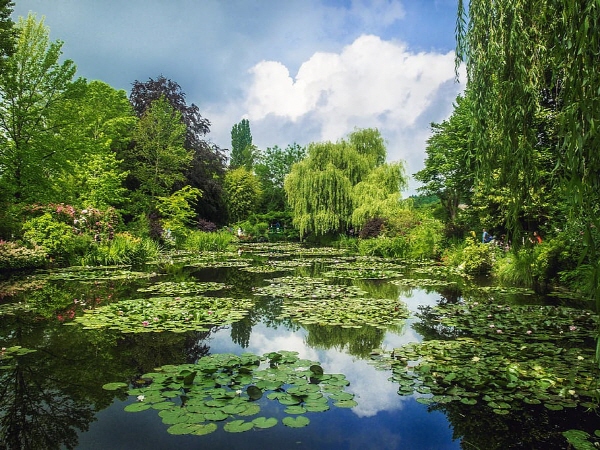
This is the very garden where Monet painted his water lilies.
Monet learned how to paint light and color from his teacher, Eugène Boudin, and by painting every day he found his own way of expressing the color of light as it shifts from moment to moment. For Monet, the Giverny garden that brought his Water Lilies series to completion was the perfect model for his remarkable powers of expression. In 1893 he bought the neighboring land to expand the garden, but it wasn't easy. When he submitted a plan for a pond to the authorities, neighbors worried that the flow of water would be blocked or the water polluted, and his plan was rejected three times. He finally won approval on the fourth attempt, agreeing to circulate the pond water only at night, when villagers weren't using it.
Even after all that effort, Monet didn't paint the pond for about a year. He felt the surrounding trees and plants needed time to settle in, and that he himself had to spend time there to become familiar with his subject. In place of an easel, he set up a bench and sat there every day, observing the pond, the water and the lilies. He then added a Japanese-style arched wooden bridge, which he loved, and, captivated by the beauty of the water garden he had made, began his Water Lilies series.
The series runs to around 250 paintings, and they are said to have been made in memory of the soldiers killed in World War I. In his final years Monet was so absorbed in the pond that he employed seven gardeners to help tend the garden. The works from this period were painted on huge, mural-size canvases, with abstract rendering of mist and reflected light and Monet's signature thick brushwork. It is the style that emerged from more than 30 years of painting water lilies.
Why did Monet stay so fixated on water lilies for so long? He seems to have wanted to hold on to the ceaseless flow of time within a single subject, and to paint light and color exactly as they change with time. He later recalled the subject like this:
"It took me time to understand my water lilies. Suddenly, I had the revelation of the enchantment of my pond. I took up my palette at once."
Take a seat on the bench and listen to the next part of the story.