Paris · Painting
Monet's Flower Garden: A Painter and Gardener
Giverny · Paris, France
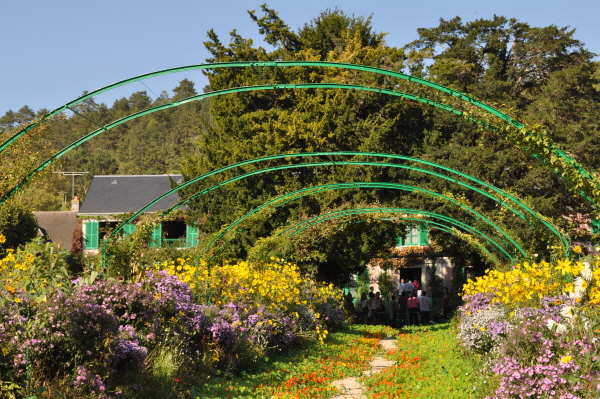
The Flower Garden is exactly what its name promises: it's packed with blooms. The bench right in front is the photo spot, so be sure to snap a picture with the house behind you. Monet lived here in Giverny for 43 years, from 1883 until his death in 1926. Painter and horticulturist, he designed and tended the Flower Garden himself, and it covers 8,000 square meters. He often declared that he was a great gardener before he was a painter, a remark that reveals his love of nature.
The cottage-style garden bursts with poppies, anemones, daffodils, lilacs, tulips, irises and too many other flowers to list, a harmony born of disorder. At first glance it looks so wild it seems to need no care, but step back and you'll see how masterfully it all fits together. There are even persimmon and apple trees, and visitors sometimes get scolded for picking the fruit, so enjoy it with your eyes only.
As a young man traveling through Normandy, Monet was riding the train from Vernon to Gisors when he spotted Giverny along the way. Charmed at first sight, he moved here in 1883. He bought the site of today's house, then an apple orchard, along with the pink building beside it. Deeply knowledgeable about landscaping, he planted flowers and trees to his own taste and created the garden you see today. He chose species by carefully calculating when each would bloom and fade, so that new flowers opened every two weeks. He pored over horticultural catalogs more than art books, and reportedly pulled weeds, dug the soil and planted irises, daffodils, poppies, roses and peonies himself. He sought to understand nature with every sense, not just his eyes. Though he complained that tending the garden left him little time to paint, once it matured, he is said to have captured the beauty of its flowers in bloom.
Still, while most of his paintings depict the water lilies of the Water Garden, he left almost nothing from this garden, and why remains a puzzle. Even so, no one can deny his passion: he poured heart and soul into growing these flowers and chose each one himself. The riot of colorful blooms seems to know the passion of the master who, a century ago, doggedly tried to capture on canvas the ever-changing play of water and light.
The critic Arsène Alexandre described Monet's garden as a remarkable sight, a palette of every color, where a great colorist set off fireworks in flowers. Even today, Monet's Flower Garden remains a favorite among garden designers.
Next up is the Water Garden. Cross through the underpass at the end of the garden. The route can be confusing, so check the map in the next chapter.