Paris · Painting
Monet's Techniques and Final Years in the Water Lilies
Giverny · Paris, France
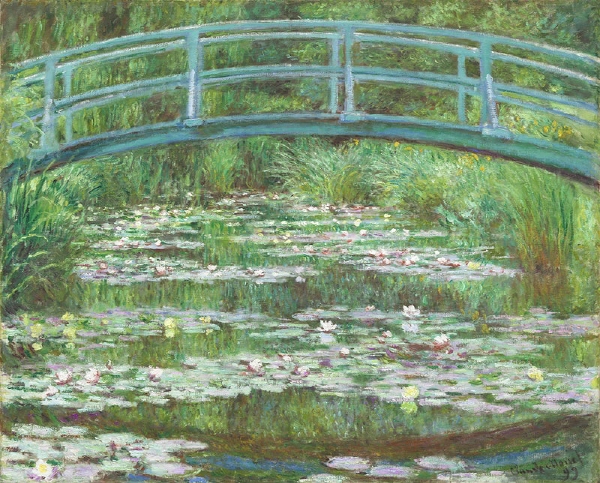
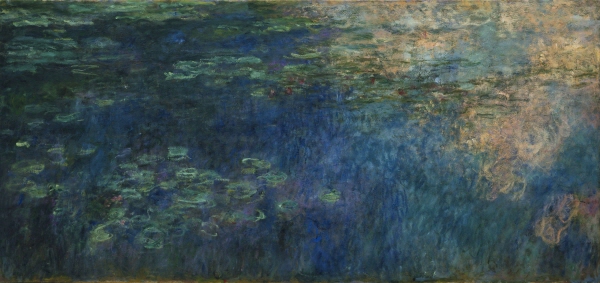
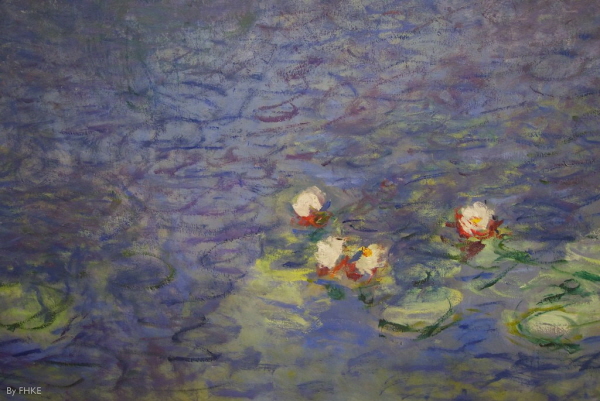
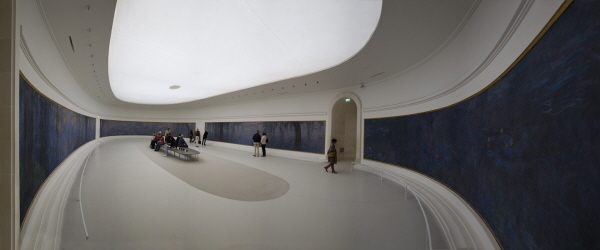
The water lilies offer a glimpse of several of Monet's painting techniques.
First, Monet worked fast. Painting strictly outdoors, he had to finish a canvas in the spot where he'd started it, and for him there was said to be no "tomorrow," because he could never know how tomorrow's light would change. His brushwork had to be quick. Second, he didn't mix colors on the palette but blended them directly on the canvas, partly to finish quickly and partly as a deliberate way of making the tones vivid. Third, he strove to capture abundant light, using bright, rich color to depict forms brought to life by sunlight.
The water lily paintings change over time. In 1899 he filled the scene around the Japanese bridge with small brushstrokes, and around 1906 he filled the whole canvas with the lily-covered pond, with softer color and brushwork. In 1908 he used round canvases to emphasize the decorative, with more saturated color and a strongly rhythmic brush. After he was diagnosed with cataracts in 1912, his paintings became noticeably darker and rougher, probably because the world was growing steadily hazier to him. By 1919 his right eye had lost all sight and his left retained only 10 percent, so he had to undergo the surgery he had long refused, and he had three operations in all. After enduring xanthopsia, a yellow cast to his vision, and then a bluish aftereffect, Monet went back to the water lilies for his last great work.
At the end of his life, the aging painter gave his remaining strength to canvases as large as 2 meters tall and 4.3 meters wide, painting again and again with swift hands. His aim was to recreate water shimmering with light. The floating lilies, swaying willow branches and clouds reflected in the water were merely devices to that end. By delicately balancing the colors of it all into one harmonious whole, he captured the sparkle of the water. At Monet's request, the works were removed from their stretchers and installed on the curved walls of two oval rooms at the Musée de l'Orangerie, under natural light. All of these conditions were set out in his will, and he is said to have donated the paintings to the state on the condition that they all be met.
Browse the gift shop for small souvenirs, then head out and start your stroll through the village.