Paris · Painting
Monet's Grave, Camille and Alice
Giverny · Paris, France
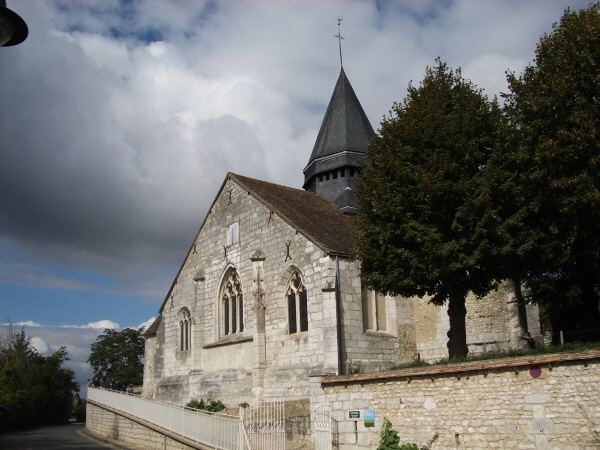
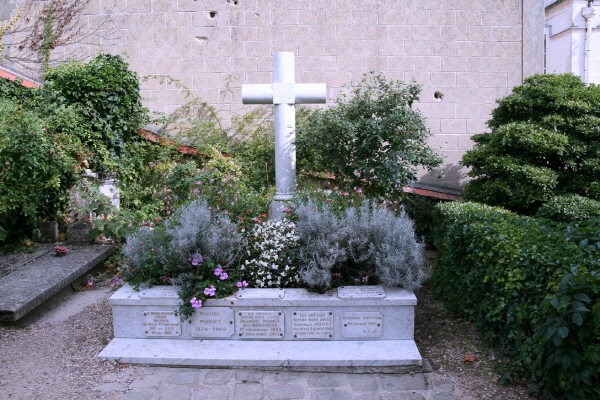
This church is rarely open to the public, but do look for Monet's grave behind it. Monet died on December 5, 1926, at the age of 86, and his final wish was for a simple funeral. He was adamant that he wanted no flowers or wreaths, and asked that the flowers in his garden not be cut for such purposes. As he requested, his family decorated the coffin only with bunches of wheat grass. As we walk around the grave, let me tell you about Monet's love story. You can also listen on your way back to the parking lot once you've seen the village.
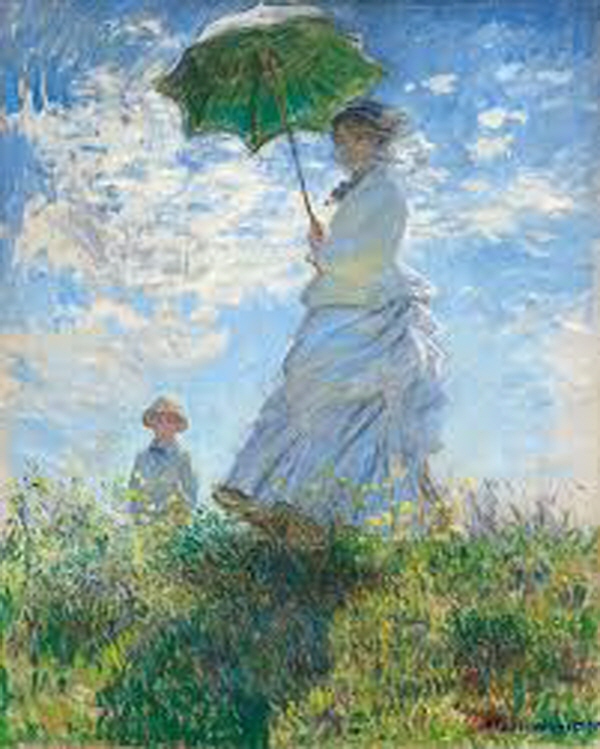
Camille, the woman in Woman in the Green Dress, came from a humble background and was considerably younger than Monet. She served as his muse, inspiring him, large and small, throughout the many paintings he made over his lifetime. The two weathered hardship together and leaned on each other, and in 1867 their first child was born. Monet's boundless love for his family appears in many of his paintings. Look closely at Woman with a Parasol and you'll see he did not render nature or facial expressions with precision. You feel the quick, somewhat rough brushstrokes right away, because what interested him was capturing a moment. By focusing on the beauty of nature created by light and the vitality of his figures, he gave the work a new aura that set it apart from earlier art. And once you know that the figures are his wife Camille and son Jean, the painting becomes even more endearing.
Still a near-unknown, Monet had married his model, Camille, in defiance of fierce opposition from his family, and she gave birth to their son Jean. They were the people he treasured most, and his paintings seem to overflow with bright love and warm peace. But a happy life was not to last. Around the time of Jean's birth, the couple ran into serious trouble. Monet fell into severe financial difficulty, and his father was unwilling to help them. As things worsened, in 1868 he sank into such deep despair that he went through a time when he could hardly go on, and in 1869 and 1870 he was rejected by the Salon in successive years. Afterward, Monet stopped painting for a while and rested with Camille. Fortunately, a nobleman named Louis Joachim supported his work, and little by little he regained the means to paint and care for his family.
Monet and Camille married in June 1870. Soon the Franco-Prussian War broke out, and they fled to London with their son, returning to France when it ended. In 1872 he settled in Argenteuil, an industrial town west of Paris, and began to develop his own painting technique. In 1878, as he was absorbed in his work, a second son, Michel, was born, and the birth left Camille's health in worse condition. The Monets ended up staying with the wealthy Hoschedé, the owner of a department store, who became a patron by buying works including Impression, Sunrise. As Camille grew very ill, Hoschedé's wife, Alice, looked after the two boys, Jean and Michel, along with her own five children. Then the department store Hoschedé ran went bankrupt, and he fled to Belgium alone and never returned.
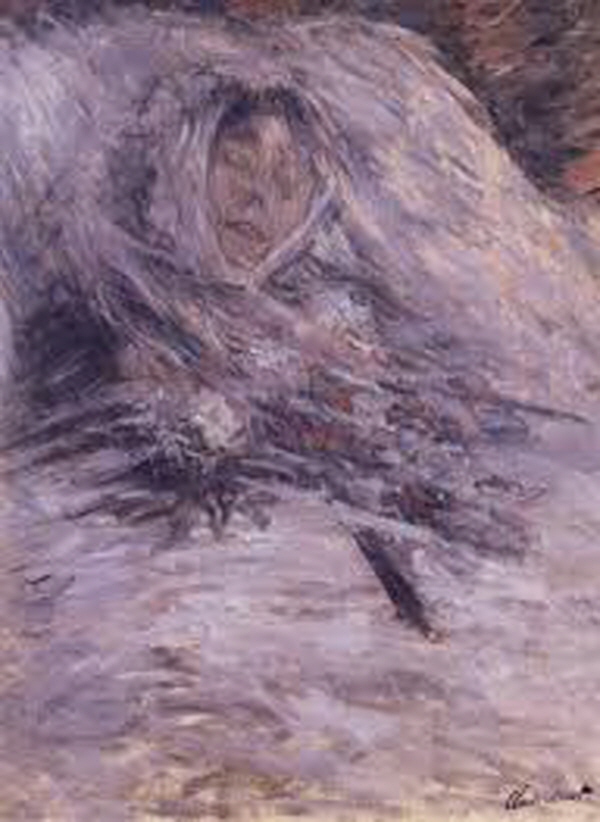
Alice and the Monets, now in dire straits, stayed in Vétheuil until 1879, the year Camille died at 32. Around that time Monet grew close to Alice, who had been caring for his children, and the two became a couple. Alice, still married at the time, moved to Giverny in 1883 with Monet and the children without divorcing. Years later, after her husband died, she married Monet in 1892. In the late 1880s and the 1890s, Monet became not only financially comfortable but also a success as an artist.