Paris · City Walks
The Oldest House in Paris: Timber-Framed Charm
Le Marais · Paris, France
Paris preserves its past so well that the whole city feels like a museum, but the Paris we see today is largely the product of Napoleon III's Haussmann renovation of the late 19th century. Many buildings were demolished and replaced in new styles, so finding traces of medieval Paris isn't easy. Le Marais, however, was left out of that program. The apartments here had no running water and no sewers, so household waste was simply thrown into the narrow lanes, and the area long carried the stigma of a neighborhood of filth and stench. Once a glorious district of kings and nobles, Le Marais declined until it became the most unsanitary and run-down part of Paris.
In the mid-20th century, plans were announced to redevelop Le Marais and tear down its unsanitary old buildings. But Parisians wanted to preserve their city's history, and they opposed demolition, arguing for renewal and reuse instead of destruction and rebuilding. Thanks to them, Le Marais survives as a historic district that still holds narrow medieval lanes, old buildings, and traces of the past.
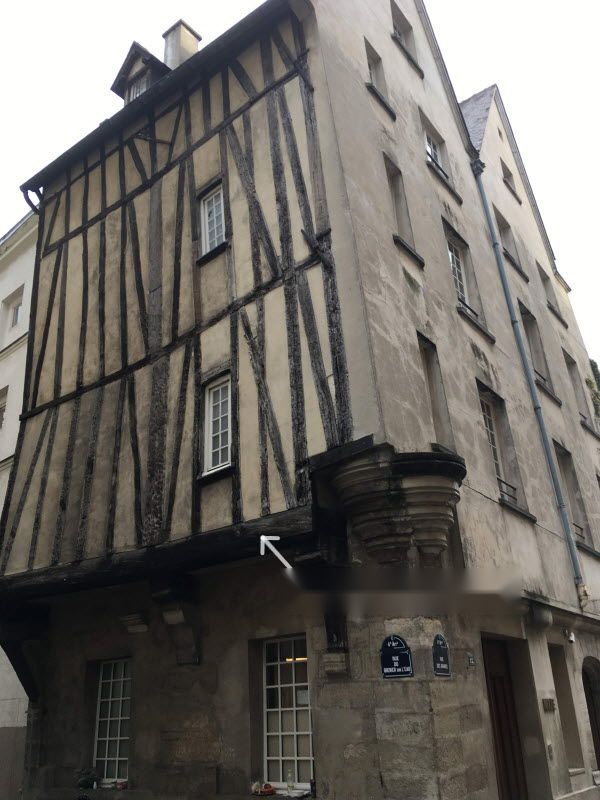
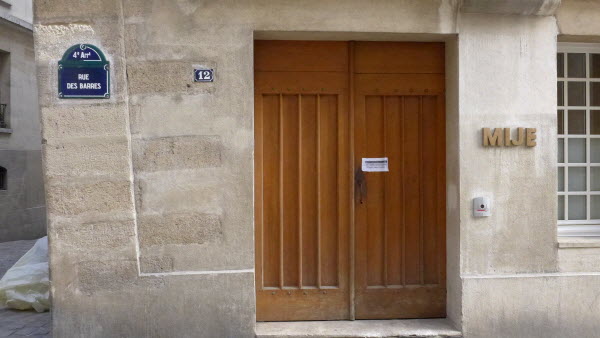
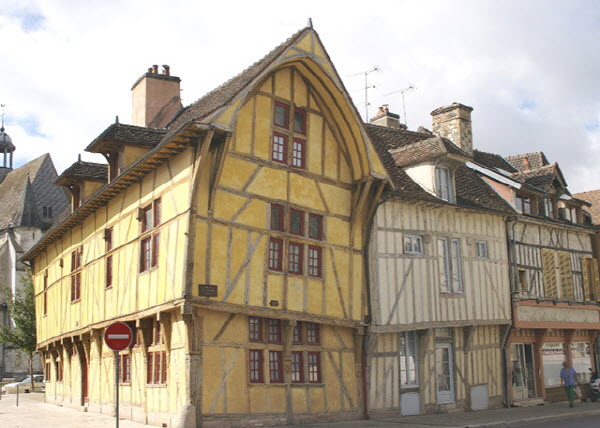
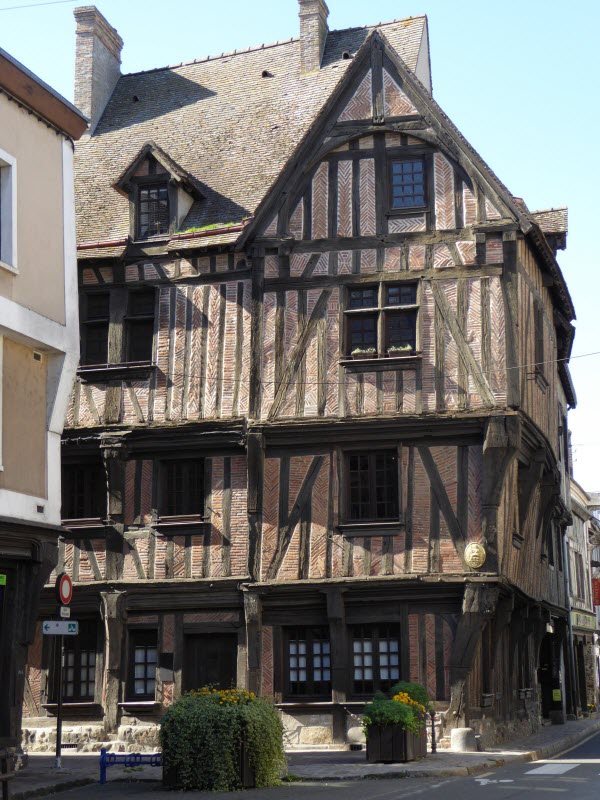
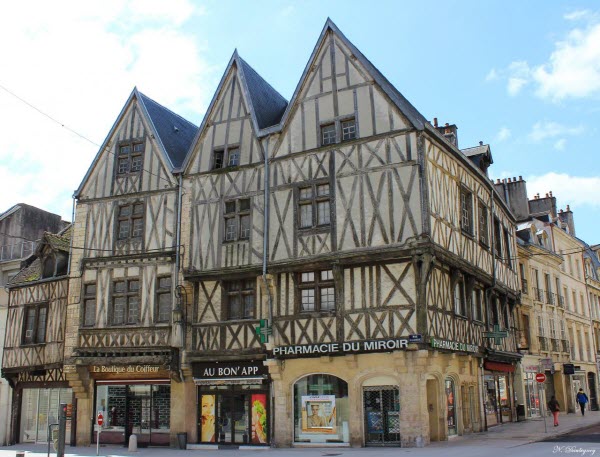
Now, back to the old house. Look for the building at 12 Rue des Barres with the "MJE" sign. It looks old at a glance, and the exposed timber frame is striking. Notice that the second floor juts out beyond the first. In old European cities, you often see top-heavy houses where the second floor is bigger than the first, and the third bigger than the second. Why build them that way? In the Middle Ages, builders finished the ground floor, put the second floor on top, finished that, and then added the third. Each time, the wooden posts had to be set slightly forward to frame the next level, which naturally created the overhang. Houses like this gave residents more space upstairs and also reduced their housing tax. In Paris, the tax was based on the footprint a building occupied on the ground, so upper floors built wider than the base were taxed lightly relative to the space they provided.
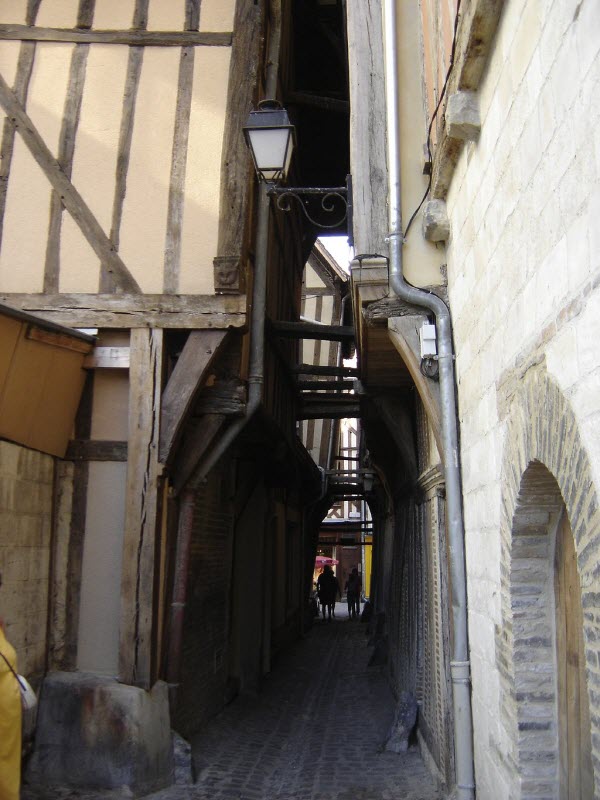
These houses appeared in great numbers in the 14th century and were banned in the 16th. They closed off narrow streets so that no sunlight reached the ground, and the stench of accumulated waste couldn't air out, which contributed to epidemics. The upper floors grew so wide that they turned lanes into tunnels, where you could almost stay dry in the rain. The overhanging section that supports an upper floor in medieval architecture is called an encorbellement.
Built in 1540, this house served as a monastery at the time. Today it is a hostel run by a company called MJE. Let's keep walking in the same direction we were heading along Rue des Barres, toward the north of Paris. When you reach a larger road, you'll find yourself standing at the top of a staircase.