Paris · Palace & Rooms
Second Floor: The Story of the French Revolution
Les Invalides · Paris, France
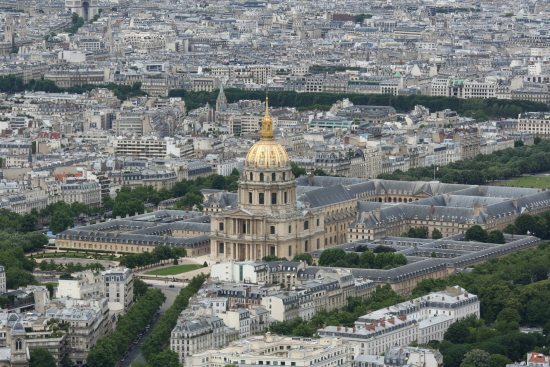
Now for the museum's galleries. The displays here cover the period from 1643 to 1871, from Louis XIV to Napoleon III, and present objects tied to France's major battles, from the Battle of Rocroi to the French Revolution. Rocroi was fought in 1643, during the Thirty Years' War, between French and Spanish forces. For the turbulent years of the Revolution, the galleries show collections relating to France, Austria, Spain, Russia and others, and there is also an exhibition on the Franco-Prussian War of 1870.
Let's use this gallery to look at the period's defining event, the French Revolution. Why does it still matter so much today? Because you can't understand French politics, French society, or even French identity without it.
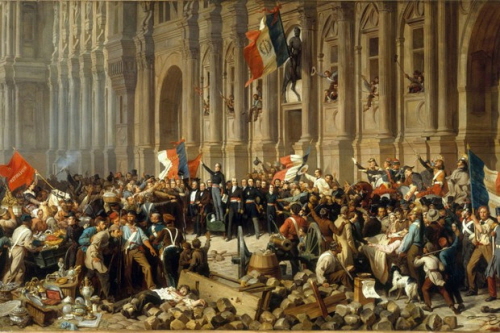
The Revolution began in 1789. Put simply, it was a civic revolution against the privileged classes, fought for social equality. Its causes included the lavish lifestyle that ran from Louis XIV through Louis XVI and the financial and social problems that followed. French society was divided into clergy, nobility and commoners, and only commoners paid taxes. The more the privileged indulged, the heavier the burden on everyone else.
The Revolution produced a declaration of rights, centered on the National Assembly, and the birth of the republic. Louis XVI was executed and the long-standing monarchy fell. Neighboring countries watched a monarchy toppled by its own people and, to keep the same thing from happening at home, formed alliances and went to war with France. Inside France, Robespierre's Reign of Terror began but turned many people against it. In 1799 Napoleon, who had won public support through his campaigns, seized power in a coup and became First Consul. In 1804, though, he crowned himself Emperor of the French. For those who longed for liberty, equality and a modern political system worthy of them, it came as a bolt from the blue. The Revolution had opened the way to a modern political order, yet France soon slid back to its earlier system.
So real equality did not arrive overnight. But the hunger for equality that the Revolution set off kept driving political and social change, and the genuine equality it sought was realized as time went on.
Les Invalides itself is directly tied to the Revolution: the citizen militia armed themselves from its arsenal. It is ironic that weapons stored here, a symbol of royal power, were used by ordinary citizens to bring down the monarchy.