Paris · Palace & Rooms
First Floor: France at War
Les Invalides · Paris, France
This floor covers the history of the French army from 1871 to 1945, including both World Wars. It is the museum's core exhibition, and the best place to understand the major wars of modern French history. You'll see uniforms and weapons from France and other countries, the clothes soldiers wore in daily life, and personal belongings such as letters and cards. Items related to France's colonies appear alongside documentary photographs and maps, and there is a wide range of wartime propaganda posters.
Here we'll focus on France's relationship with Nazi Germany during World War II. The war, which ran from 1939 to 1945, left deep scars on France. France is counted among the victors, yet for much of the war it was occupied by Germany and lived under a form of German rule. It can seem strange that France, with its image as an empire holding vast colonies in Africa and Indochina, was occupied.
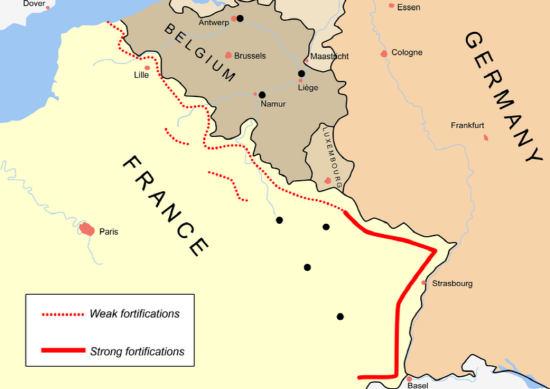
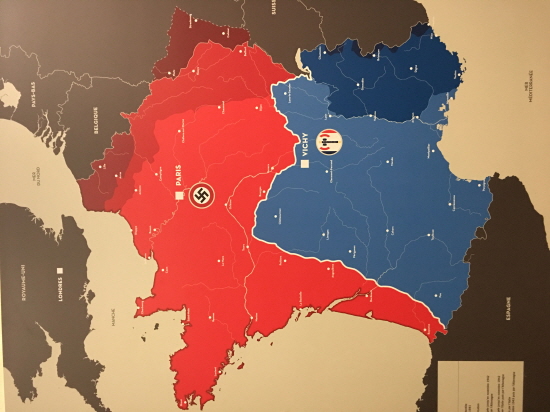
After the Nazi Party took power in 1933, Hitler declared war on Britain and France and attacked Poland. As German forces took over neighboring countries, they came for France too. Haunted by the horrors of World War I, the French army built the Maginot Line, stretching hundreds of kilometers, to guard against a German attack. But Germany caught France off guard by attacking along a different route, and France was occupied. Marshal Pétain, a hero of World War I, negotiated with Germany and signed an armistice in 1940, which was in effect a surrender. France was then split into the north, under direct German rule, and the south, run by the Vichy government, effectively a German puppet regime. Meanwhile, Charles de Gaulle went into exile, led the Resistance for French freedom and set up a provisional government; we'll look at him more closely in the de Gaulle gallery. In 1942 Germany occupied the southern zone administered by Vichy, placing the whole country under occupation. France was freed from German control in 1944.
After the war, France and Germany seemed bound to remain bitter enemies. But under the Marshall Plan, the American program of economic aid, European countries had to cooperate to rebuild. France, wanting a central role in forming a European community, chose to join hands with its former enemy. The two nations put their old hostility behind them and built a partnership, one result of which was a shared history textbook.
It's worth remembering, though, that while France sought reconciliation with Germany, its relations with its former colonies remain contested on many points to this day.