Paris · Architecture
Pont Alexandre III
Paris · Paris, France
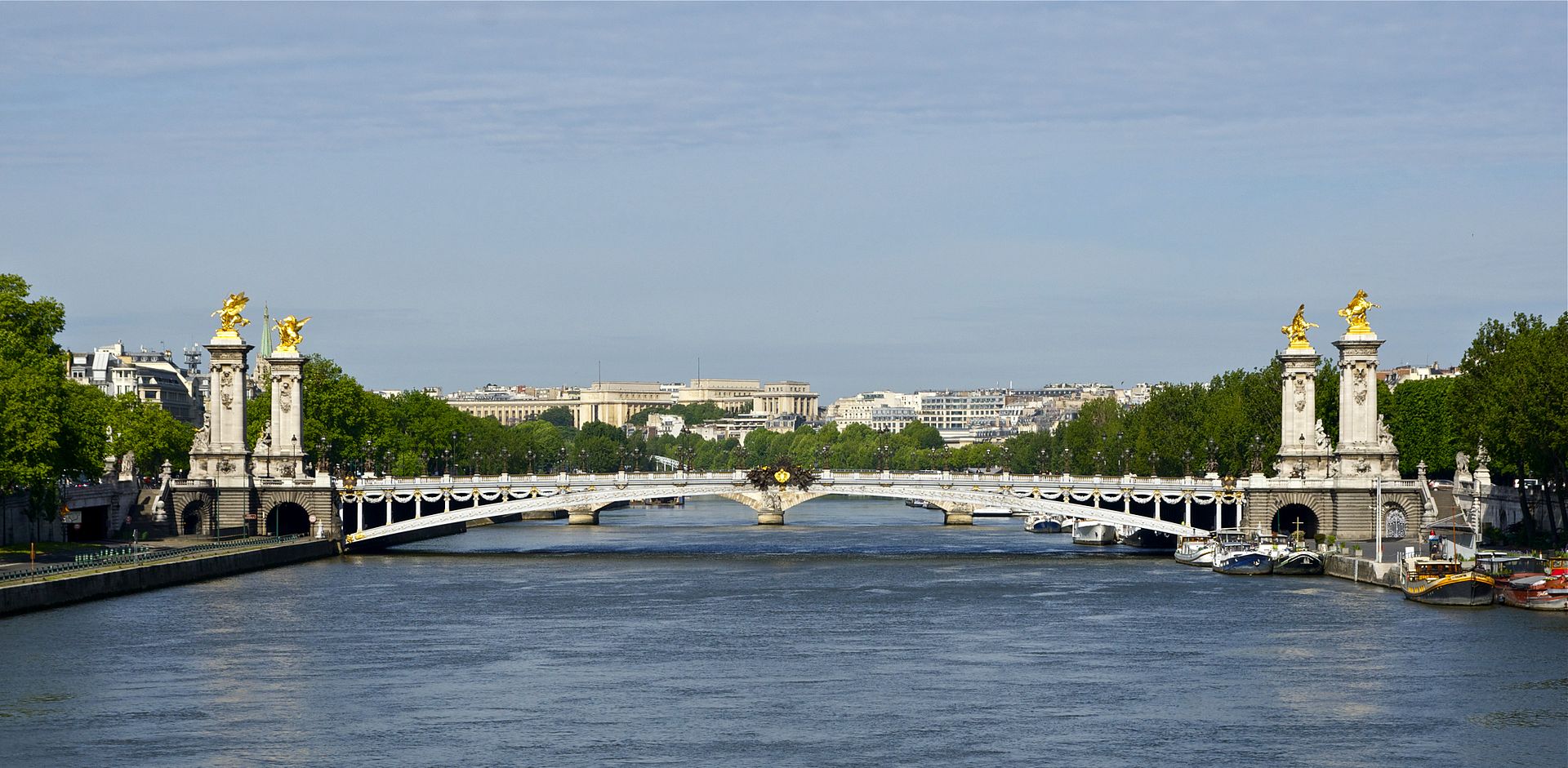
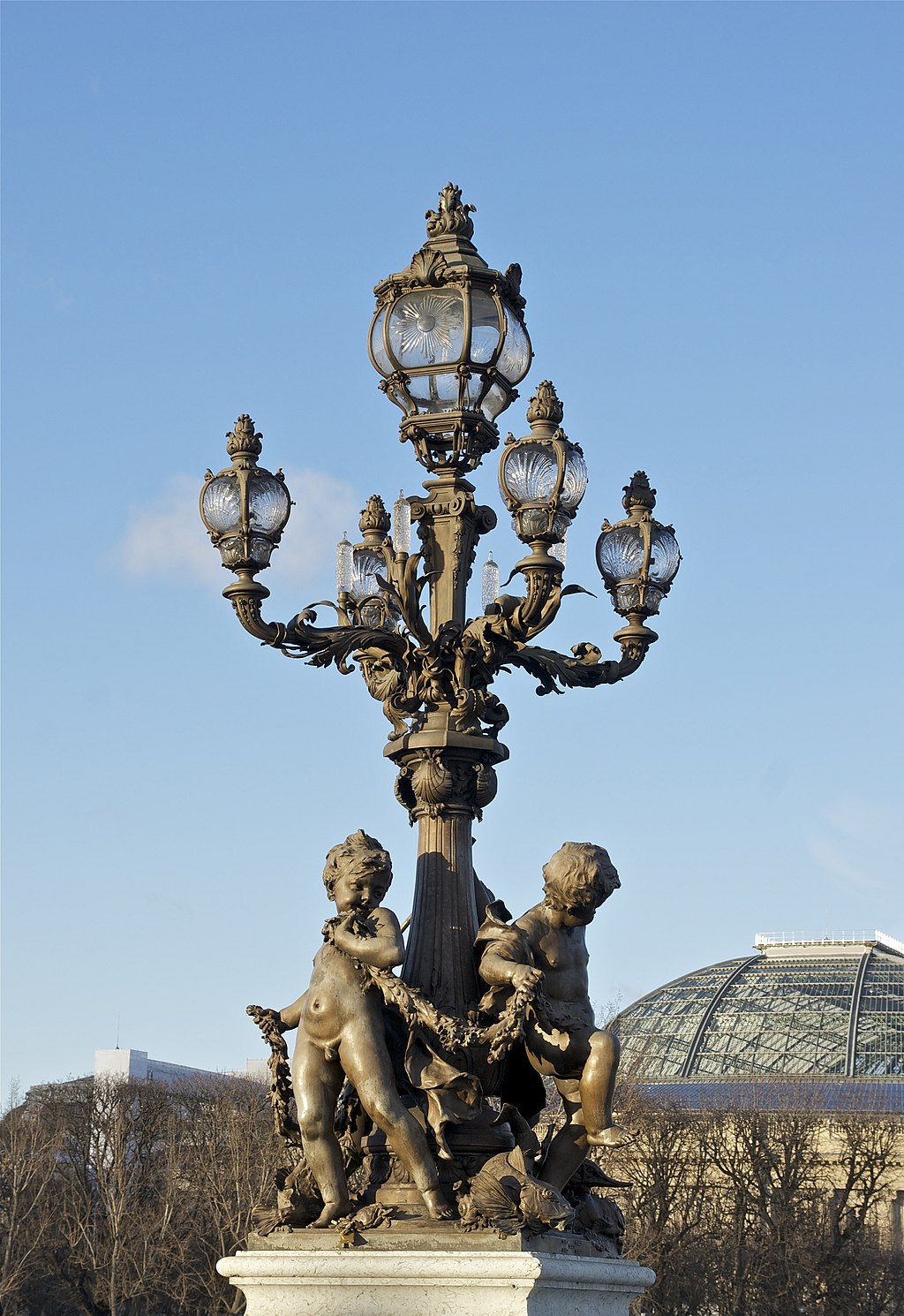

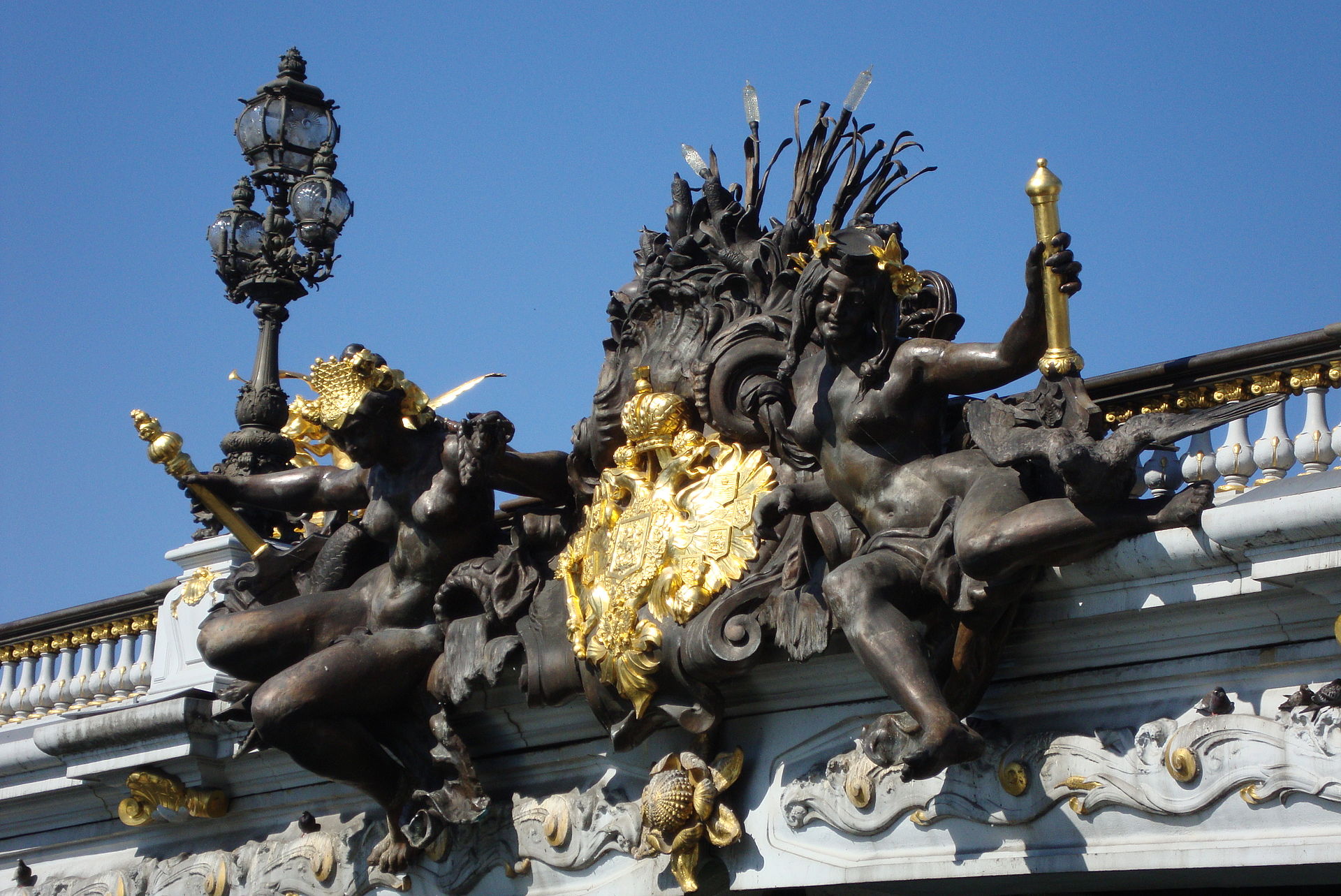
The Pont Alexandre III is widely regarded as the most ornate and lavish bridge in Paris. "Pont" is French for bridge, and Alexandre III was a Russian tsar, so the name means "Alexander III's Bridge". It was built as part of the 1900 Exposition Universelle in Paris, at the same time as the Grand Palais and Petit Palais, and took about four years to complete, from 1896 to 1900. A textbook Beaux-Arts design, its two sides are richly decorated with charming Art Nouveau lamps, nymphs and cherubs. Like the Eiffel Tower and the other monumental structures raised for the fair, it is a showpiece of 19th-century engineering.
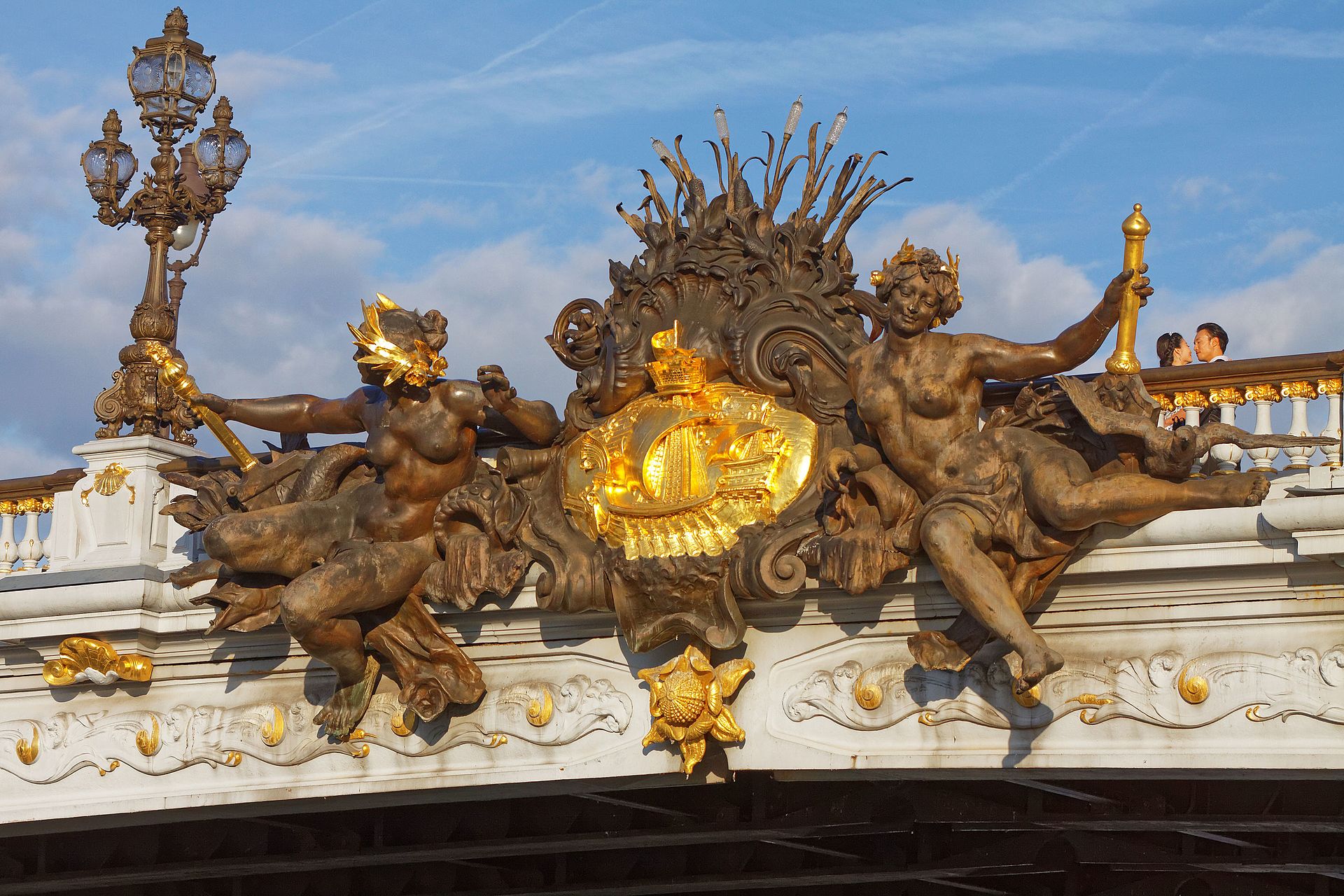
As the name suggests, the bridge honors Tsar Alexander III, who sealed the Franco-Russian alliance of 1892. That alliance ended France's diplomatic isolation and helped weaken German dominance, so the bridge carries symbols of both nations. They are hard to see from the deck, but at the center of each side is a giant copper sculpture. On the side facing the Eiffel Tower, two nymphs representing the Seine flank a golden ship, part of the Paris coat of arms, standing for France. On the opposite side, two nymphs represent the Neva River, which flows through St. Petersburg, then the capital of the Russian Empire, with a gilded Russian imperial coat of arms between them, representing Russia. Both copper pieces are by Georges Récipon, who also made the quadrigas atop the Grand Palais, your next stop.
The ornate copper work on the central arches is lovely, but the gilded statues on the 17-meter pillars holding up the bridge's ends deserve a look too. The golden statue on the pillar nearest the Grand Palais is called "Fame of Agriculture", with "Peaceful France" below it. On the Petit Palais side, the statue on top is "Fame of the Arts", with "France of Charlemagne" beneath. Across the bridge, on the Eiffel Tower side, the sculpture on top is "Fame of Combat", with "Renaissance France" below. The last golden statue is "Fame of War", above "France of Louis XIV". Each of these figures stands for a major period of French history.
So the Pont Alexandre III is far more than a way across the river: its ornate decoration is packed with symbolism.