Paris · Painting
Japonisme and Monet's Studio
Giverny · Paris, France
The first thing you see when you step into Monet's house may strike you as odd. This is the home of the Impressionist Claude Monet, yet right at the entrance hang Asian paintings: Japanese woodblock prints known as ukiyo-e. Monet and many other Impressionists were influenced by them.
Ukiyo-e is said to have reached 19th-century Europe as wrapping paper, and artists who saw it were stunned. They were looking for something new. They wanted to move beyond depictions of religion, myth and history and find fresh subjects, and with the invention of the camera, the value of perfectly realistic painting plummeted. Why buy a painting that merely copies reality when you can take a photograph? The artist's individuality became what mattered. Painters began to strip away the perspective and sense of volume they had used to paint realistically, and to work on the flat, two-dimensional surface that is most truly the language of painting. That's when the ukiyo-e on the wrapping paper caught their eye. These distinctive prints depicted the simple daily lives of ordinary people and nature, in flat compositions with no sense of depth and vivid color.
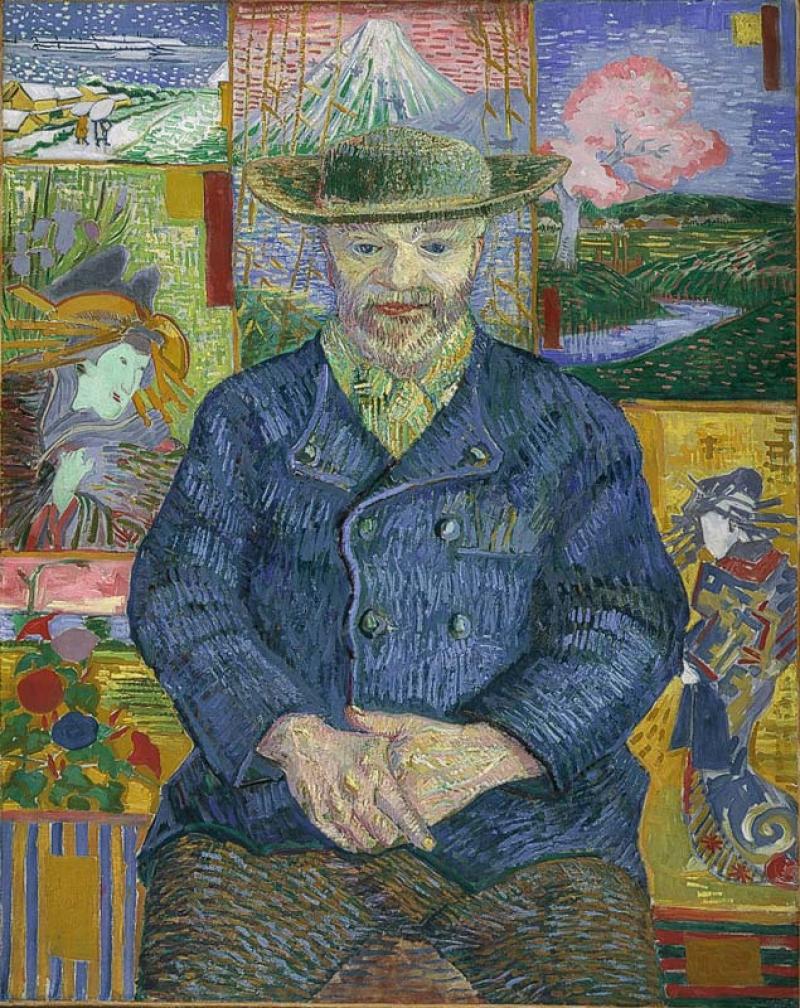
Among those inspired were Claude Monet, Édouard Manet and Vincent van Gogh. On the detail page you'll find Van Gogh's "Portrait of Père Tanguy," which shows the man who sold paints to artists in Montmartre and bought their paintings. Ukiyo-e prints appear boldly in the background, and Van Gogh also made studies copying ukiyo-e directly. There's no depth in the portrait, only a flat composition and bold color. The French word for Japan is "Japon," so this influence of Japanese culture is called Japonisme.
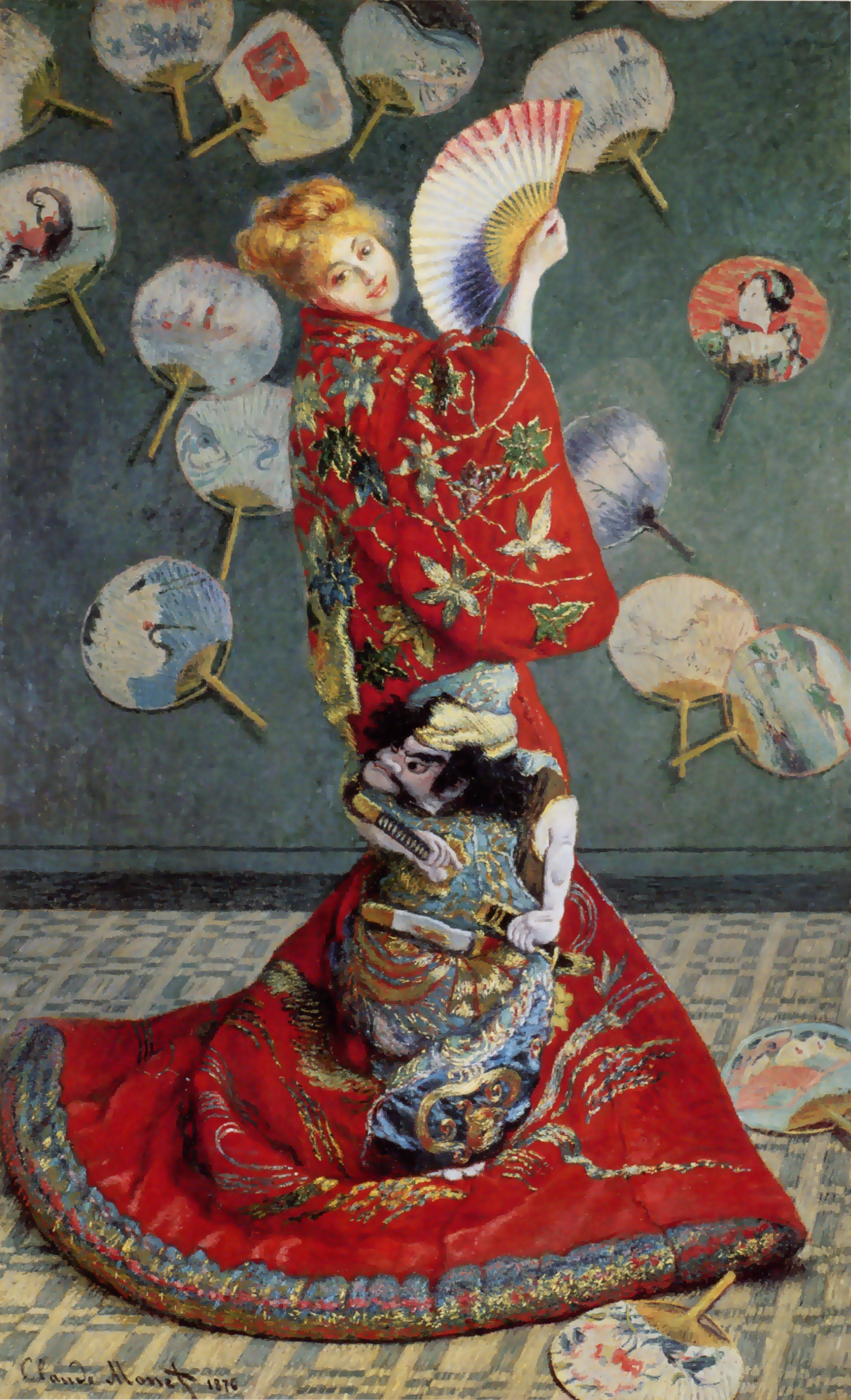
Monet adored Japanese culture. The detail page also shows "Camille in a Kimono," a painting shaped by that taste. He dressed his wife Camille in a kimono and had her pose, and it's unmistakably Japanese in style. Even though Monet was influenced by Japonisme, few of his paintings are so openly Japanese. He reportedly had Camille, who was ill, pose for hours. He painted it for money: such pictures sold. Wealthy bourgeois buyers with a colonialist outlook were fascinated by the exotic and the "primitive," and Monet, in financial trouble, had little choice but to paint and sell works like this.
Let's move on to the next room. It's full of paintings, all of them reproductions. But this was where Monet actually stored and finished his works, serving as both studio and reception room, and it has been recreated just as it appeared in photographs from the time. Let's take a closer look at a few of the pieces.