Paris · Shopping
What Boucicaut Understood About Parisian Shoppers
Paris · Paris, France
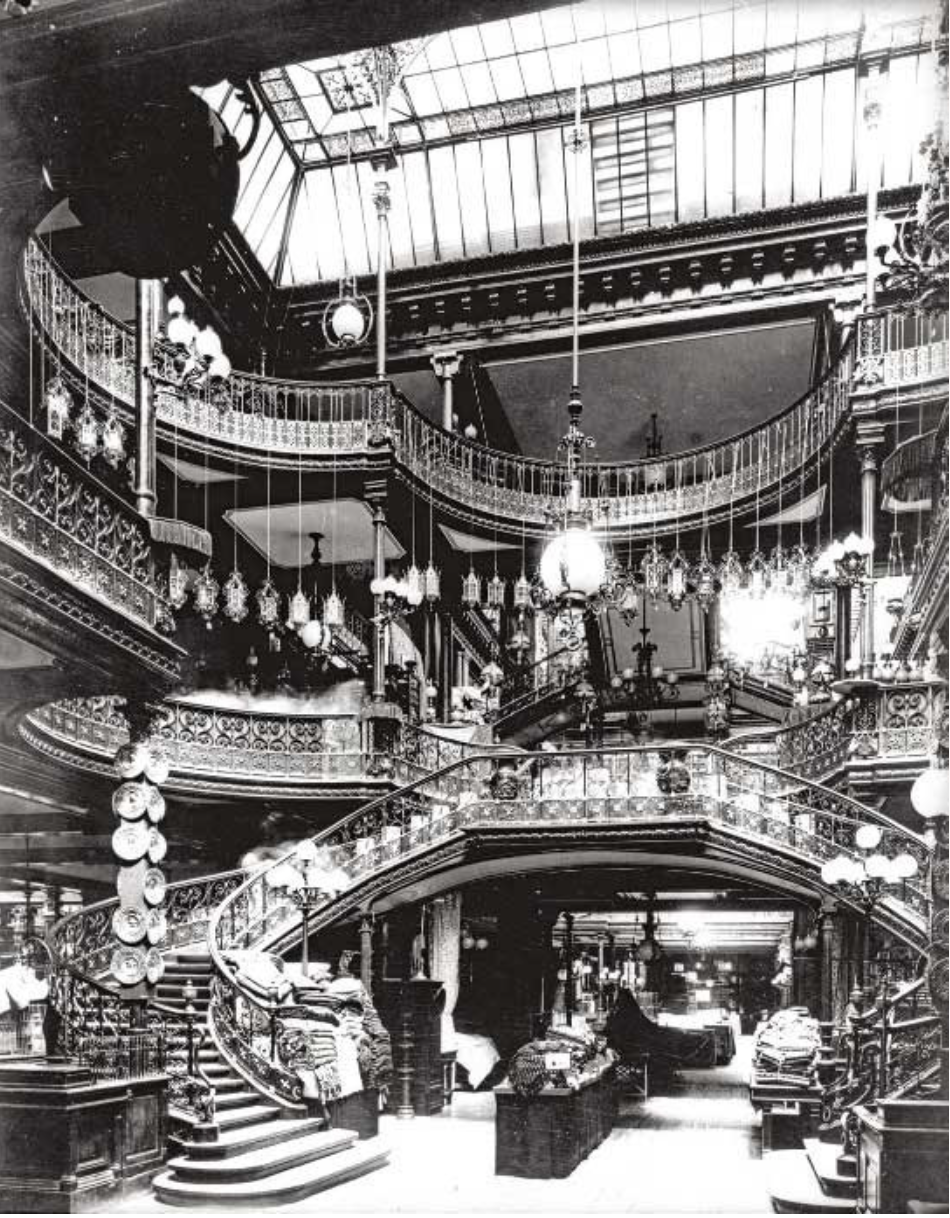
Boucicaut's interior was laid out exactly as he planned. Vast halls, eye-catching spectacles, and goods stacked floor to ceiling all sparkled in natural and artificial light. A department store decorated to seize attention at every turn felt like stepping into a new world, or a palace.
Even today, walking into a department store feels different from the moment you cross the threshold: the air, the glittering lights, the goods that make your eyes go wide. Parisians back then felt the same, and probably more so, because it was an experience unlike anything that had existed before. Simply being there lifted people's spirits, and women flocked to the stores. People say that when they need a mood boost they change their hairstyle or go shopping, and buying pretty things in a beautiful place feels good in itself.
Then there's the crowd effect. When everyone around you raves about a product, you end up buying things you don't need, or trying a food just because others have. If you're the only one not joining in, you feel behind, so you follow the trend. That sense of doing what others do and taking part in the same ritual drove purchases. It's the feeling that everyone in your circle is using a similar product and talking about it, and you're the only one without it. Women of that era justified their spending the same way: other women were buying, so a woman of the same standing had to as well, to keep up appearances. Boucicaut exploited this by continually widening the range of fashionable goods and anything likely to become a talking point, and putting them on display.
As noted earlier, the middle class wanted to imitate the aristocracy and upper class to set themselves apart from ordinary people and workers, and the department store fulfilled that desire. Buying refined goods and semi-luxuries made them feel they had moved up a rung, and let them show off how much they could afford. Sometimes they stretched their budgets or even borrowed money. In Zola's The Ladies' Paradise, a woman knows she shouldn't spend her husband's hard-earned money on luxuries, yet buys compulsively and shows off to other wives. Middle-class women of the day justified such spending, and the guilt that came with spending beyond their means, as part of the drive to move up in the world. Boucicaut exploited this by placing refined goods and semi-luxuries front and center.
These impulses were stronger than you might expect. After Bon Marché opened, Paris saw a wave of thieves - people shoplifting at department stores. This wasn't need-driven theft, like Jean Valjean stealing bread because he was starving, but compulsive theft, and it was largely wealthier, reasonably well-off people who did it. One psychiatrist of the time observed: "A peculiar phenomenon has recently appeared in Paris alone: theft has begun to occur frequently, and since it emerged with the arrival of the department store, we have decided to call it 'department store disease.'" It shows how astonishing the department store was to Parisians, and how a desire for new culture and fashion drove them. Boucicaut's Bon Marché, which read those impulses so well, was bound to succeed.
So which goods were so popular that people would steal them, and which semi-luxuries did people buy to imitate the upper class? Some are still expensive today, and some have become commonplace. We'll cover them in the next chapter.