Paris · Shopping
Semi-Luxuries and Must-Haves of 19th-Century Paris
Paris · Paris, France
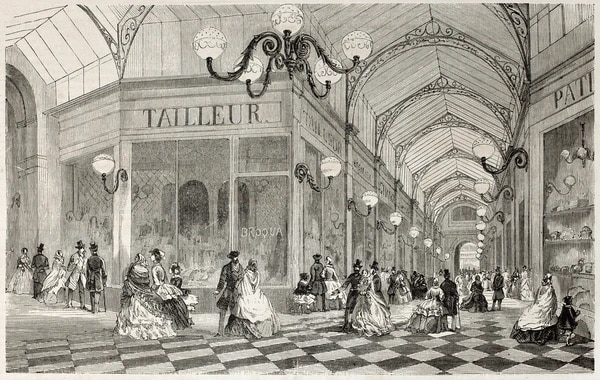
In status-conscious societies, in Europe and elsewhere, what you wore showed who you were. But the Industrial Revolution and advances in technology brought ready-made clothing and lower prices, and the dress of ordinary people and the bourgeoisie gradually converged. As the vast majority of workers began to look like them, the bourgeoisie could no longer set themselves apart by appearance alone. Anxious about it, they turned to new goods to distinguish themselves. Here are four of the popular items and luxuries of the day.
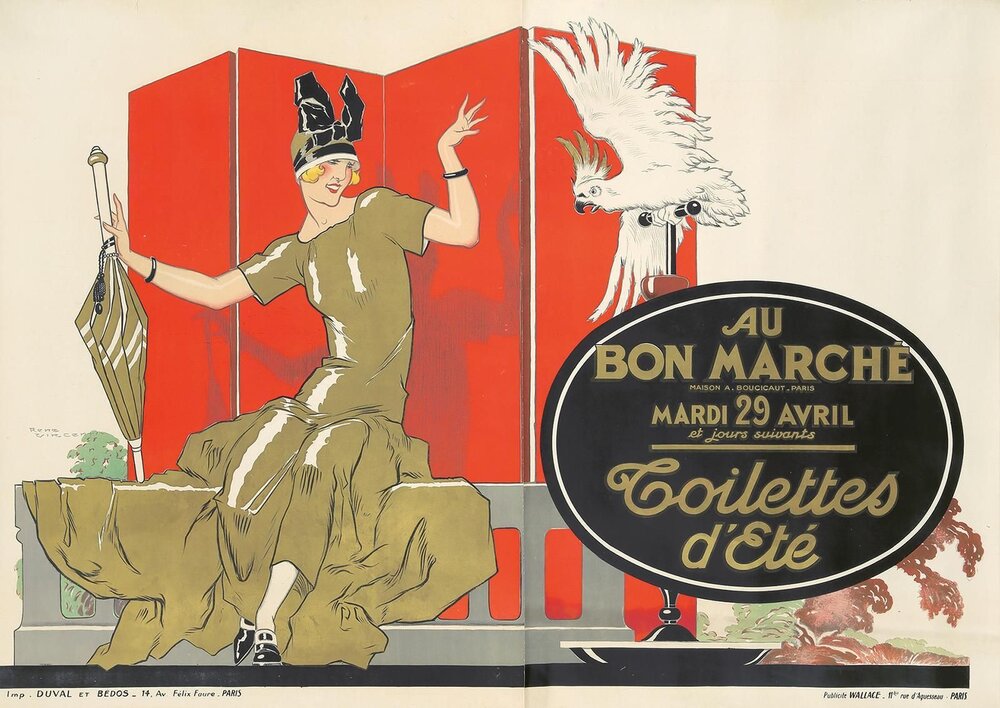
First, the parasol. Common enough today, it was once a luxury of upper-class women. To set themselves apart from outdoor workers and to preserve the "pale face" that was the beauty ideal of upper-class women then, parasols that shielded the skin from the sun were essential. For men, the necktie played the same role. Once worn only by aristocrats, ties were tricky, with different types and ways of knotting that took real skill to get right. Wearing one properly was a quiet way of showing your status and proving you were special. Accessories like these let people imitate the upper class and distinguish themselves from ordinary folk. They were wildly popular, and department stores drove sales by offering them in a wide range of types and fabrics.
The other two items are luxuries, not clothing accessories, and you'll usually find them on a department store's ground floor: jewelry and perfume.
Jewelry was as expensive then as it is today, and it satisfied women's love of beauty while raising their outward status. Paris's jewelry industry grew when Napoleon III became emperor, fueled by the extravagance of the court and the upper classes. As it developed, skilled jewelers settled around today's Rue de la Paix and Place Vendôme, and Cartier, still a high-end jewelry brand, first appeared on Place Vendôme in this period. Once jewelry spread among the upper classes, it quickly became a luxury through which middle-class women could show they were on par with them. But fine jewelry was too expensive, and even the relatively inexpensive pieces sold in department stores cost a month's salary or more. Without the means to buy the real thing, the middle class turned to cheap imitation jewelry to get a similar look and status and to satisfy their desire for beauty.
Perfume has its own backstory. From the mid-eighteenth century, growing concern about public hygiene brought growing concern about smell. The bourgeoisie assumed workers in unsanitary conditions smelled bad, and used perfume to set themselves apart. The most popular scents were delicate florals: strong animal scents were thought to cover body odor, while a subtle floral fragrance suggested "modesty," then considered a feminine virtue. Perfume started out as a luxury only a few of the upper class could afford, but technological innovation made it cheaper and let it spread to the middle class.
That's why perfume bottles are so ornate. They're really just containers for scented liquid, so why make the packaging and design so lavish? To plant in the middle class the idea that "luxury is beautiful" and to convey the artistic value of "beauty makes you beautiful." Buying perfume, women got more than a scent: they also bought a social status that set them apart from workers, and the image of the ideal woman.