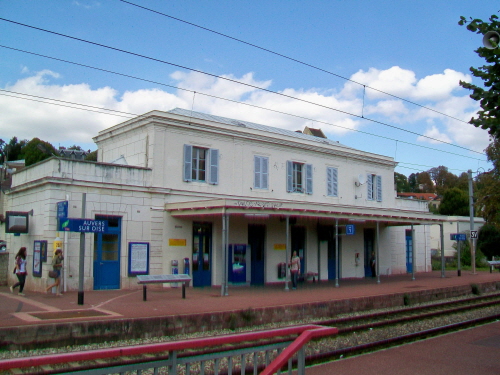
Paris · Painting
Why Van Gogh Came to Auvers
Auvers-sur-Oise · Paris, France
What brought Van Gogh to Auvers-sur-Oise in the first place? In his 37 years, Vincent van Gogh lived at 38 different addresses in four countries: Groot-Zundert, The Hague, Amsterdam, Nuenen, Brussels, Antwerp, London, Ramsgate, Paris, Arles, Saint-Rémy and, finally, Auvers-sur-Oise. In each of these places his traces are easy to find today. Yet he left little behind at any of them: art supplies, a few books and a handful of furniture at best. He longed for a stable life but never found it, and kept moving from place to place.
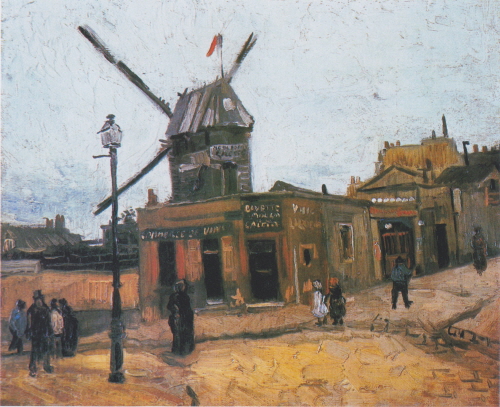
His first 33 years were spent, one might say, with his family. From 1886, at the start of his 34th year, he began living alone in France, drifting from café to restaurant to cabaret and hopping between cheap inns, like many painters of his day. Van Gogh's House in Auvers-sur-Oise gives you a sense of that life. In the 1880s his brother Theo had established himself as an influential art dealer in Paris, and in 1886 invited Vincent to Montmartre. There he mingled with many of the avant-garde painters of the age and broadened his understanding of art. A work from this period is Le Moulin de la Galette.
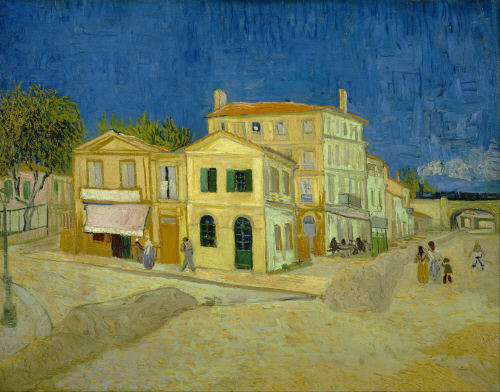
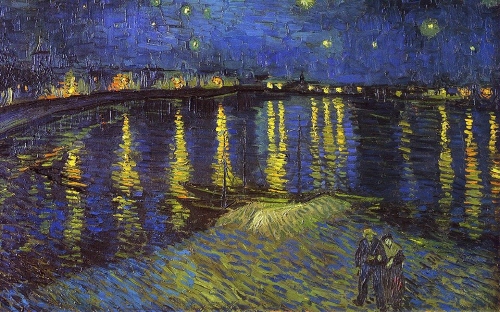
In 1888, at Theo's urging, he moved to Arles. There his distinctive style began to take hold in portraits and landscapes, and paintings such as The Yellow House and Starry Night Over the Rhône date from this time. The hospital in Arles, where he was treated after cutting off his ear following a quarrel with Gauguin during a bout of mental illness, is now a tourist attraction. A year after that treatment he moved to Saint-Rémy in Provence, where his landscapes began to break light into distinct zones. A lesser-known account adds that he could not stay in Arles because of opposition from local residents and had to move.
On 20 May 1890, again on Theo's advice, he arrived in Auvers-sur-Oise, a quiet haunt of Impressionist painters. Energised by his rest at Saint-Rémy and determined to repay his brother, he painted at least one picture a day for his last 70 days. One reason he managed more than 80 works was the care of Dr. Gachet. A physician who also painted, Gachet had been asked by Theo to support Vincent's mental well-being. Many accounts describe Van Gogh as wild, ill-tempered, alcoholic and hysterical, but here, at least, he worked hard to repay what he owed his brother, and listened to Gachet, who offered himself as a friend, while developing his own art. He lodged at the Ravoux Inn for one franc a night, yet in Auvers he lived with a rich inner life, and is said to have been ordering art supplies from Theo right up to the end of his life.
Van Gogh died on 29 July 1890, at the age of 37. Many stories have been told about his death. But the paintings he left behind have never turned their backs on the world.