Paris · Painting
Daubigny's Garden and the Father of Impressionism
Auvers-sur-Oise · Paris, France
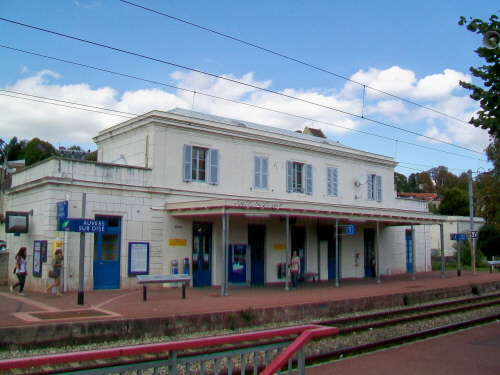
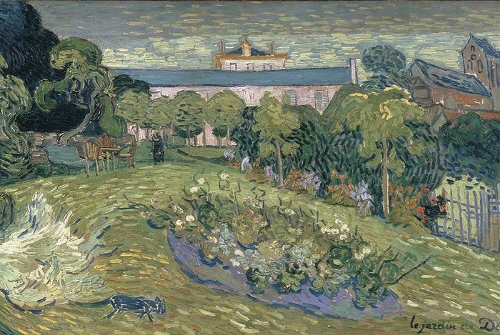
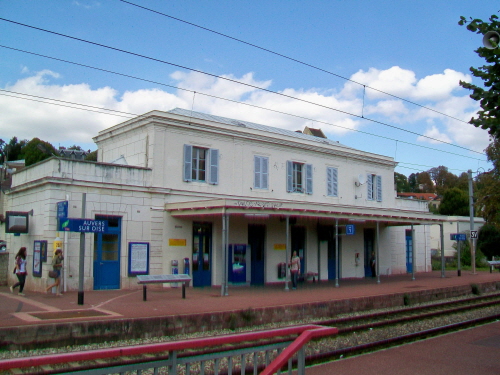
Cross the road from Auvers-sur-Oise station and head left, and in front of number 22 you will find a painting mounted on the wall. It is Van Gogh's Daubigny's Garden, which depicts the house and garden of Charles-François Daubigny, a painter who profoundly influenced Impressionism, from Pissarro, Cézanne and Monet to Van Gogh himself.
Daubigny was born in Paris and belonged to the Barbizon School, alongside Jean-François Millet and Théodore Rousseau. These landscape painters portrayed nature, and the farmers working the countryside, with unvarnished realism. His house and studio were something of a pilgrimage site for artists of the day, Paul Cézanne among them.
In Van Gogh's painting the garden is a dazzling world of green, brimming with life. Daubigny, whom Van Gogh admired and loved, was long gone, yet the garden looks as though its owner were still alive. In a letter to his brother Theo, Van Gogh wrote that this painting expressed his intentions thoroughly. What were they? Perhaps it was to recreate plants, which spend their whole lives rooted in one spot, as writhing, breathing, blazing things. That majestic vitality may have been what he wanted to capture, or the life he longed to live: as fresh as the trees in the picture, blooming like flowers and tough as grass. Even the cat strolling calmly through the garden seems still by comparison. The buildings look plain and modest next to the lush plants, and Daubigny's wife enters the garden in black mourning dress. Van Gogh painted the garden three times, and the second version has no cat. Some gossips have wondered whether that was a hint at his own death.
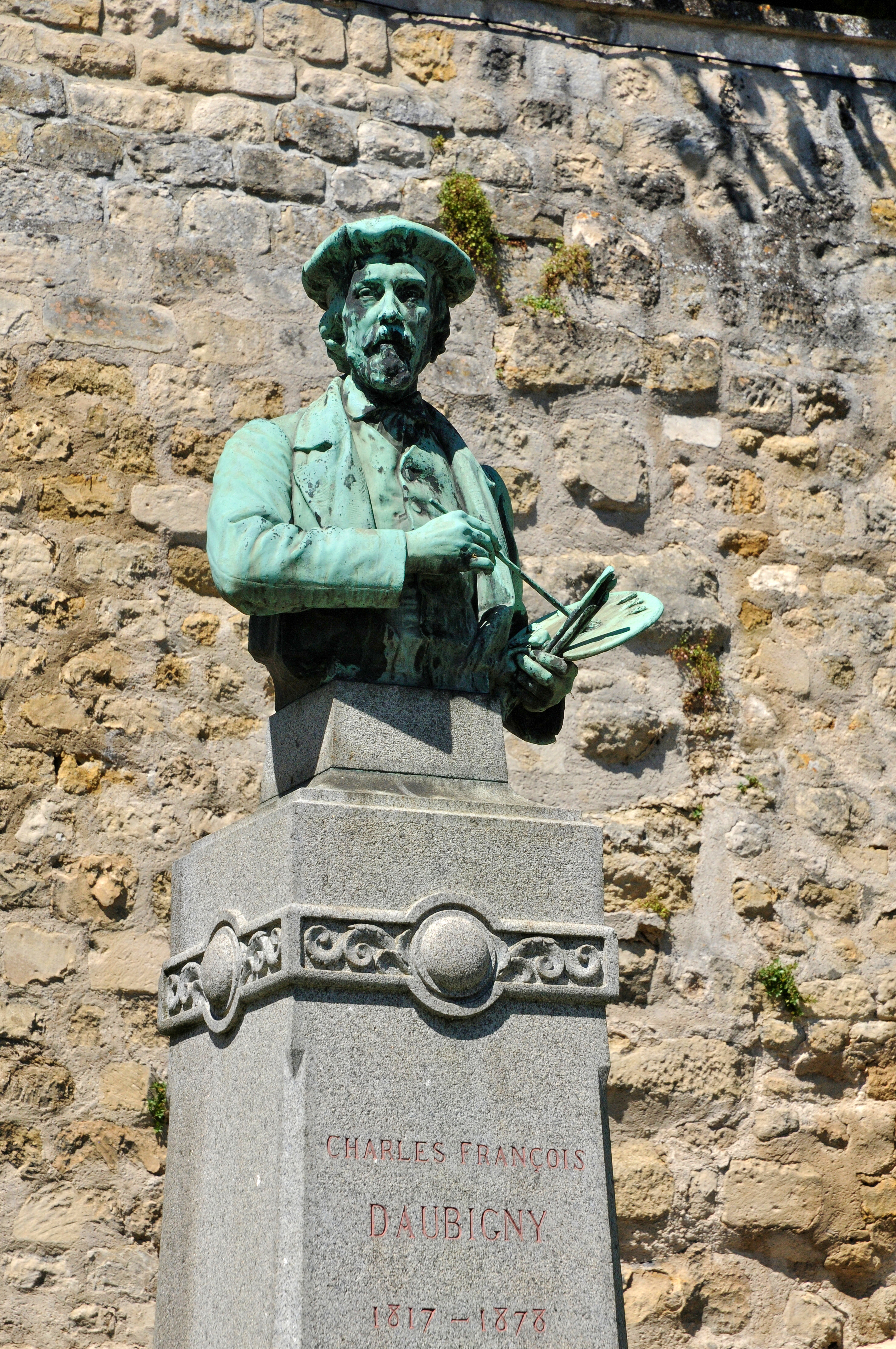
Follow the road to the right, then turn left up the first lane, and you will reach the statue of Daubigny. Van Gogh never met Daubigny, but, like Claude Monet, he was deeply influenced by him. He mentioned Daubigny some 60 times in letters to Theo and often named him among the artists he admired most. Van Gogh took up painting about two years after Daubigny died in 1878, and followed his methods closely. Painting outdoors, en plein air, as Van Gogh and his contemporaries did, was a field Daubigny had pioneered. He carried his easel and paints up into the hills, and even turned a boat into a floating studio, which let him paint the water vividly from the best spot on the shore. Van Gogh always called Monet the greatest landscape painter of his age, but ask him who came before Monet, and he would surely have said Daubigny.
Your next stop is the Church of Auvers. Face the Daubigny statue, bear right and walk a little uphill, and the church will come into view.