Paris · Architecture
A Jewel Box Born of Debt
Sainte-Chapelle · Paris, France
Sainte-Chapelle stands on the Île de la Cité, the same island as Notre-Dame. It's about a kilometre long and 300 metres wide, and you could stroll around it in half an hour, yet it is where Paris began. Two thousand years ago a tribe called the Parisii settled here, and their name eventually became "Paris".
Now picture the island 800 years ago, when it looked nothing like today. Some 15,000 people were packed onto it, with more than twenty churches and chapels, and every morning their bells rang out at once. The eastern tip belonged to God. Notre-Dame was under construction, 70 years in and still nowhere near done, beside Europe's oldest hospital, the Hôtel-Dieu, and the bishop's palace. The western tip belonged to the king, home to the Palais de la Cité, residence of the French monarchs. In the middle of that palace a new building began to rise: Sainte-Chapelle. If Notre-Dame was everyone's cathedral, built over some 180 years, this was a king's jewel box, finished in seven.
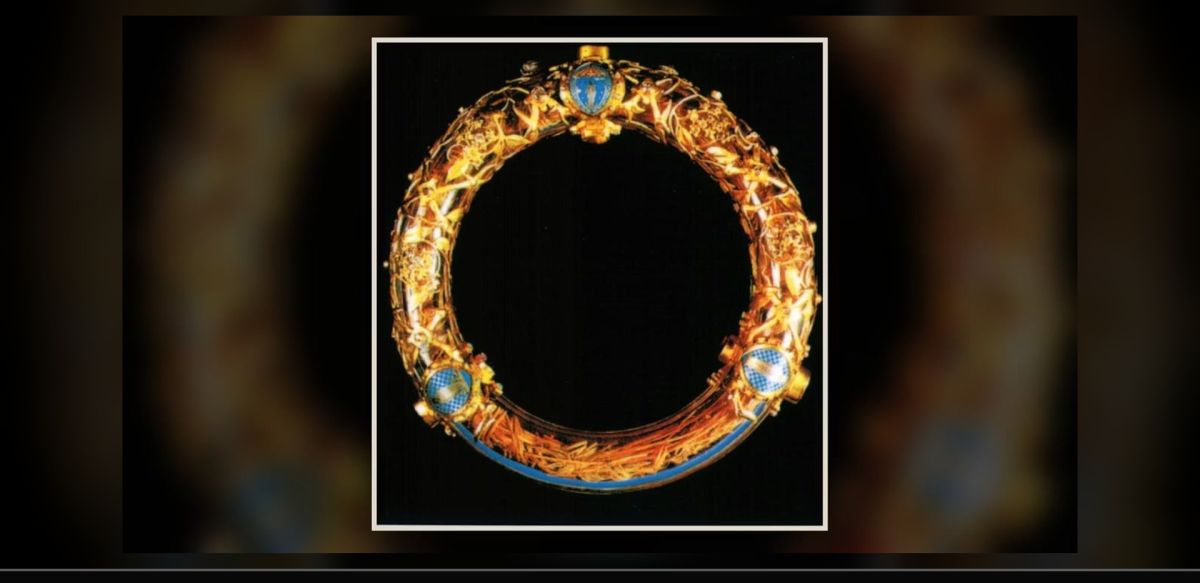
The reason it exists traces back to a letter from a man drowning in debt. In 1237, Baldwin II, the last emperor of Constantinople, came calling at the royal court in Paris. He was emperor of the Eastern Roman Empire in name only, wandering Europe in search of money. The only land he truly ruled was the besieged city of Constantinople itself. His last remaining asset was the relics his imperial chapel had guarded for 600 years, above all the Crown of Thorns, said to have been worn by Jesus on the cross.
In 1238, desperate, Baldwin pledged the Crown to Venetian merchants as security. If the debt wasn't repaid within four months, it would belong to Venice forever. As the deadline neared, he wrote a final letter to his cousin Louis IX, the young king reputed to be the most devout in Europe: pay off my debt, and the Crown is yours.
Louis didn't hesitate. The price was 135,000 livres, nearly half of the French kingdom's annual budget at the time. Over the next few years he went on to buy a piece of the True Cross, the Holy Lance that pierced Christ, and other relics of the Passion, 22 in all. The most sacred authority in Christendom had effectively moved to Paris, and people began calling it the New Jerusalem. The building erected to house these treasures, Sainte-Chapelle, is said to have cost less than half of what the Crown of Thorns did.
Construction began around 1242, and the chapel was consecrated on April 26, 1248, in under seven years. Notre-Dame, rising at the other end of the island at the same time, took 182 years, and many masons gave their whole lives to it without ever seeing it finished. Sainte-Chapelle could be begun and completed within one king's lifetime for two reasons. The first was money: unlike Notre-Dame, funded by citizens' donations, it drew on the royal treasury, which never ran dry. The second was talent: the finest masons, sculptors and glassmakers of the age were put to work at once. Yet the architect of this masterpiece remains unknown to this day.
At the consecration, the king and queen were present, along with the king's mother, Blanche. She had spent her life fighting for her son, and now she watched him complete the holiest space of all. Two months later Louis set off on crusade and entrusted the kingdom to her once more. Blanche died in 1252, while her son was far away in Syria.