Paris · Architecture
Light of Endings and Fulfillment: The West Rose Window
Sainte-Chapelle · Paris, France
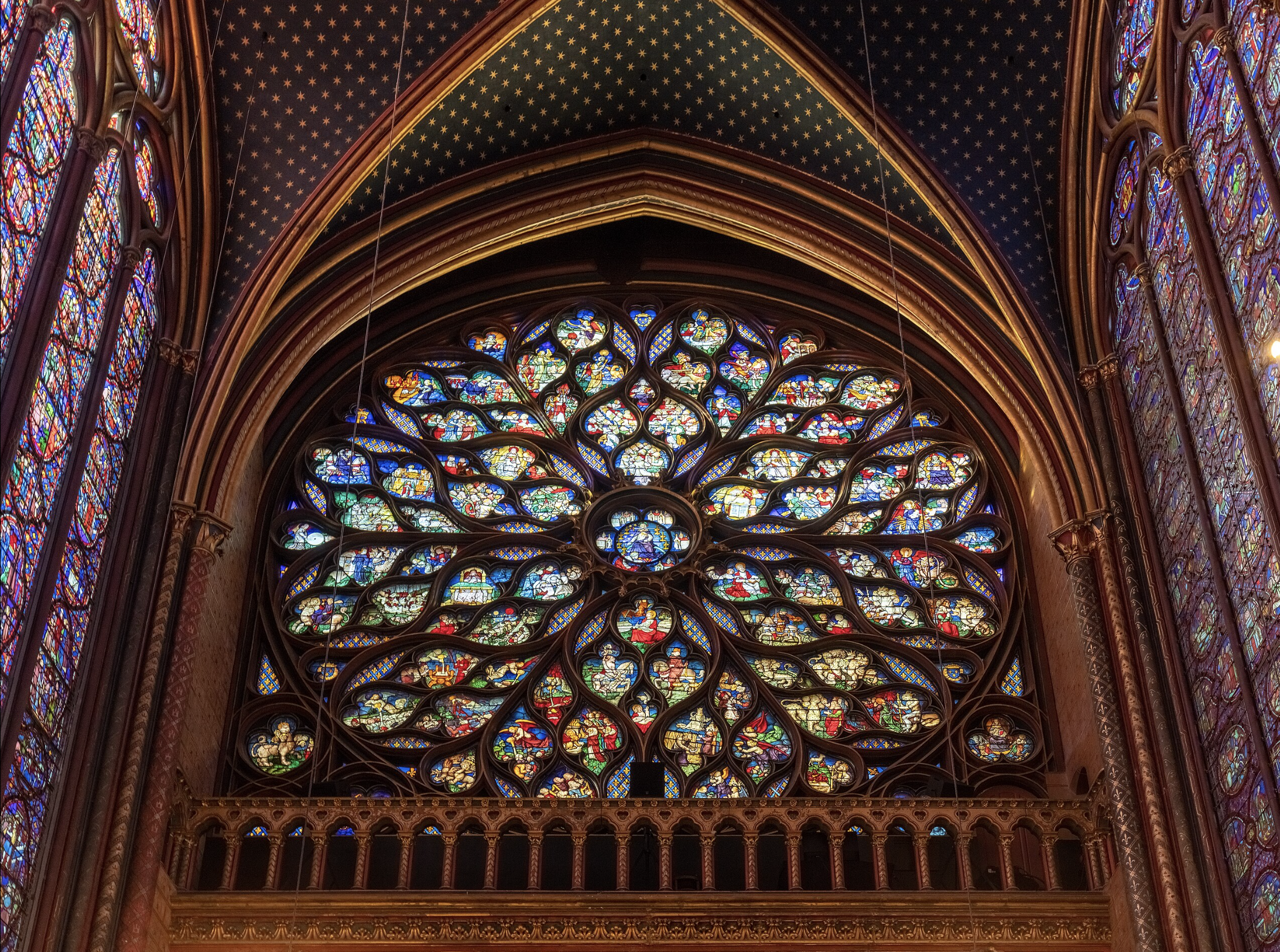
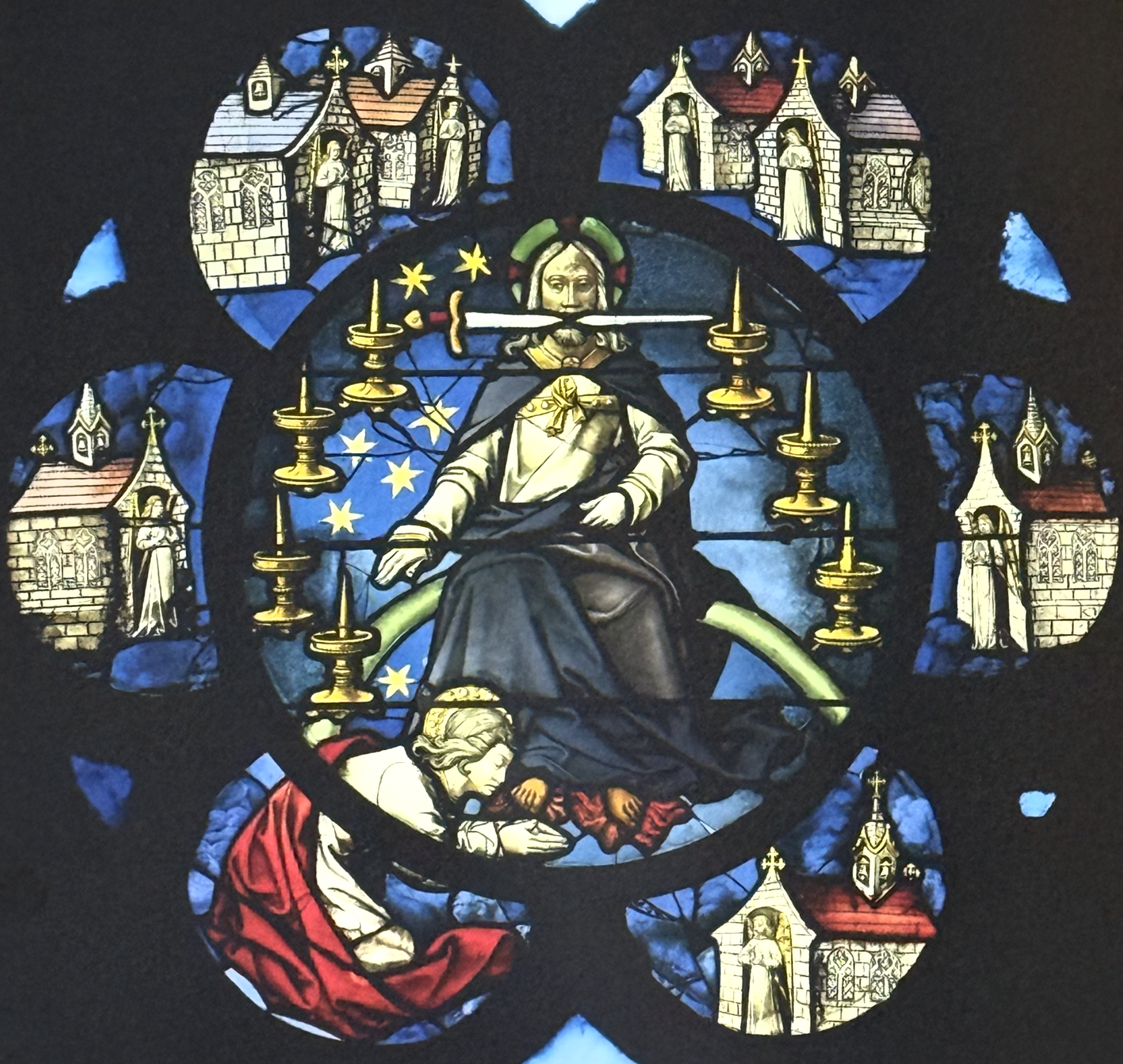


While the stained glass around the chapel tells of the Bible's beginnings and long history, this huge rose window depicts its final book, Revelation. At the center, Jesus stands with a sword in his mouth, surrounded by seven golden lampstands and seven stars. At his left foot, Saint John lies prostrate.
Put very simply, Revelation records John's vision of a prophecy: after the end of the world and the Last Judgment, Jesus returns and the Kingdom of God begins. In other words, the present world ends and a new one starts. The sword in Jesus's mouth isn't a real sword; it symbolizes his authority and judgment, meaning that the word of God he speaks will judge and condemn evil. The window shows a world so corrupt that people worship a seven-headed dragon that mimics God. At the bottom center, a rider on a white horse, symbolizing death, and a rider holding scales, symbolizing famine, herald the start of calamity. An earthquake is shown too. John receives these revelations in a posture of humility: lying face down.
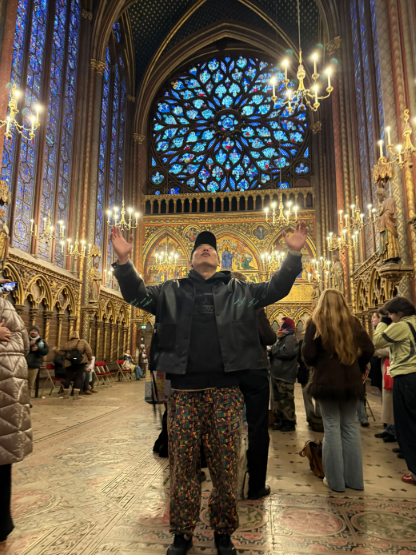
It's also worth noting that this rose window faces west. What happens in the west? The sun sets. Just as today must end with sunset before tomorrow can arrive, the placement can be read as saying that the present world must end before a new one can begin.
The rose window was made in the late 15th century, about 250 years after the surrounding 13th-century glass, because the original had been damaged over time. Made with technology 250 years more advanced, it is more finely detailed than the other windows, and while they are dominated by red and blue, here you'll notice plenty of yellow. You can also spot the coat of arms of Charles VIII, the king at the time the window was made. The part marked in red is the royal emblem of Charles VIII of the House of Valois. Like Louis IX, he wanted to leave his mark here.
With the final story of the Bible, the tour of Sainte-Chapelle comes to an end.