Paris · Architecture
A Bible Written in Light: The Stained Glass
Sainte-Chapelle · Paris, France
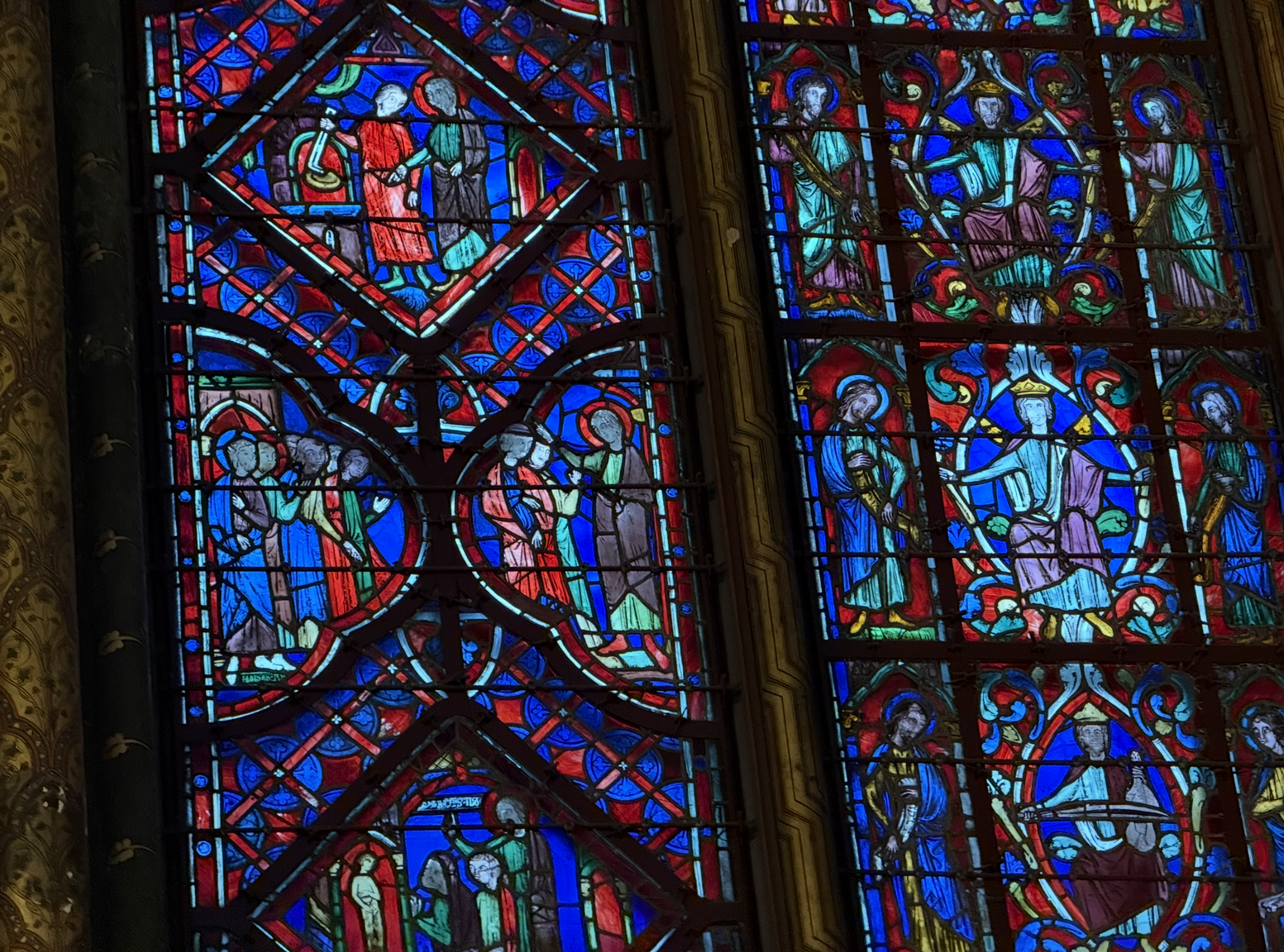

These stained-glass windows hold no fewer than 1,113 scenes from the Bible, a Bible written in light. Starting with Genesis at the entrance end, they run in order through to the Book of Revelation. European churches have so much stained glass and sculpture because, in an age when few people could read, images were a way to spread the word of the Bible.
What's interesting is that this Upper Chapel was open only to royalty and the chosen few, literate elites. So why fill it with so many images? To show overwhelming beauty. The glass doesn't just convey biblical knowledge; it was meant to fill visitors with awe and wonder as they entered, and so to communicate the authority of the king.
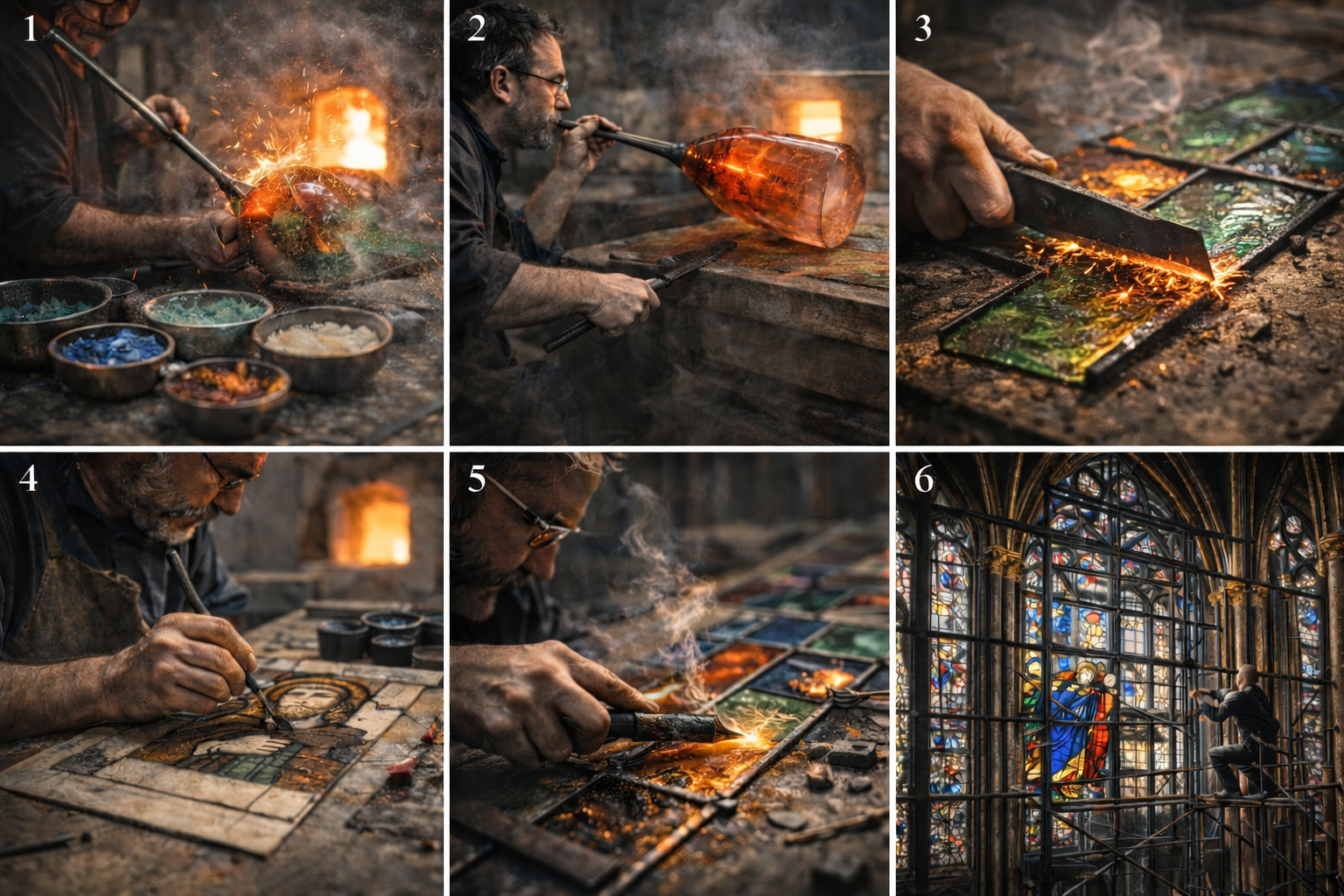
So how was this enormous work made some 800 years ago? First, copper (for green) or cobalt (for blue) and other materials were added to a molten mix of sand and ash to form a lump of colored glass. Second, the lump was attached to the end of a pipe and blown by mouth into a cylinder, which was then cut across its width and flattened into a sheet of glass. Third, the sheet was cut along a sketch with a red-hot iron. Fourth, details such as facial expressions and the folds of clothing were painted on by hand with black pigment. Fifth, the finished pieces of glass were soldered together into one large scene. Finally, iron bars were set tightly between the windows to hold the huge glass walls in place.
Now let's look closely at three of these windows. Start by heading to the Genesis window, right next to the entrance.