Paris · Architecture
The Reason for Its Existence: Relics and a Jewel Box of Light
Sainte-Chapelle · Paris, France
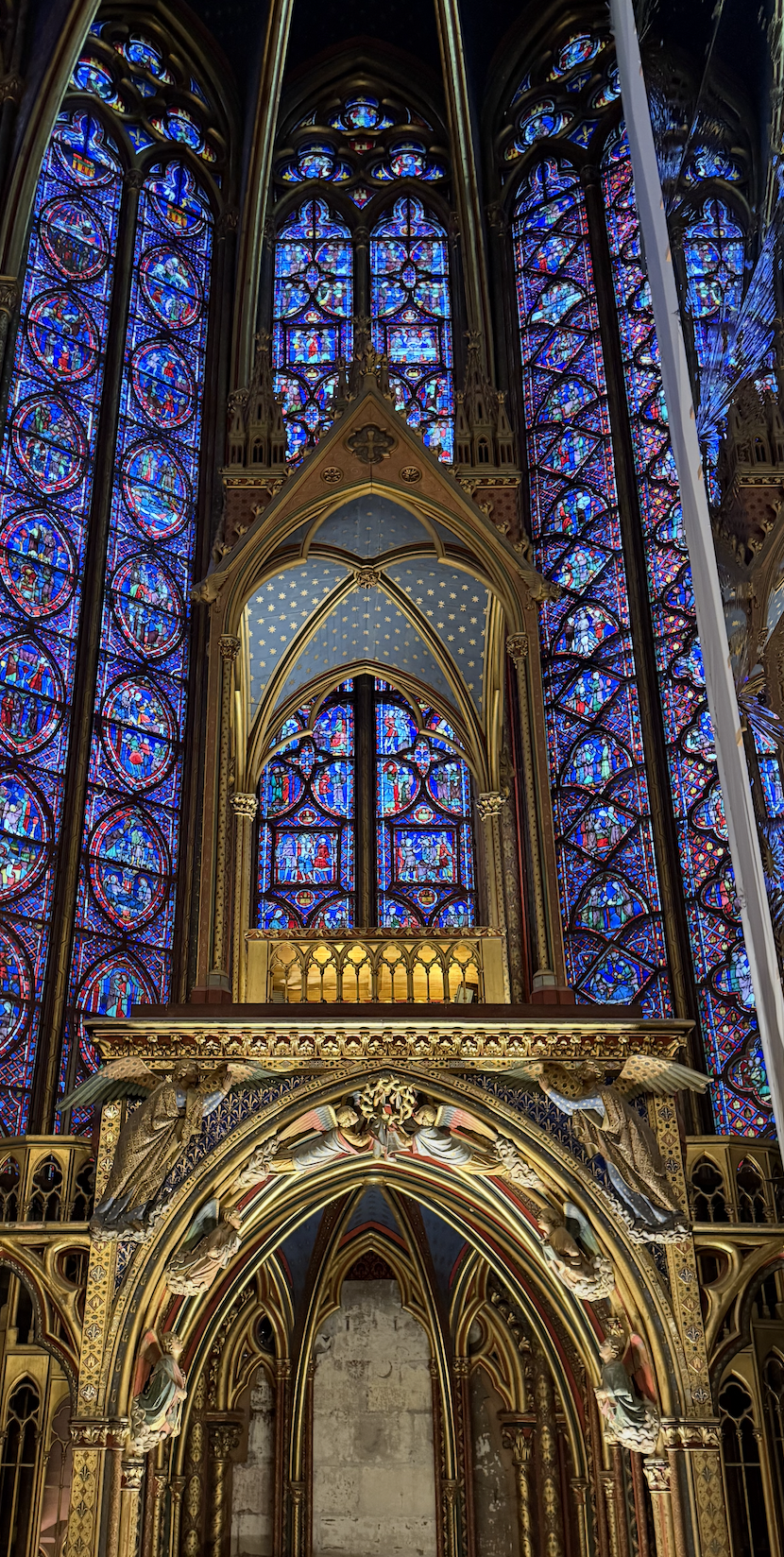
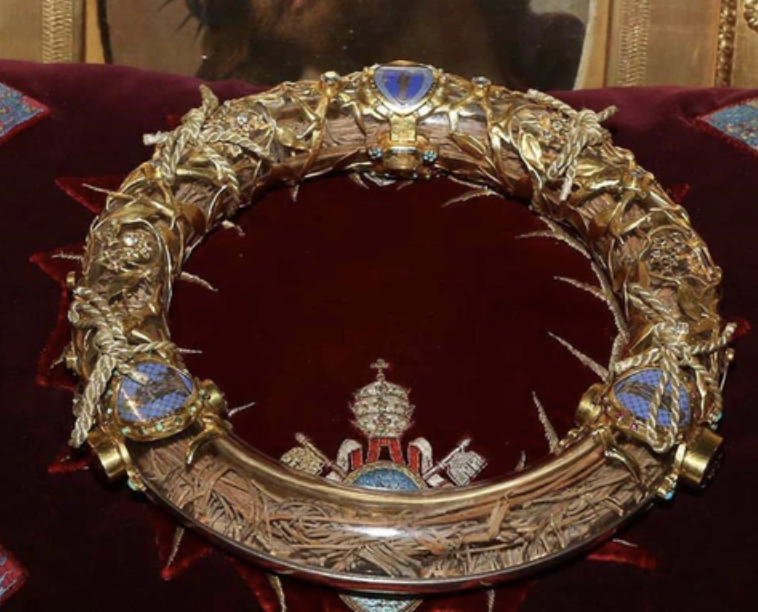
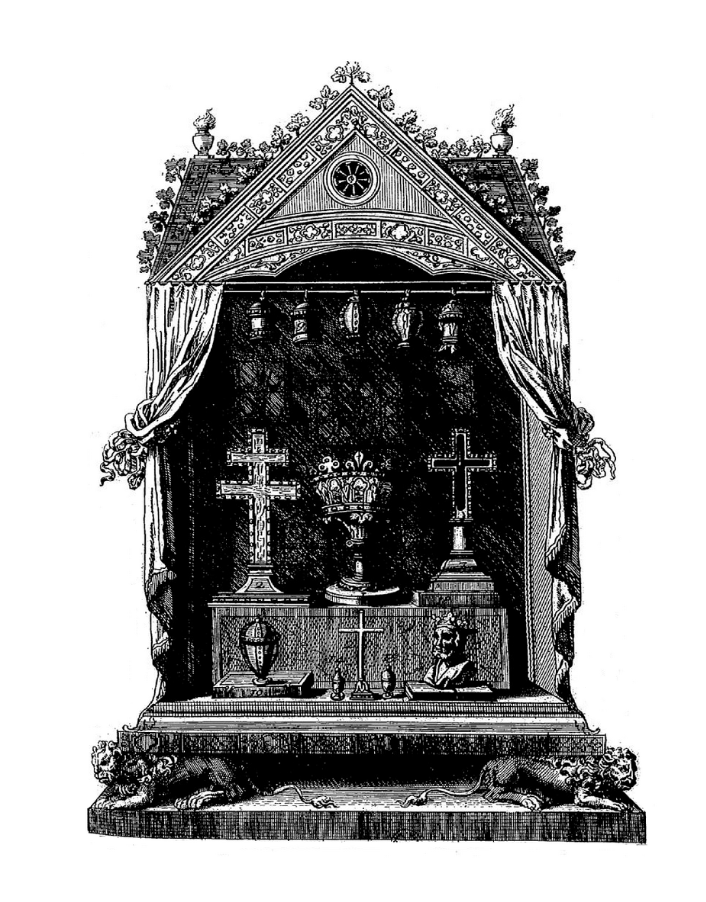

The altar ahead is the heart of Sainte-Chapelle and the reason it exists. It once held the Crown of Thorns that Jesus wore when he was crucified. Besides the crown, kept in a glass case adorned with gold, the chapel housed relics tied to the Passion: a fragment of the cross, part of the lance said to have pierced his side, the purple robe he wore, the reed staff and the Holy Blood. Sainte-Chapelle was built to hold them. In effect, Louis IX had bought the ultimate jewel, the Crown of Thorns, and built the largest, most beautiful jewel box in the world, in the form of architecture. That is why Sainte-Chapelle is known as the "jewel box of light."
In those days, relics were precious assets that symbolized a state's authority. According to tradition, Louis IX spent about 40,000 livres on the chapel, while the relics cost 135,000 livres, more than three times as much. To display them properly, the king had a huge shrine, called the Grande Châsse, built high up behind the altar. It was 2.7 meters long and covered in silver and gilded copper; when the multicolored light from the stained glass bounced off this golden case, the relics are said to have glowed like a mysterious flame. The shrine itself reportedly cost another 100,000 livres. All of this gives a sense of how this was a project on which the fate of the nation seemed to hang.
Today, though, the altar is bare. Even this sacred place, which must have seemed eternal, could not escape the great wave of the French Revolution in the 18th century. As a symbol of religion and royal power, Sainte-Chapelle became a prime target of the revolutionaries and was damaged; the relics were scattered and the Grande Châsse was melted down entirely. Fortunately, the most important relic, the Crown of Thorns, survived and was recovered, and it is now preserved in the treasury of Notre-Dame Cathedral. You can no longer see relics here, but the sculpture of an angel holding the Crown of Thorns beneath the altar hints that they were once kept in this very spot.