Paris · Architecture
The History of Sainte-Chapelle
Sainte-Chapelle · Paris, France

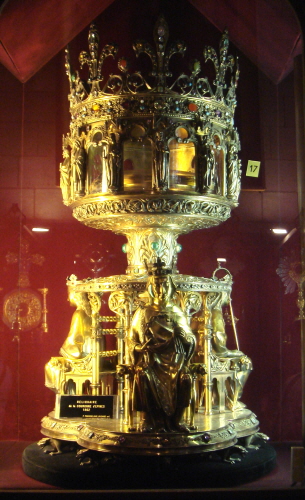
Sainte-Chapelle, one of Paris's loveliest Gothic chapels, was begun in 1246 and completed in 1248. Its architect is unknown, and it has been a French national historic monument since 1862. The name means "Holy Chapel". It was built by Louis IX, a crusader and reputedly the most devout king in France, to house relics he had bought in Constantinople at a staggering price, including thorns from the crown of thorns and a piece of the Cross. The emperor of Constantinople owed money to Venetian merchants and had pledged the relics as collateral, so they reached Paris by way of Venice. Louis welcomed their arrival with a week-long festival. Until Sainte-Chapelle was finished, the relics were kept at the Château de Vincennes, and today around 30 of Louis's relics, including the Crown of Thorns, are held at Notre-Dame Cathedral. They are said to have come through the 2019 fire unharmed.
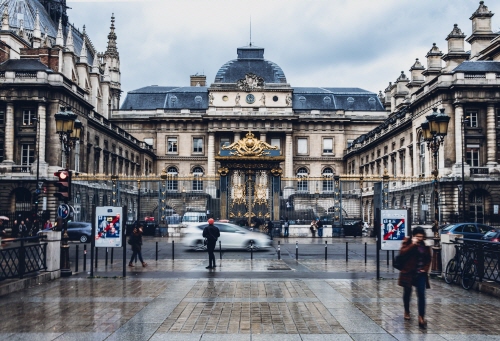
The chapel stands in the courtyard of the Palais de Justice, France's highest court, which served as a royal residence until the late 14th century. Its upper floor was reserved for the royal family. Later generations didn't share Louis's piety, though, and the upper chapel fell into disuse, even serving as a granary just before the French Revolution in 1789. It then became a legal archive, with so many filing cabinets that the stained glass was said to be hidden from view. After being put to so many uses with little regard for its upkeep, it needed a major restoration in the 19th century.
Along with the Conciergerie, Sainte-Chapelle is one of the best-preserved early works of the Capetian dynasty, France's third royal line. It is French Gothic, and specifically Rayonnant. French Gothic first appeared in 1140 and stayed in vogue until the mid-19th century, with Notre-Dame and Amiens Cathedral among its landmarks. The Rayonnant phase, from 1240 to 1350, refined massive, heavy Gothic building into something elegant and almost dreamlike, minimizing the sense of material weight. Sainte-Chapelle is regarded as the finest example of the style. Gothic buildings usually overwhelm with sheer size, but this one isn't large. Its beauty and craftsmanship are so fine that it is often called the most beautiful building in France.
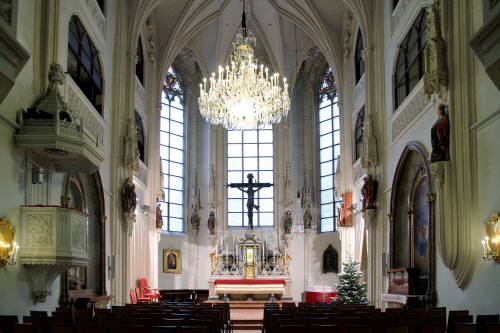
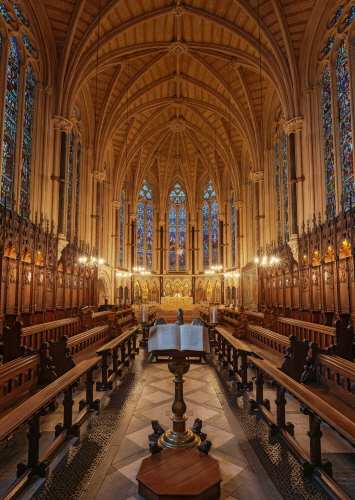
By hanging masterpieces of art that he sponsored in his palace chapel, Louis IX established himself as the most influential king among the leaders of Western Christendom. Sainte-Chapelle borrowed two ideas: the passage that let the emperor of Constantinople slip unseen between his palace and Hagia Sophia, and the two-story layout of Charlemagne's palace chapel in Aachen, Germany. As Louis's influence spread across Europe, so did the chapel's fame, and buildings such as the Hofburg Chapel in Vienna and Exeter College in Oxford are said to show its influence.
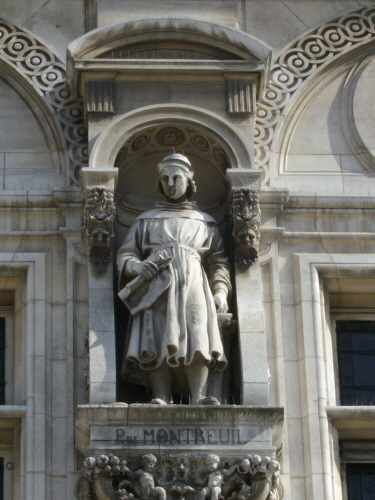
Oddly, the name of the chief architect has not been recorded. Until the 19th century it was attributed to Pierre de Montreuil, who remodeled the Abbey of Saint-Denis and completed the south transept façade of Notre-Dame, but today's scholars no longer favor him and propose various other architects.