Paris · Architecture
Sainte-Chapelle: Inside and Out
Sainte-Chapelle · Paris, France
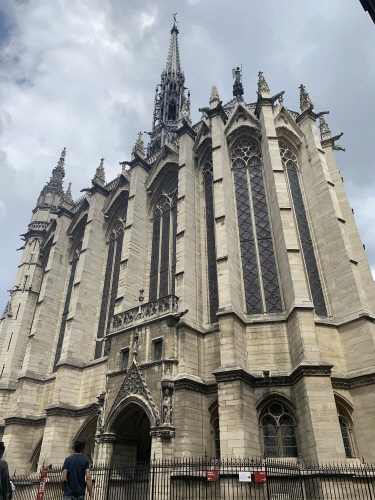
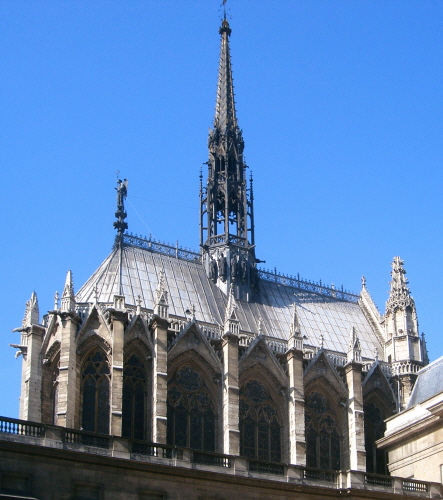
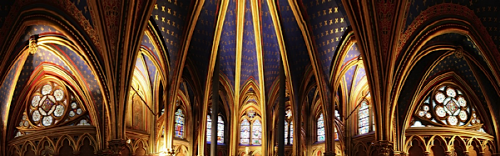
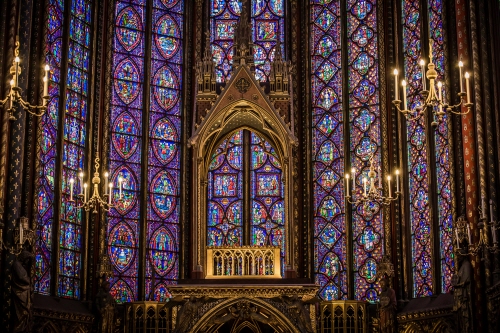
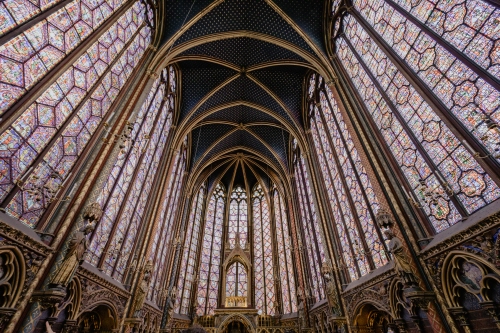
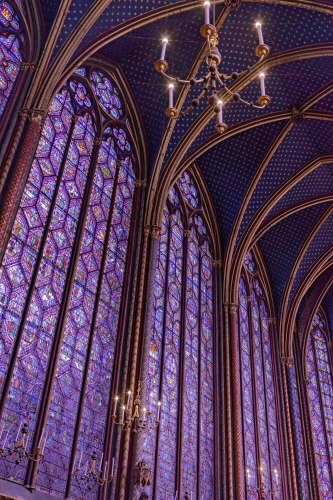
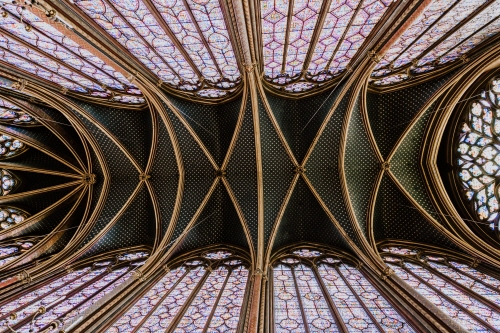
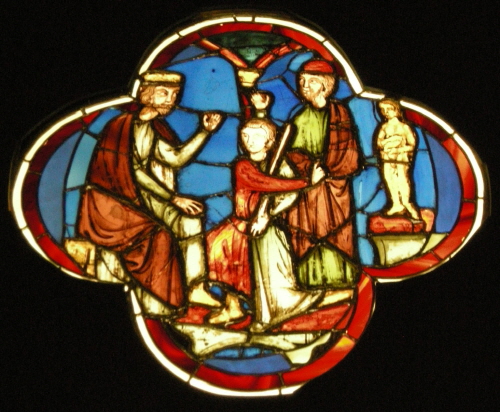
Start with the exterior once you reach the Île de la Cité. Gothic architecture usually calls to mind tall spires reaching for heaven, but Sainte-Chapelle's spire isn't especially high, and the original chapel built by Louis IX didn't have one. The current 75-meter spire was added in 1853 under Napoleon III. The Paris-born scholar Jean de Jandun wrote in the 14th century that entering Sainte-Chapelle felt like stepping into the most beautiful room in Paradise, and the reason is probably the stained glass. If you had to pick the chapel's finest feature, it would be the glass, which depicts scenes from the Old and New Testaments and lives up to its reputation as the most spectacular 13th-century stained glass in the world.
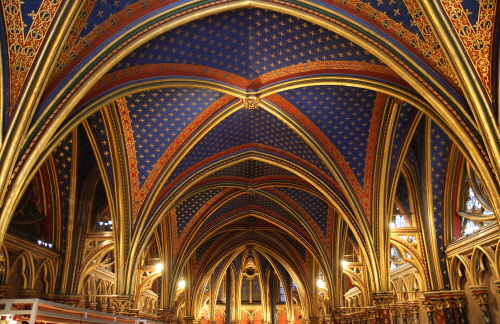
There is glass on both floors. The windows below harmonize with the crossed ribs typical of Gothic style, but the upper chapel's glass is the real star. Inside, the ground floor holds a small gift shop and the space where palace staff once worshipped. It's quite ornate, yet once you climb the stairs to the upper chapel you'll forget everything you saw below. Still, don't rush past the lower level, which has painted columns and rib vaults that give it a crypt-like feel.
The upper chapel is 33 meters long, 10.5 meters wide and 20.5 meters high at its peak. Its stained glass is the oldest in Paris, renowned for its rich colors and fine detail. Fifteen 13th-century windows, each 14 meters tall, fill the nave and the semicircular apse at the chapel's end. The walls between the columns are all window, so on a bright day the effect is beyond words. The glass covers a full 600 square meters, so some say that where other churches are stone buildings with stained glass set into them, Sainte-Chapelle is stained glass with stone as its frame. Step inside and glass fills your entire field of view; you almost have to look away on purpose to notice the other structural details.
Another thing that makes this glass special is how it retells the Bible in detail. The windows of the eastern apse show the New Testament: the Passion of Christ in the center, the infancy of Jesus on the left and the life of John on the right. The nave windows to the west, by contrast, tell of ideal kings and queens from the Old Testament. Starting with Genesis on the north wall and running through Exodus, Leviticus, Numbers, Joshua, Deuteronomy and Judges, they continue on the south wall with Jeremiah, Judith, Esther and Kings. The last window at the far end of the south wall shows the rediscovery of the relics of Christ, their miracles, and their journey into Louis IX's hands. In all, 1,134 scenes are depicted, so take your time. As befits a chapel built to hold relics, the walls are kept to a minimum and glass is used wherever possible, so the whole chapel feels like one big jewel box. From a distance the 15 great windows look identical, but each has a different pattern, which keeps the eye interested and shows off the artistry.
How is stained glass made, anyway? First comes a highly detailed sketch, drawn precisely because the glass must be cut to fit it. Next, large quantities of glass are colored, using only five colors: blue, red, yellow, green and purple. The color comes from metals added to the glass itself: cobalt for blue, manganese for purple and antimony for yellow. The colored glass is then cut to the sketch, with heated iron in the 13th century and later with a diamond. After that, extra detail is painted on: facial expressions, the folds of clothing, the texture of fabric. Artists used a fine brush to apply a gray paint made of glass powder and iron filings mixed in water and vinegar, layering it to create shading. Once the painting is done, the glass is fired at 600 degrees and the pieces are joined with long strips of lead. The weight and size of each section were watched carefully, to keep any one panel from growing too heavy and collapsing. The sections are then assembled into a single window and fixed with small iron fittings, and a finished window usually contains more than 100 pieces. Analysis of the remaining pigments with modern techniques suggests the original colors were much brighter and deeper than what we see now, and far more saturated than the stained glass popular in the 19th century.
There is more here than glass. Larger-than-life statues modeled on the Twelve Apostles stand inside, six of them replicas; the damaged originals are kept in the Museum of the Middle Ages in Paris's 5th arrondissement. Look, too, for the textile hangings dyed in vivid colors to match the glass. The west window holds a rose window, added in 1490 within the tracery of the upper chapel, that rivals the stained glass in beauty and tells the story of the Book of Revelation. The pieces in both the windows and the rose window are intricate and small, so the longer and more patiently you look, the more of the stories you will see.
How was this seemingly sturdy chapel restored? Sainte-Chapelle suffered heavy damage during the French Revolution in the 18th century, and most of the structure has been restored, but more than two-thirds of the windows are original. The mid-19th-century restoration was so meticulously documented that it is still held up as a model of monument restoration, with the aim of returning the chapel as closely as possible to its original appearance by consulting every record. Since the 1970s, conservation work has continued piece by piece, because huge numbers of visitors and factors such as pollution have been damaging the glass. In 1945 a layer of varnish was applied to protect it from dust and scratches, but it gradually clouded and ended up harming the glass. So in 2008 a more ambitious seven-year plan began, costing 10 million euros, to clean and conserve all the stained glass, clean the stone decoration of the façade and repair some of the statues. Half the budget came from individual donations. A layer of heat-formed glass was laid over the windows to preserve them, and the work finished in 2015, timed to the 800th birthday of Louis IX, who commissioned the chapel.