Paris · Architecture
Sacré-Cœur Basilica: The Basics
Sacré-Cœur Basilica · Paris, France
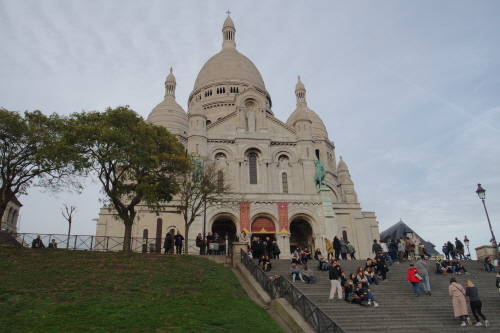
Sacré-Cœur is French for "Sacred Heart", and the heart in question is that of Jesus. Churches dedicated to a sacred heart often honor the heart of the Virgin Mary, and when this basilica was built, many churches were being named for or dedicated to Mary. Naming this one for the Sacred Heart of Jesus, in tribute to his love for humankind, gives it a slightly different meaning.
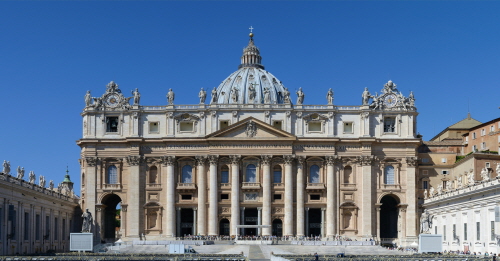
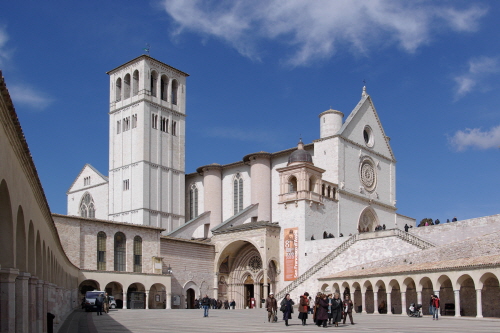
Its official name is the Basilique du Sacré-Cœur, a Roman Catholic pilgrimage church. So why a basilica rather than a cathedral, as at so many European churches? A cathedral is the principal church of a diocese, led by a bishop, while "basilica" is a title the pope grants to certain churches as a special privilege. The word itself goes back to the courts where, in ancient Greece, judges ruled in the king's place; traces of a basilica still stand at Pompeii, so the term has been in use since before the Common Era. Several churches built over the tombs of saints carry the title, including St. Peter's in Rome and St. Francis's in Assisi. Church law divides basilicas into major and minor, and only four in the world are major basilicas, all of them in Rome, ranking above every other place of worship. Cathedrals, by contrast, are mostly medieval and belong to a bishop's diocese. Sacré-Cœur is not a diocesan church at all but a pilgrimage site and independent sanctuary devoted to the Sacred Heart. Construction began in 1876, the building was finished in 1910, and it was formally consecrated in 1919.
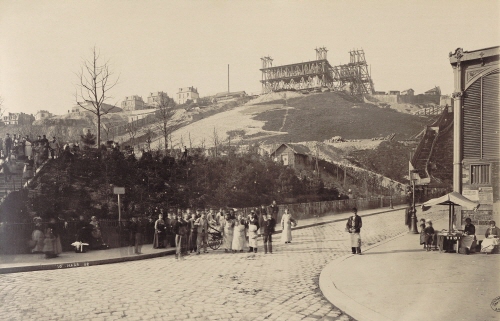
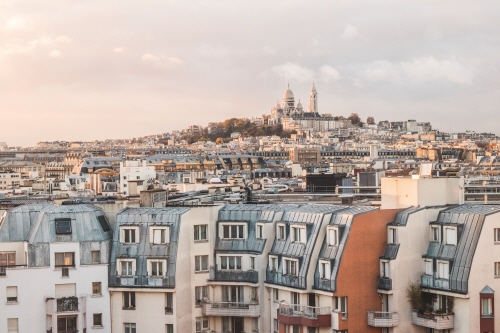
The basilica crowns Montmartre hill (the Butte Montmartre), the highest natural point in Paris at 130 meters. Counting the hill, it is the second-highest spot in the city after the Eiffel Tower, which is well over 300 meters tall. The dome and bell tower rise 91 meters, and the site sits 213 meters above sea level, with the 210-meter Montparnasse Tower just behind.
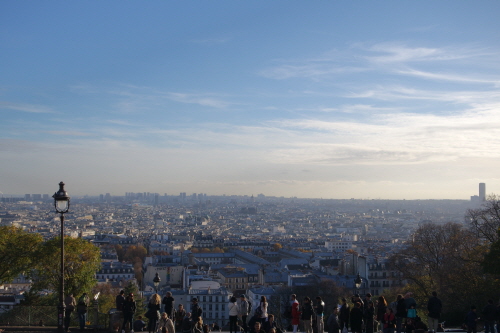
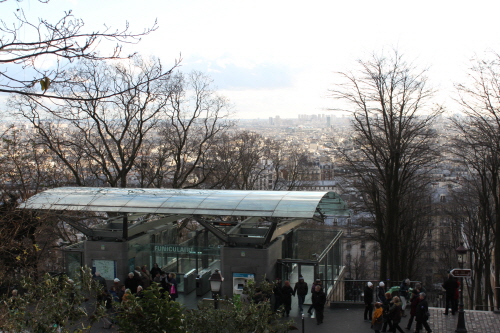
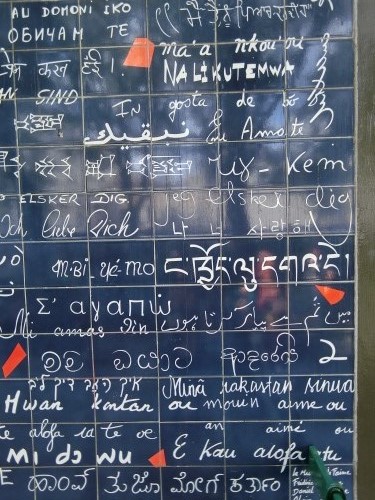
In front of the church, a gently sloping hillside is laid out with stairs, viewpoints, resting spots and a popular meeting square. From here you can see about 30 kilometers to the south, so plenty of non-Catholics come just for the view of Paris. If you walk up via Pigalle and Abbesses rather than taking the funicular from Anvers station, stop for a photo at the deep-blue Wall of "I Love You" right outside Abbesses station. It fills an entire wall with the words "I love you" in languages from around the world.