Paris · Sculpture
A Monument That Doesn't Depict Its Subject: The Whistler Monument
Musée Rodin · Paris, France
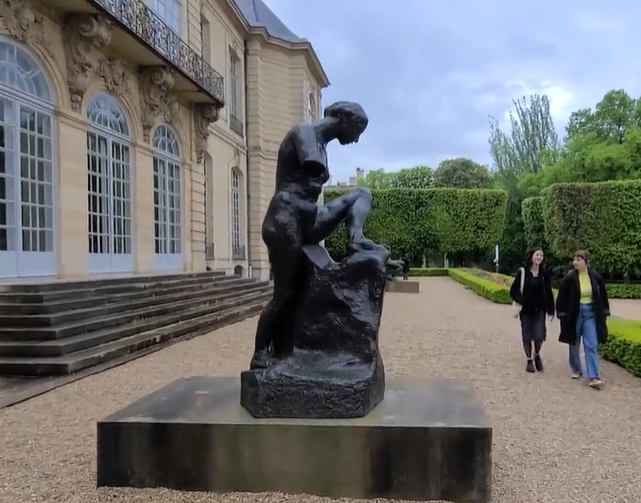
This sculpture is a monument honoring the painter James McNeill Whistler. In 1905, Rodin was commissioned to create a tribute to the famous American artist. Weighing how to approach it, Rodin made a choice that was highly unusual for the time: rather than depicting Whistler directly, he would sculpt a muse to symbolize him instead. Part of what led him there was the fact that Whistler had reportedly said, before his death, that he didn't want a monument raised in his memory. It also helped that Rodin, as president of the International Society of Sculptors, Painters, and Gravers at the time, held a position few people were inclined to challenge — which gave him the freedom to attempt something this unconventional.
The model for the sculpture was Gwen John, the artist who would later become Rodin's lover. In his later years, Rodin drew increasingly on ancient Greek and Roman sculpture, and this piece is no exception — inspired by the Venus de Milo at the Louvre, he left the figure without arms.
When it was unveiled, the finished sculpture received widespread praise. As one of the first instances of a monument honoring its subject through a symbolic figure rather than a direct likeness, it's regarded as a work of considerable significance.