Paris · Sculpture
Three Rejections Made Him: The Turbulent Life of Auguste Rodin
Musée Rodin · Paris, France
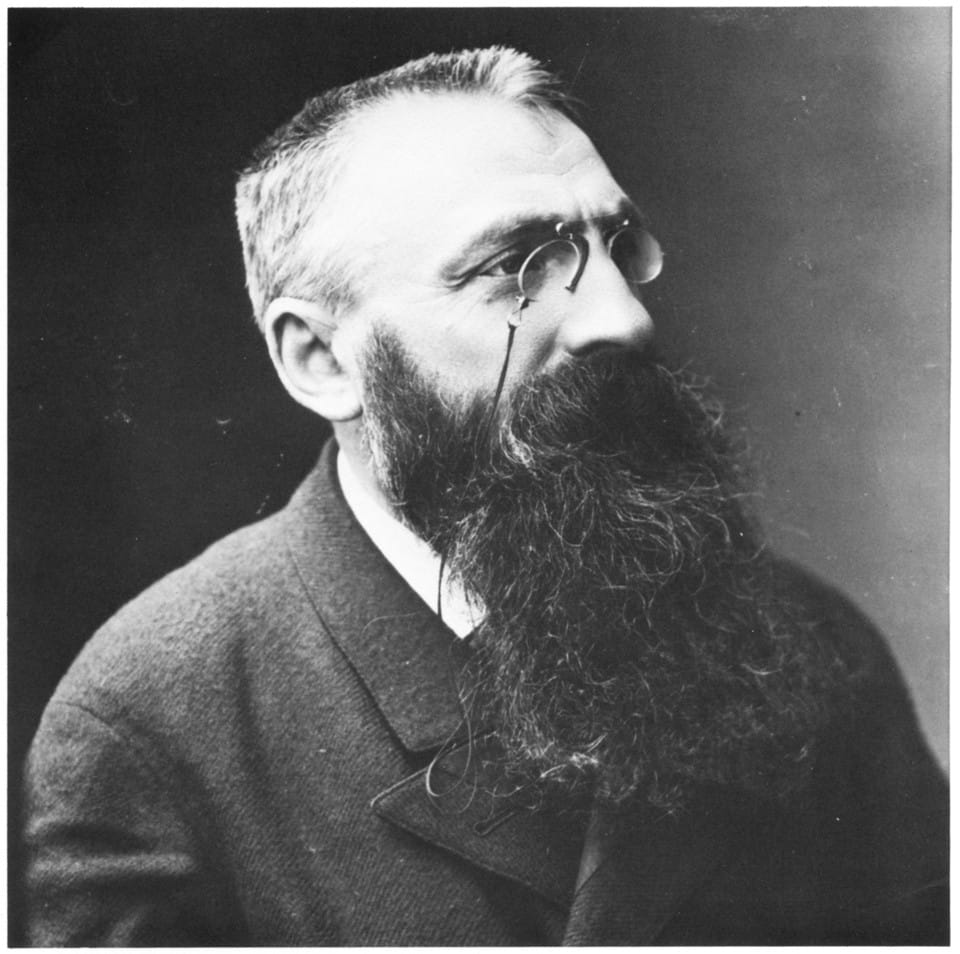
Rodin was born on November 12, 1840, in Paris. His father worked as a civil servant, so while the family wasn't wealthy, Rodin still got an education — and when his artistic talent showed early, his father enrolled him at the Petite École. There he studied drawing and sculpture before applying to the École des Beaux-Arts, France's most prestigious art school. He was rejected three times.
Rodin had been confident his talent was more than enough to get in, so the blow hit hard. By some accounts, the admissions judges at the time favored Neoclassical work, and Rodin's submissions, shaped by his own distinctive style, simply didn't match what they were looking for. In hindsight, that rejection may have worked in his favor — never receiving a formal, conventional sculpture education meant his individual style stayed intact. Had he been admitted, he might have ended up just another ordinary sculptor.
Having given up on school, Rodin had to find work right away to support himself. Around this time, his sister Maria died of peritonitis. Rodin blamed himself, convinced her death had been brought on by stress over a man he had introduced her to, and the guilt consumed him. To atone, he decided to become a priest. But Father Eymard, who had taken Rodin under his wing, judged that sculpture suited him far better than the priesthood, and guided him back toward art. Without that decision, the world might never have known Rodin the sculptor.
Around the same time, Rodin met a woman named Rose Beuret and began living with her. When they had a child together, he found himself needing to earn a living rather than keep studying, so he took work as an assistant in the studio of the sculptor Carrier-Belleuse. For Rodin, sculpture during this period was less an artistic pursuit than simply a way to get by. Fortunately his talent was undeniable, and work kept coming in from various quarters. After nearly twenty years of steady work, his finances had stabilized enough that he traveled to Italy — and seeing the masterpieces of Renaissance giants like Da Vinci and Michelangelo with his own eyes reignited his artistic passion.
Back in Paris, he created The Age of Bronze. The figure was so lifelike that it sparked controversy over whether he'd cast it directly from a real body — a dispute that caused him considerable stress, but also the very thing that first made his name widely known.
From there, Rodin's career as a sculptor proceeded fairly smoothly, with only occasional turbulence. During this period, while still with his longtime partner Rose, he carried on a sixteen-year affair with Camille Claudel. When the two met, Camille was 18 and Rodin was 41. They eventually parted ways, Rodin returned to Rose, and Camille, devastated by the breakup, was eventually committed to a psychiatric hospital, where she spent the rest of her life. Rodin later had a relationship with a woman named Gwen John, all while he and Rose remained a couple. It wasn't until 1917, when Rodin was 77, that he and Rose formally married — but Rose died just two weeks after the wedding, and Rodin himself passed away from old age shortly after.
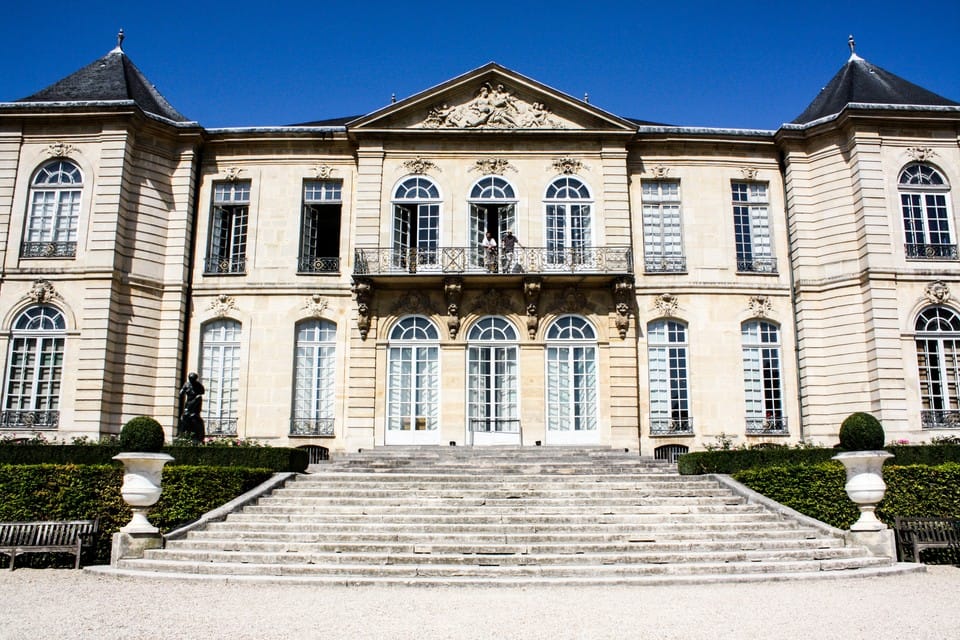
Before his death, Rodin donated all of his sculptures and personal collection to the French state, on the condition that the building he had used as his studio be turned into a museum. As a sculptor, he achieved enormous success, built considerable wealth, served as president of a sculptors' society, and was awarded the Legion of Honor, France's highest distinction. Among all the artists we know of, very few managed to secure both that level of wealth and that level of honor — which gives some sense of just how beloved a sculptor he was across the world.