Paris · Sculpture
From Mansion to Convent to Museum: 200 Years of the Musée Rodin
Musée Rodin · Paris, France
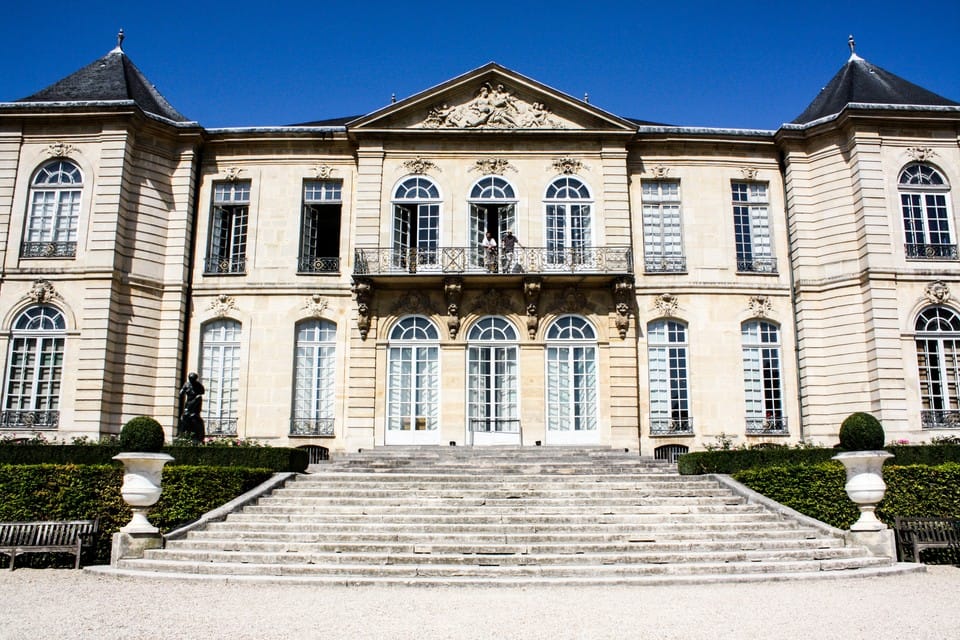
The site where the Musée Rodin now stands was originally a private mansion built in the 18th century. France was going through an era of economic prosperity at the time, with newly wealthy families emerging everywhere. When the royal court and the aristocracy relocated to Versailles, central Paris emptied out, and demand for grand private mansions exploded among the wealthy who stayed behind, eager to display their social standing.
One of them was Abraham Peyrenc de Moras, a bourgeois who had made his fortune in finance. He bought the plot where the museum now sits and commissioned the celebrated architect Jean Aubert to build a mansion in the latest style — the very building that would, around 1732, become the origin of what is now the Musée Rodin. In other words, this was originally nothing more than a house for someone to live in.
Over the roughly two centuries that followed, the building was put to all kinds of uses. It served as a residence for various aristocrats, became property of the Republic during the French Revolution and was used as embassies for several countries, and in 1820 was sold by the Duchesse de Charost to three nuns, becoming a building for the Society of the Sacred Heart. By the 1900s it had become residential again — and because of its sheer size, it was divided up and rented out to multiple tenants, most of whom were artists. Rodin was one of them. He rented several rooms there to use as his studio and to store his personal collection.
In 1909, the building faced the threat of being sold off piecemeal, but it was saved by people determined to protect Paris's cultural heritage, and the French state ultimately purchased the entire property. As the government debated what to do with the building, Rodin offered to donate his entire sculpture collection — a gesture that became the decisive moment behind the founding of the Musée Rodin. Rodin, already elderly by then, wanted his works to be displayed together in one unified place after his death, which is what drove the donation.
The Musée Rodin opened its doors in 1919. Sadly, Rodin had died of illness two years before its completion and never got to see the museum bearing his name finished — though his wishes were reflected throughout its creation. The museum has since been altered several more times to reach the form it has today.