Paris · Sculpture
Finding Completeness in Broken Hands: Rodin's Ancient Collection
Musée Rodin · Paris, France
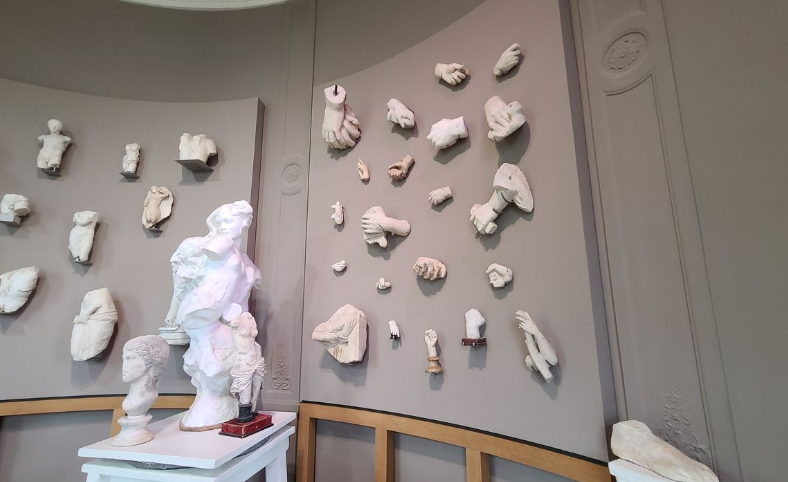
What's gathered here is a selection of hand-shaped fragments from Rodin's collection, mounted together on the wall. You can tell these pieces are thousands of years old, but you might wonder why that matters much. Some would say they wouldn't take these even for free, given how incomplete they are. But to Rodin, these fragments meant something entirely different.
As a sculptor himself, Rodin saw even broken fragments like these as a classroom where he could learn from ancient craftsmen. So he collected whatever he could find — hands, feet, heads, broken pieces of any kind — amassing more than 2,000 artifacts in total. Studying these fragments over many years, he came to realize that an incomplete sculpture could still stand as a complete work of art in its own right.
Think of the Venus de Milo, on view at the Louvre. That statue has no arms, yet it's considered a complete masterpiece all on its own. The Rodin sculptures we've seen on this tour — the ones missing arms, or reduced to just a torso — exist precisely because of this insight he drew from studying ancient fragments.