Paris · City Walks
Notre-Dame: Where Paris Begins
Paris · Paris, France
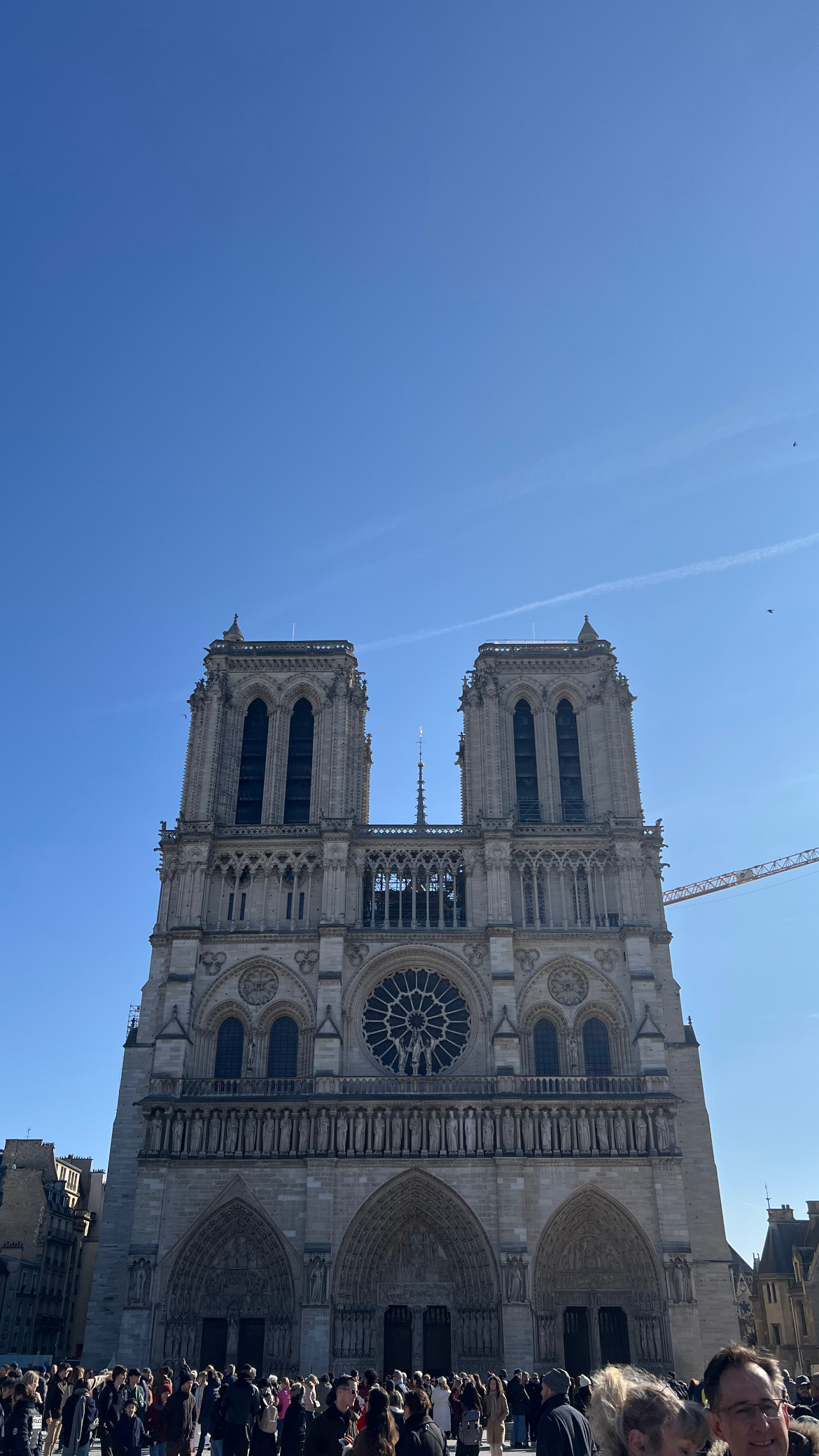
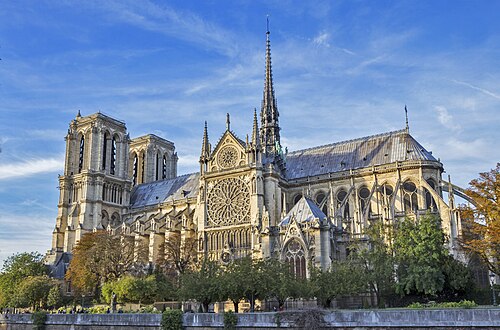
Standing in the heart of Paris, Notre-Dame is one of the most famous Gothic cathedrals in the world and a defining landmark of France. Its first impression may not overwhelm you, but it makes a fitting starting point for this walk because it has lived through the history of Paris, and of France itself.
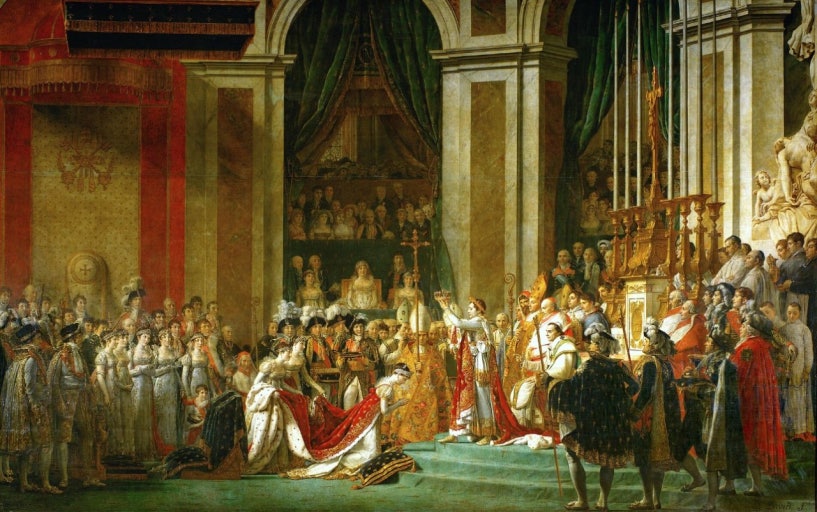
Louis VII laid the foundation stone in 1163, and after a long construction the cathedral was completed in 1345. It is a sacred place, where the rehabilitation trial of Joan of Arc was held, yet it has endured plenty of trials of its own. During the 16th-century Wars of Religion, Protestant Huguenots destroyed its statues and exterior. In the French Revolution, citizens vandalized it, replacing the Virgin Mary on the altar with a Goddess of Liberty and stripping it of its function as a church. Napoleon's coronation restored that role, but the cathedral then faced demolition under the 19th-century remodeling of Paris and the threat of bombing in both world wars. Gradually forgotten by the public, it was revived by Victor Hugo, author of Les Misérables. His love letter to the cathedral, The Hunchback of Notre-Dame (Notre-Dame de Paris in French), became a hit, and Parisians realized its value and raised donations for its restoration. The funerals of presidents de Gaulle and Mitterrand were later held here. A fire broke out in 2019, and in December 2024 the cathedral was reborn as you see it today.
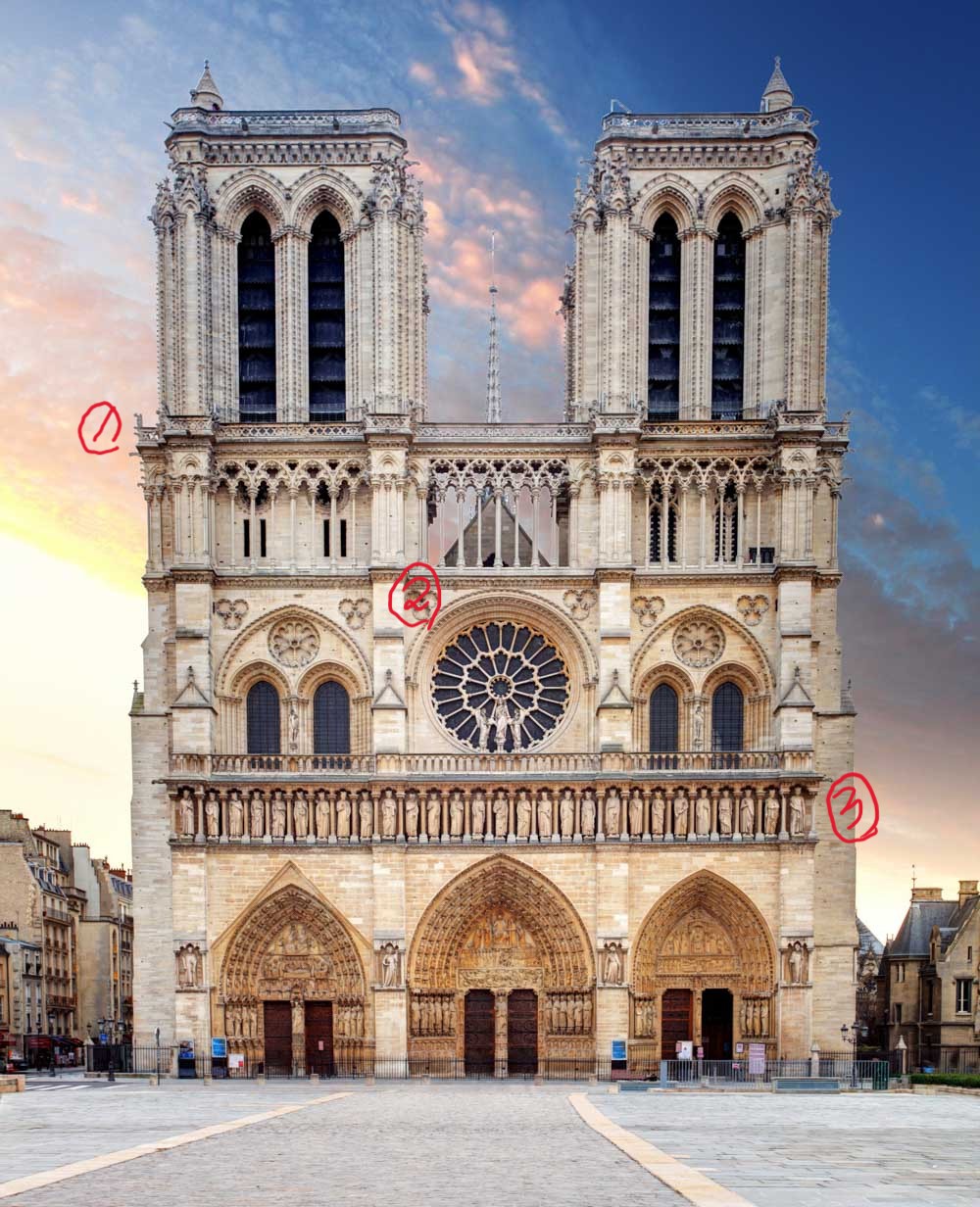
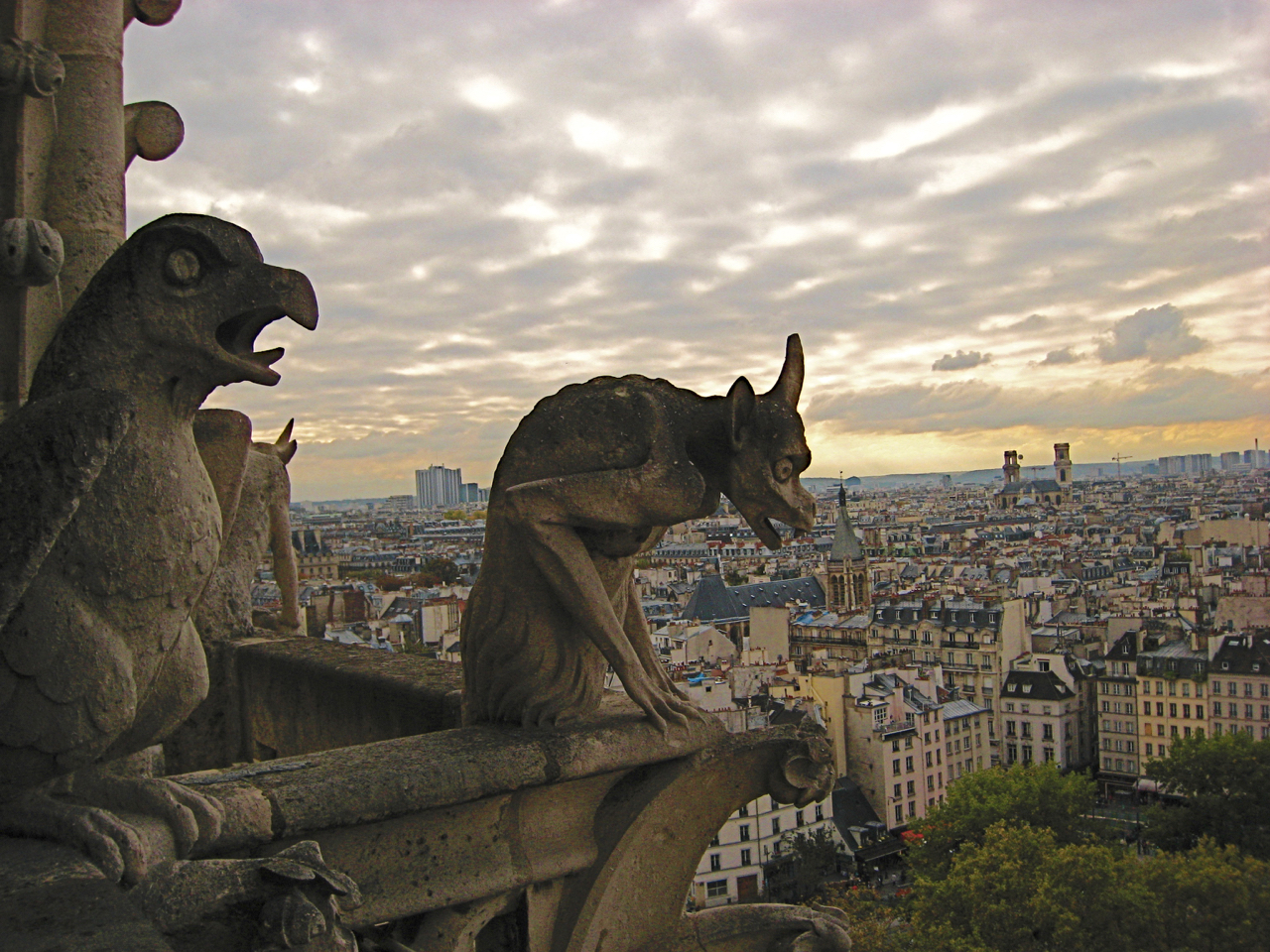
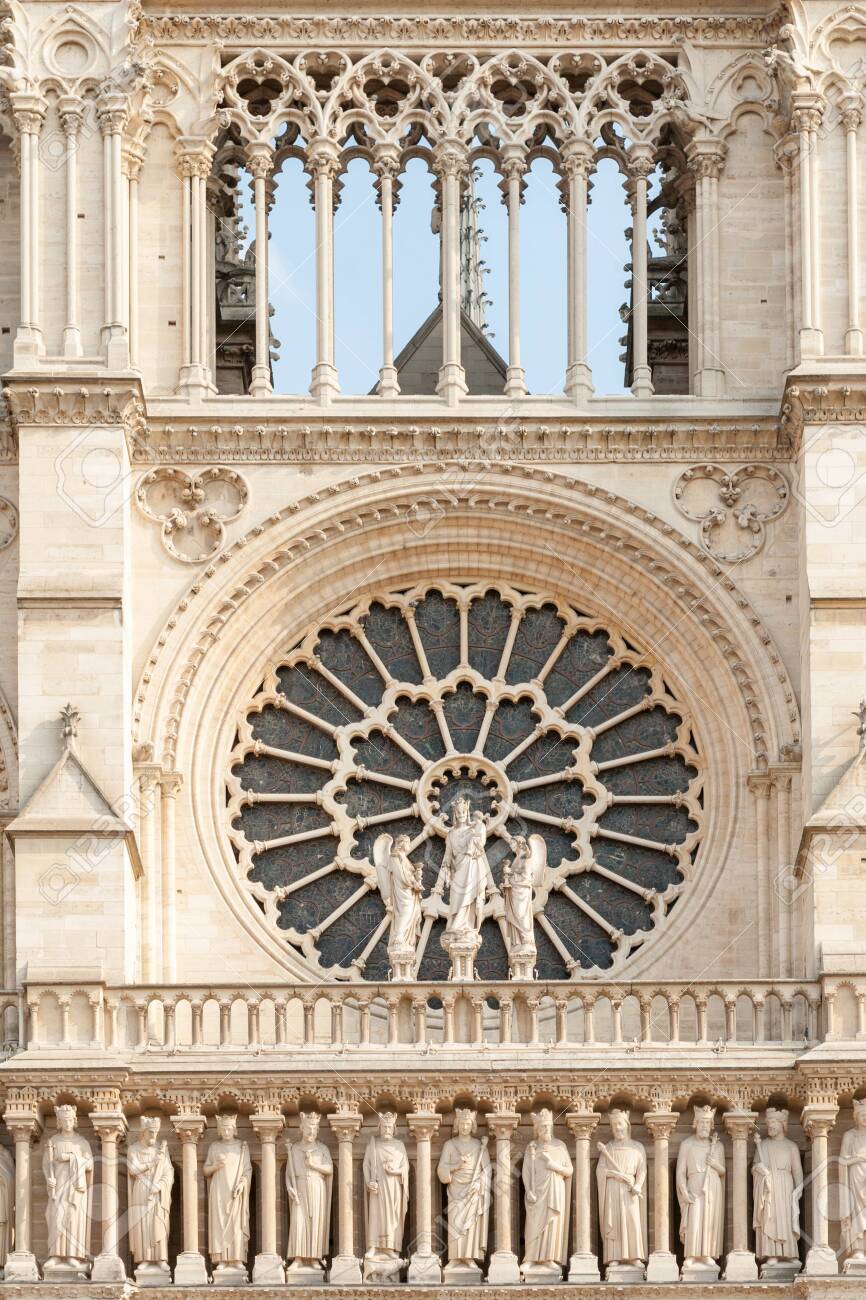
Start with the twin towers. They rise to 69 meters. Near the roofline, gargoyles shaped like all kinds of monsters act as gutters, spreading the weight of rainwater. The central rose window shows Mary holding the infant Jesus with angels, flanked by Adam on the left and Eve on the right. Above it runs a row of 28 statues of the Kings of Judah from the Old Testament. Parisians mistook them for French kings during the Revolution and destroyed them; they were restored in the 1800s. The three portals are, from left, the Portal of the Virgin, the Portal of the Last Judgment and the Portal of St. Anne, the mother of Mary. Up close, you can see Jesus presiding over the Last Judgment, the Coronation of Mary, scenes from Jesus's childhood and other sculpture tied to the church's story.
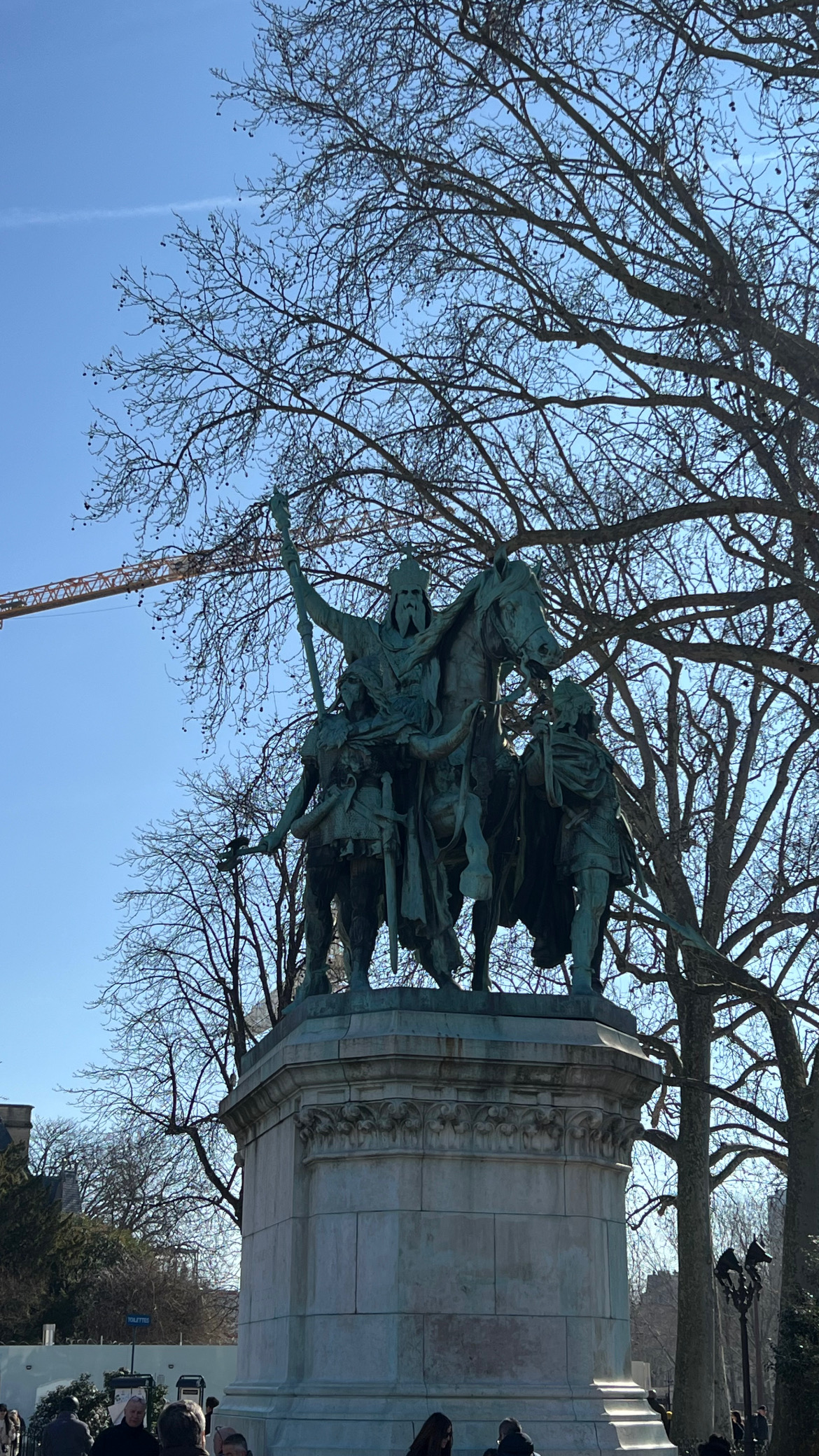
Look to the right of the cathedral and you will see a statue half hidden by trees. It is Charlemagne, king of the Franks, who expanded his territory enormously and won the title of emperor. Napoleon's ambition is said to have been to recover the glory of Charlemagne's age. A great general, Charlemagne also cared deeply about culture and the arts, and his era flourished so much it has been compared to the Renaissance; late in life he is said to have been more a scholar than a soldier. There are two reasons the statue stands here. One is that he was a devout Catholic who spread the faith in the lands he conquered. The other is a reading that by placing the statue of the man who led the Frankish kingdom to glory in front of Paris's most visited church, the French subtly assert that France was, and is, the center and leader of Europe. It echoes the fact that the name France comes from the Franks.
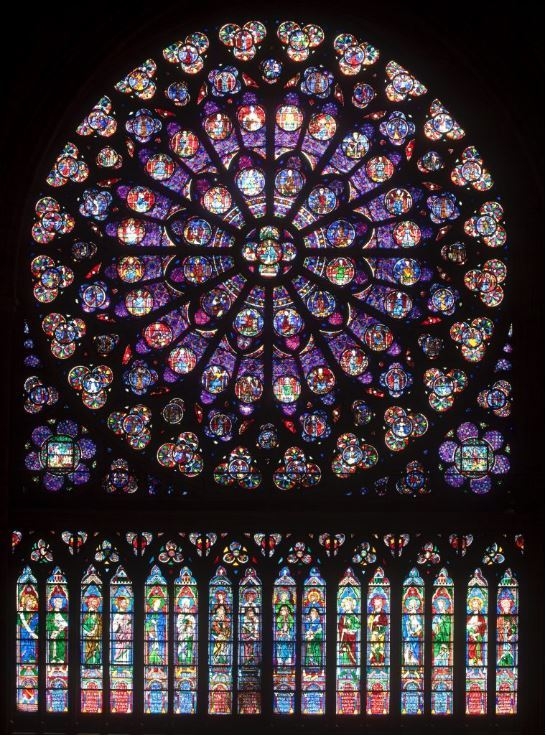
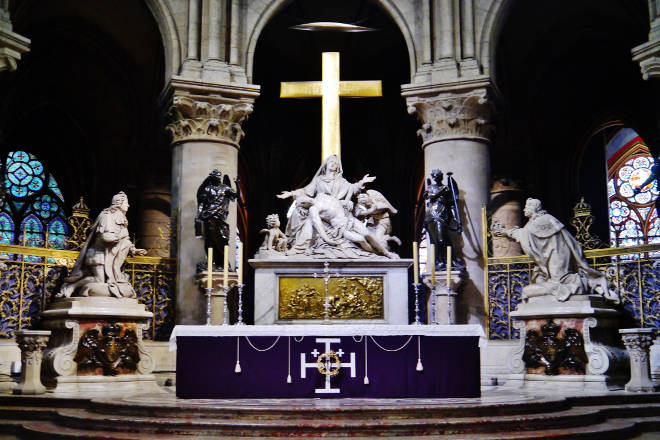
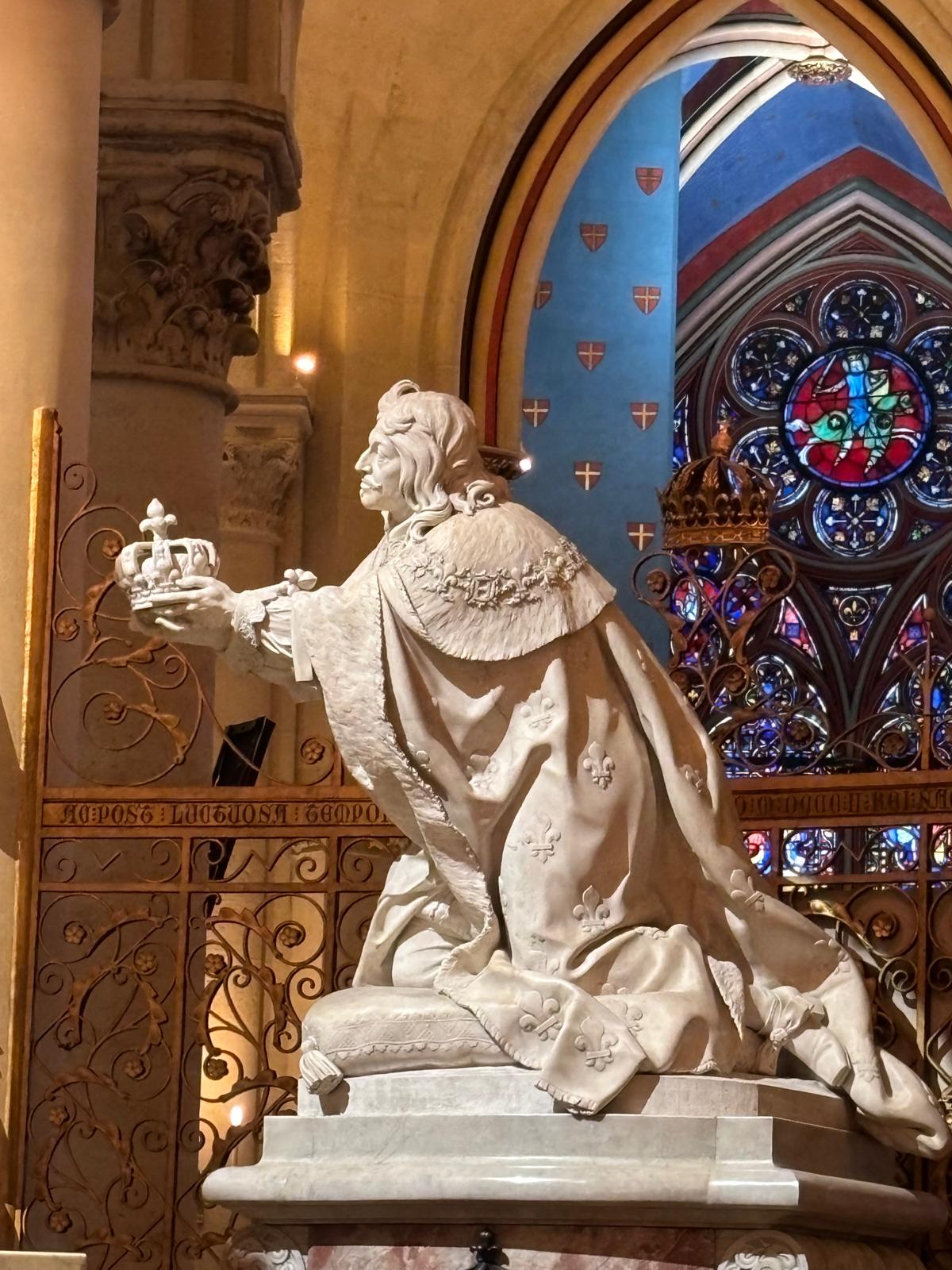
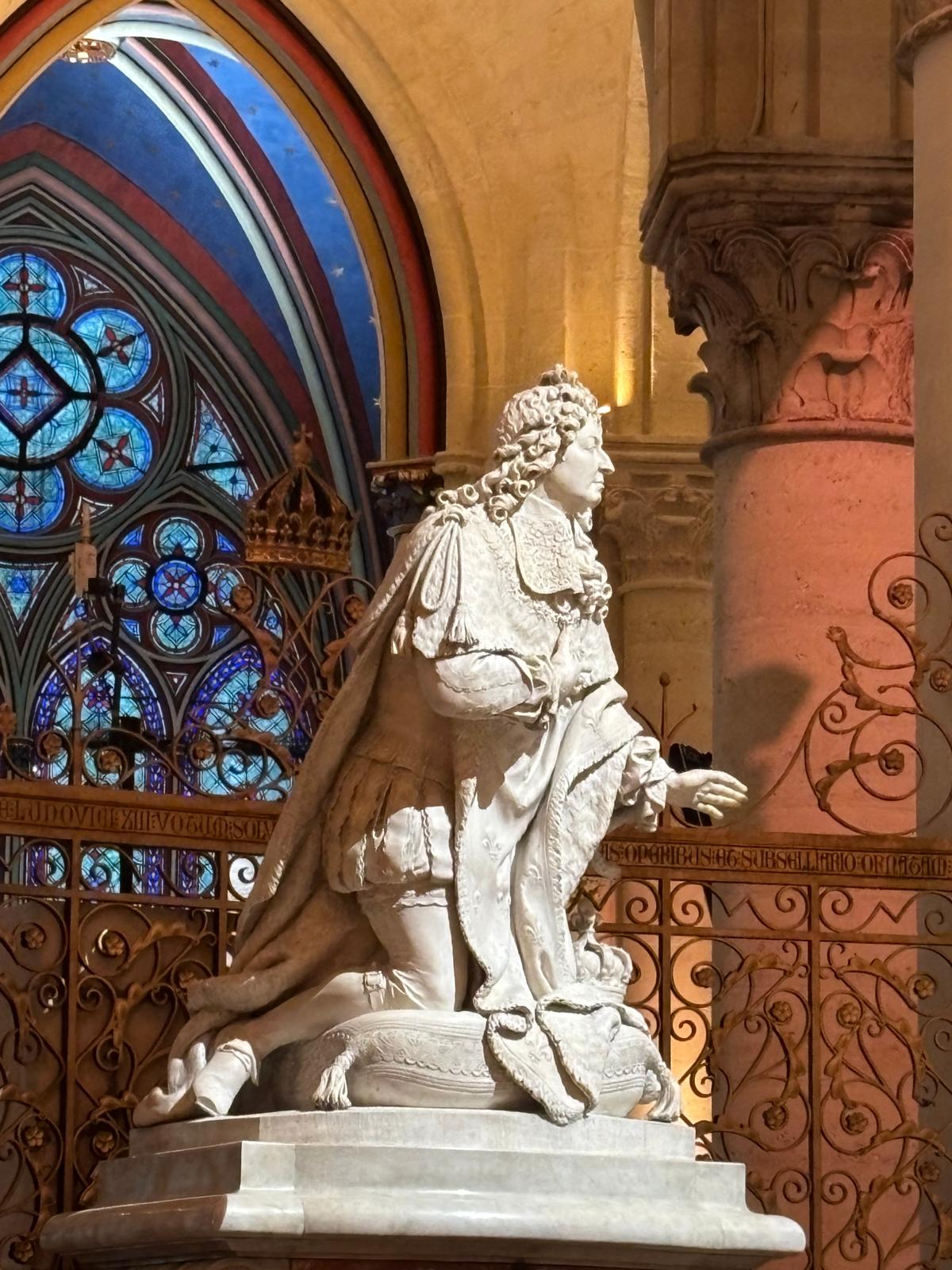
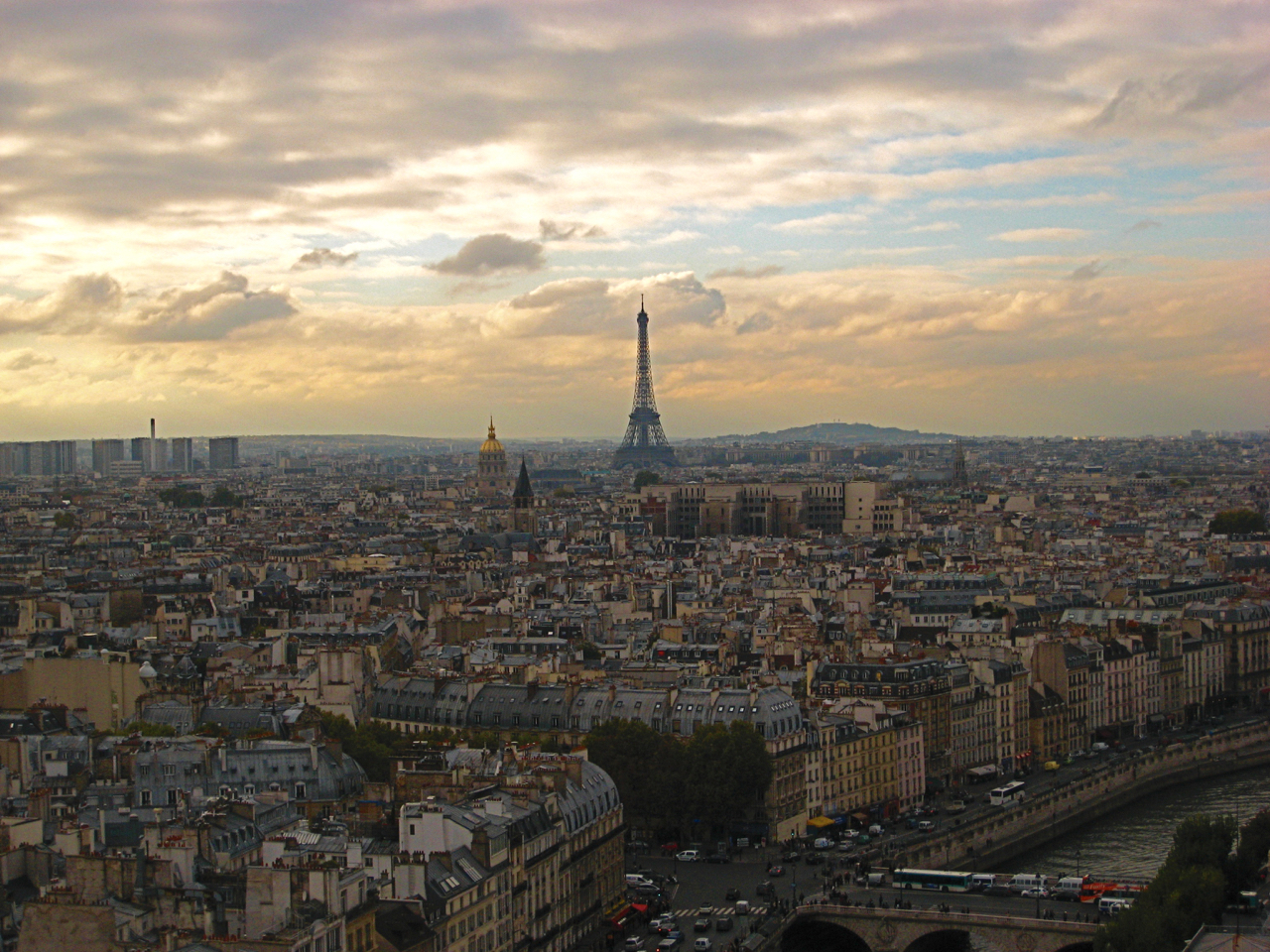
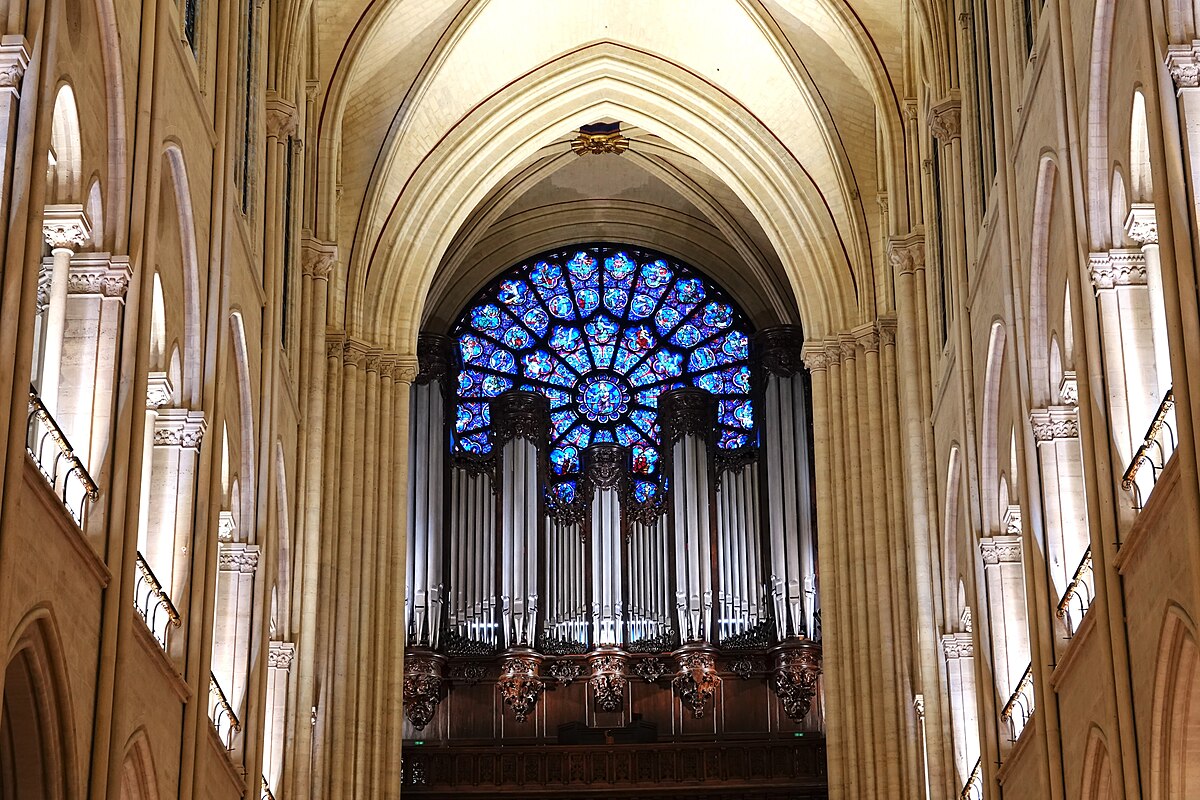
A few tips for going inside. Look for the soaring Gothic vaults, the stained glass that makes you feel heaven has been brought indoors, and the Pietà at the altar, beside which Louis XIII and Louis XIV kneel in worship. The paid viewing tower means climbing 400 steps, but rewards you with a panorama of Paris. It is covered by the Museum Pass, and with so many visitors, booking ahead is strongly advised. On your way out, look toward the rose window and you can find an organ installed in 1403.
The front is lovely, but the south side is beautiful too, and the best viewpoints are marked in the reference images. Next up, with your back to the cathedral, is Sainte-Chapelle and the Conciergerie, about seven minutes away and two crosswalks over. The long queue makes it easy to spot.