Paris · City Walks
Sartre and Beauvoir's Shared Grave
Paris · Paris, France
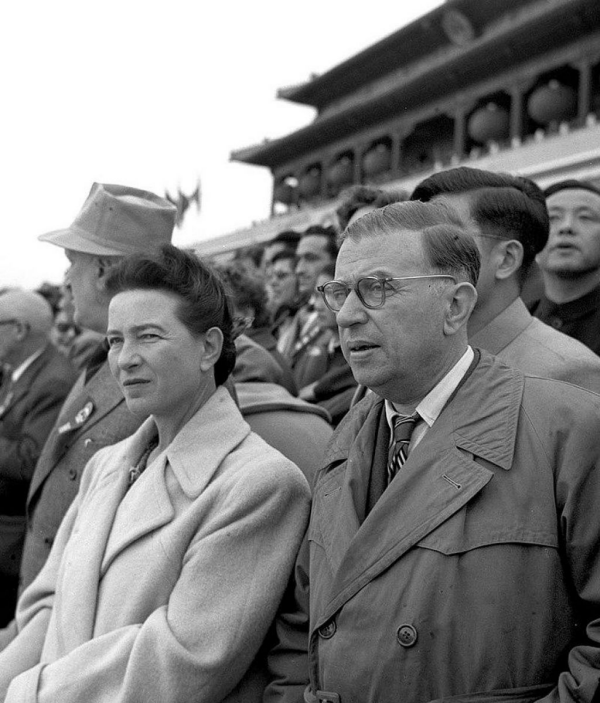
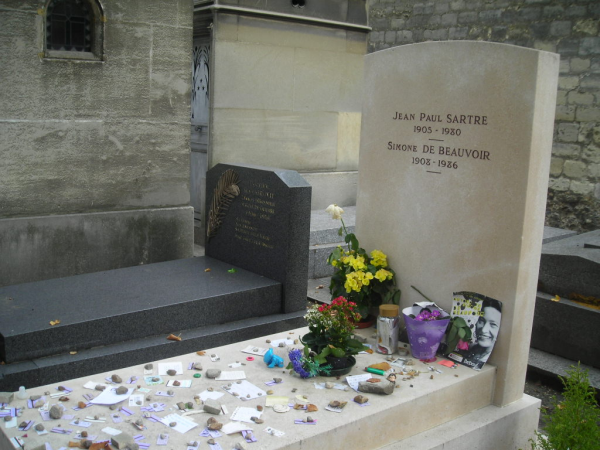
This is the grave of Sartre and Beauvoir, the couple who became a symbol of the "contract marriage." Sartre, a French existentialist philosopher, thinker and writer, is known for his novel Nausea and was nicknamed the "pope of existentialism." Beauvoir, author of The Second Sex, led the women's liberation movement and is known as a writer who won the Prix Goncourt, often called France's Nobel Prize in Literature.
The two met while taking the philosophy teaching examination at the Sorbonne. Sartre came first and Beauvoir second, and that is how their relationship began. Beauvoir, 21 at the time, set a record as the youngest person to qualify as a philosophy teacher, and as soon as the results were announced, Sartre confessed his love and proposed a contract marriage in the same breath. Each could have romantic relationships with other people, as long as they told each other honestly. They would first live together for two years and then renew the contract every two years. Many people condemned the arrangement, but Beauvoir, who believed that traditional marriage turned women into domestic workers, readily agreed.
To avoid domestic work, they lived in separate rooms in the same hotel and kept their marriage going while respecting each other's space. Both are also known to have continued seeing other people. Sartre even met women whom Beauvoir, who was bisexual, had been involved with, a relationship that startled many. In the end, though, they always came back to each other, supporting each other's public work and standing in solidarity. They spent 51 years together and are buried together. Sartre died in 1980 and Beauvoir in 1986. In her autobiography, Beauvoir said that the most successful achievement of her life was her relationship with Sartre, built on their contract marriage.
What sets this shared grave apart is that many visitors leave metro tickets. It is almost buried under little white scraps of paper. If you want to pay your respects but haven't bought flowers, simply leaving a metro ticket will do. No one knows why the custom began, and there are several theories. People leave metro tickets not only at the graves of Sartre and Beauvoir but also at Gainsbourg's. In his case, it is said to be because of "Le Poinçonneur des Lilas," an early hit from 1959 about a metro employee.