Paris · City Walks
Oscar Wilde's Tomb
Paris · Paris, France
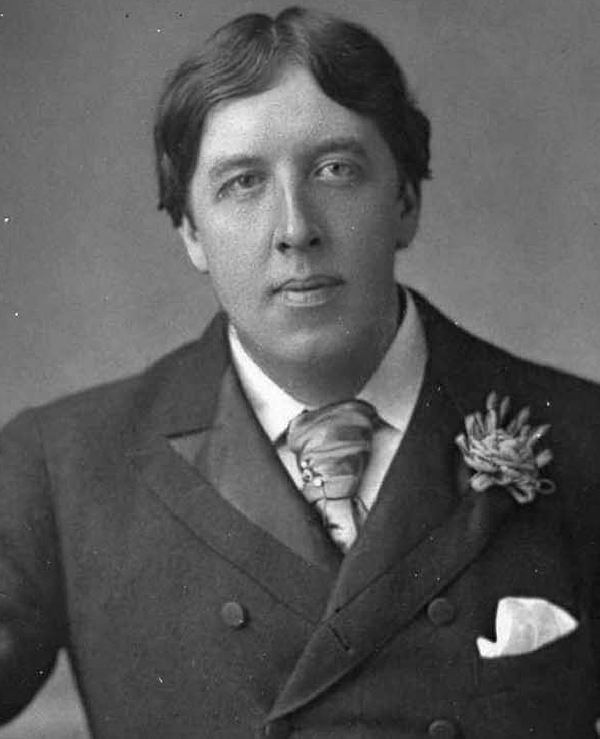
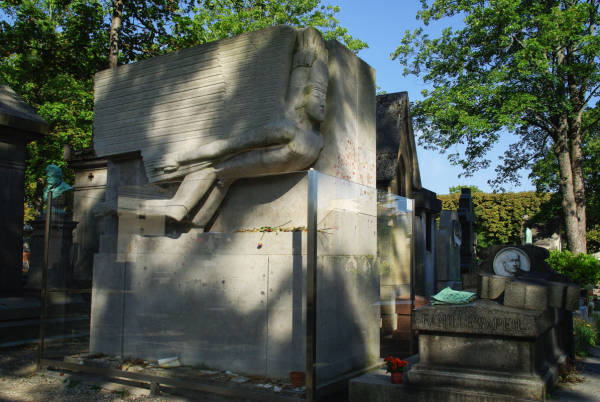
The question you will hear most often at Père-Lachaise is probably "Where is Oscar Wilde?" The grave of this hugely popular Irish playwright is now enclosed behind a glass barrier.
Wilde was a gifted and unapologetically self-assured writer who championed aestheticism, or "art for art's sake," and left behind works such as The Picture of Dorian Gray, The Happy Prince and Salome. He was famous for provocative, witty remarks like "Youth is an art," "When I was young I thought money was the most important thing in life; now that I am old I know that it is," and "In religion, truth is just an opinion that has survived," and he was always the subject of gossip. Active in England, he came to Paris to escape a scandal after his homosexuality came to light. Before that he had already lost a case brought by the father of his young lover, and during two years of hard labor he fell and injured his ear. Surgery on it in Paris led to an infection, and he died young in 1900 of meningitis.
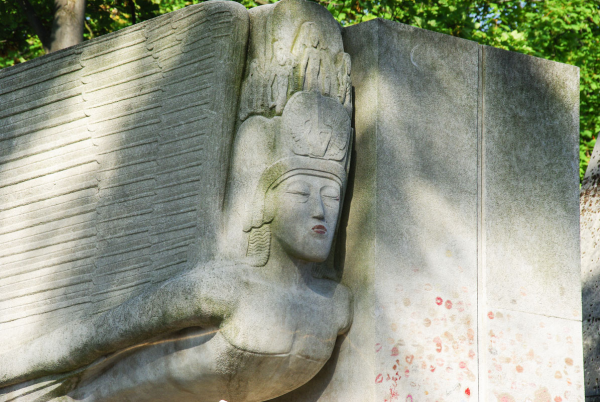
In 1908, Robert Ross, Wilde's literary agent, paid the sculptor Jacob Epstein 2,000 pounds to design the tomb and monument. Epstein drew on Wilde's The Young King, on the sphinx, and on the primal sexuality of Indian and Egyptian art, and spent about ten months on the monument. The design was controversial, and because Wilde had so many detractors, many people opposed putting up any monument at all. From the day it was made until recently, it has been one of the most controversial graves in the cemetery.
The finished monument's angel, or sphinx, is nude. In 1961 it was discovered that someone had secretly stolen part of the figure, which caused a stir. It turned out that a cemetery manager had been using it as a paperweight, and it has since vanished entirely. A replacement in silver, made in 2000 by the multimedia artist Leon Johnson, is now in place.
The biggest reason Wilde's grave became famous is the lipstick marks. No one knows who started it, but at some point fans began putting on lipstick and kissing the tomb, until the lower part was completely covered in lip prints. Because the ingredients in lipstick can damage the stone, in 2011 a glass barrier was put around the entire tomb to keep people from getting close. Ireland regards the grave of its national writer as a national monument, so the Irish government pays for its upkeep.