Paris · Architecture
Baron Haussmann's Plan and Palais Garnier
Palais Garnier · Paris, France
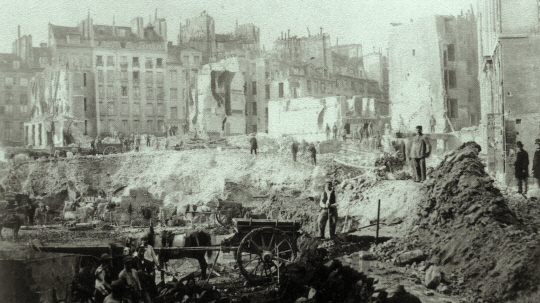
Five years before the attempt on Napoleon III's life, Paris was already in the middle of a sweeping redevelopment program. After the attack, Palais Garnier and the Avenue de l'Opéra were folded into it.
Paris is a wonderful city to explore on foot. Streets radiate out from each landmark, and if you follow one to its end, it leads you to another. That layout comes from the urban renewal plan carried out by Napoleon III and Baron Haussmann, then the prefect of the Seine. Before the overhaul, the city's streets were so narrow they were hard to navigate, and the ground was still bare earth, which turned to mud in the rain. Sewers hadn't been built yet, so household waste and filth spilled into the streets, disease spread easily, and crime was a problem too. Paris was not an easy place to live, which is why the city was remade.
Rue Le Peletier, home of the Salle Le Peletier, suffered from the same problems. The street was so narrow that crowds gathering before and after performances could be dangerous. After the assassination attempt, Napoleon III ordered Haussmann to include a new national opera house in the redevelopment. He also asked for a safe route from his residence, the Tuileries Palace, to the theater, and for a private entrance for the imperial family at Palais Garnier.
Compare the 1872 painting with today's photo and you'll see an eagle sculpture above the door of the imperial family's private entrance. The eagle was the emblem of the Napoleonic dynasty. Napoleon III, however, was deposed before Palais Garnier was finished and never got to use the door. You can still see this entrance when you enter the building today, and we'll point out exactly where it is during the tour.