Paris · Painting
What to Know Before You See Van Gogh
Musée d'Orsay · Paris, France
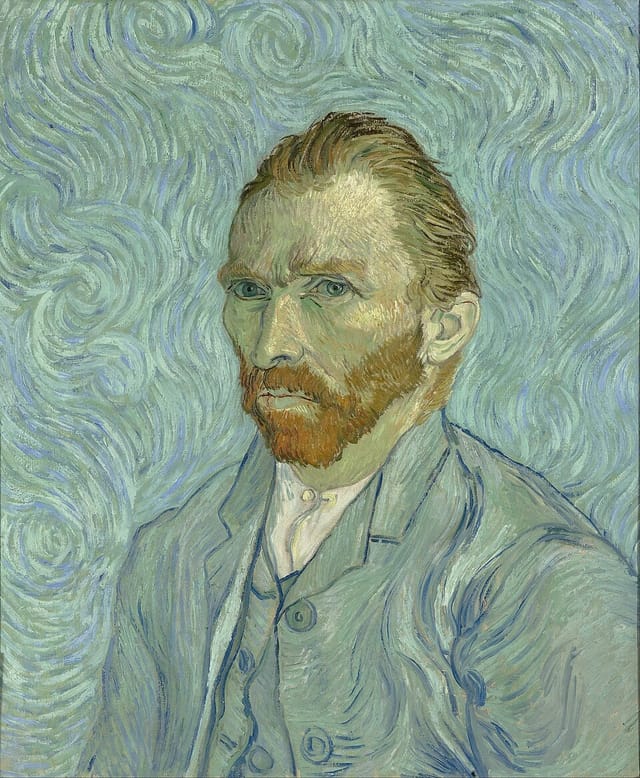
Ask most people to name the most famous painter in the world, and plenty would say Van Gogh. Part of the reason may be the striking contrast between his vividly colored paintings and the lonely, pain-filled life behind them — a life that reads almost like a drama. In a way, no painter's story has ever been told quite as completely as his. That's exactly why it helps to know something about his life before you look closely at his work.
Van Gogh was born in the Netherlands in 1853. His father was a pastor, and he initially planned to follow in his footsteps, but abandoned that path partway through and turned to painting instead. He believed he'd succeed as an artist, but reality proved far harder, and he lived in poverty his entire life. It was only thanks to his brother Theo, an art dealer, that he managed to scrape by and keep painting at all.
Theo is an inseparable part of Van Gogh's story. The two brothers exchanged roughly 650 letters, which preserve Van Gogh's emotions and daily life in vivid detail — and those letters are a huge part of why we can connect with his paintings so emotionally today. Theo was arguably the single greatest benefactor in Van Gogh's life, both while he lived and after his death.
After living with Theo on the hill of Montmartre in Paris, Van Gogh eventually moved to Arles, in the south of France. Worn down by life in Paris, he found Arles a wellspring of fresh inspiration, and it was there that he painted masterpieces like The Starry Night and Sunflowers. In Arles, he dreamed of creating a shared space where artists could live, paint, and debate together, and sent out invitation letters to several painters. Nearly all declined — only one accepted: Paul Gauguin. The two got along at first, but their clashing personalities gradually drove a wedge between them, and after a serious fight, Gauguin left Arles for good.
Left alone, Van Gogh sank into deep loneliness and growing mental instability, and one day he famously cut off part of his own ear. Several explanations have been offered — that it followed his fight with Gauguin, that he felt guilty after Theo's letter about his upcoming marriage hinted he might no longer be able to send money, or that he gave his ear to a woman he was close with after her own skin had been injured by a dog bite. Since Van Gogh never explained it himself, no one knows which account is true, but all three point to the same fragile state of mind.
He was later treated at an asylum in Saint-Rémy, then moved to recover in Auvers-sur-Oise, a village near Paris. He spent about 70 days there and produced some 70 paintings, including a second version of The Starry Night and several other masterpieces from that period. Not long after, he took his own life with a revolver. Today, Van Gogh's grave sits side by side with Theo's in Auvers-sur-Oise.
Van Gogh never managed to properly sell a single painting in his lifetime and relied entirely on his brother to survive. Judged simply as a person, he's not someone easy to praise without reservation — but his passion for painting was unmatched. He wasn't content to merely depict objects; he tried to pour his inner emotional life into them, which is exactly why he's remembered as one of the defining figures of Post-Impressionism, a movement devoted to exploring the inner self and the essence of things.