Paris · Painting
A Shadow With No Source: Van Gogh's The Church at Auvers
Musée d'Orsay · Paris, France
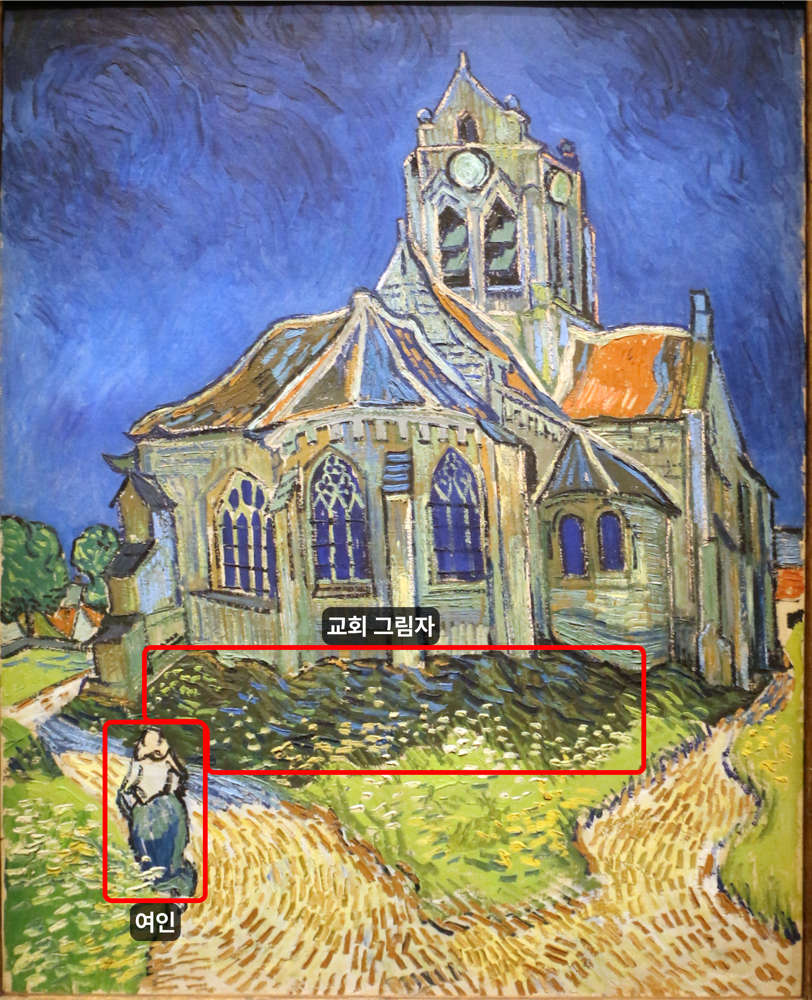
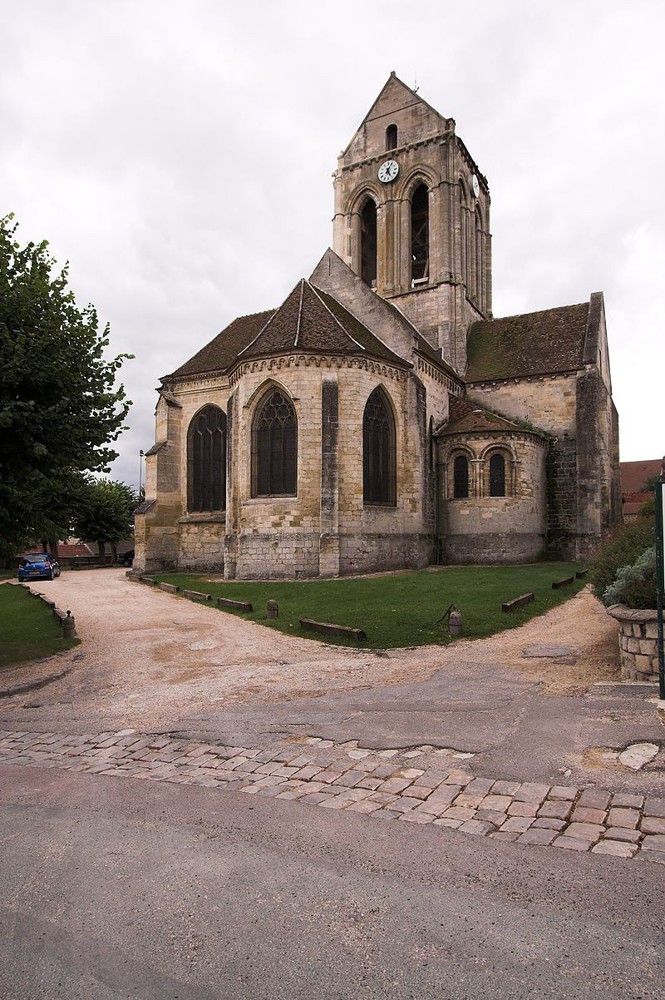
Auvers-sur-Oise, a small village outside Paris, is where Van Gogh spent the last two months of his life. This painting depicts the church there.
The most striking feature of this painting is its contrast in light. The two forking paths in front of the church are bathed in bright light. The church itself, though, feels completely different. Even the sky surrounding it is dark, almost as if heavy storm clouds have gathered overhead. The building itself is painted damp, heavy, and dark, as if it's been caught in the rain.
A deep shadow falls across the front of the church, and here's where something curious emerges: sunlight comes from a single direction, so if the church casts a shadow forward, the woman walking the path on the left, under the same light, should cast one too. But look for her shadow, and you won't find it anywhere in the painting. In other words, this shadow wasn't produced by any actual sunlight — Van Gogh painted it in deliberately.
The outline of the church is also rendered as a wavering, almost collapsing curve. The real building, built in the early 13th century in the Gothic style, is in fact quite straight and orderly in appearance. So why did Van Gogh render it as something so dark and unstable?
Van Gogh's father was a pastor, and Van Gogh himself had once done missionary work in Belgium as a young man hoping to become a pastor, only to be cast out by the church. Around that time, in a letter to his brother Theo, he compared their God to the god of a drunkard in a Shakespeare play, and said the church's sermons felt hollow and meaningless. He seems to have held deep reservations about the church by then, and that sentiment may be exactly what led him to paint this church so dark and unsettled.
Auvers-sur-Oise itself is a quiet, serene, beautiful village not far from Paris by train. You can visit the house where Van Gogh spent his final days, this very church, and the wheat field with crows from another of his famous paintings. Since he died here, his grave is in the village as well. If your Paris itinerary allows the time, it's well worth the trip.