Paris · Painting
Color Over Accuracy: Van Gogh's Bedroom in Arles
Musée d'Orsay · Paris, France
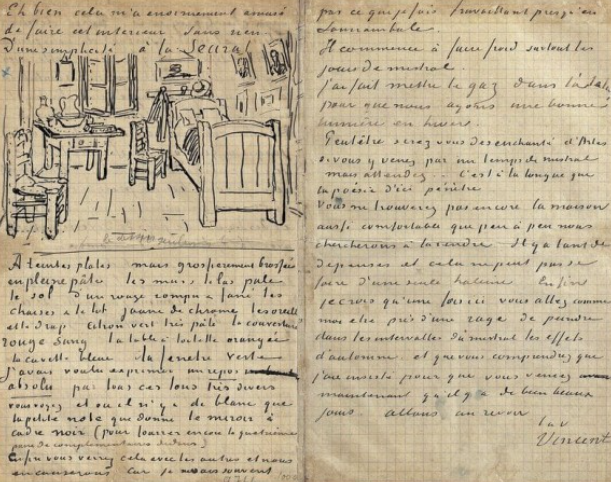
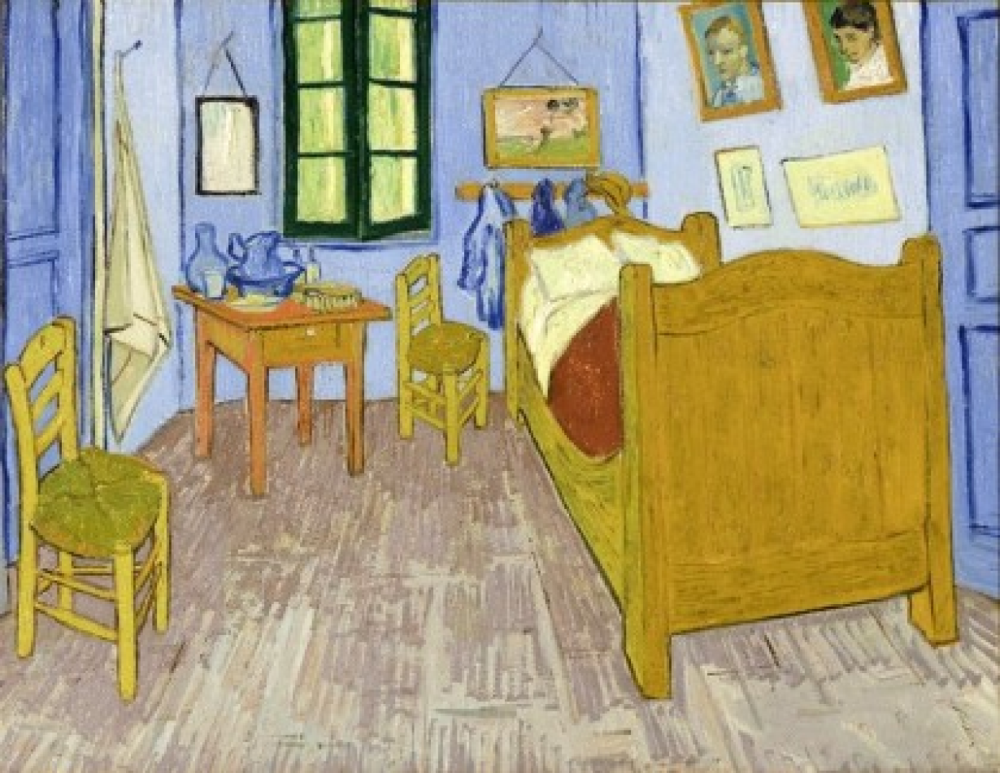
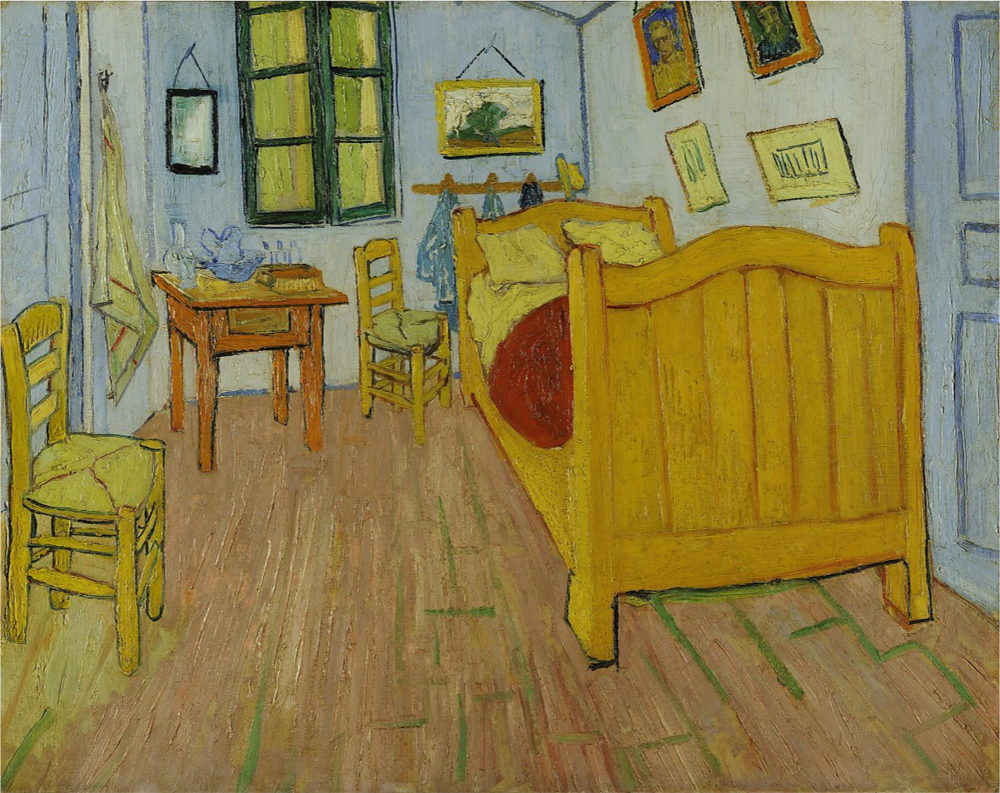
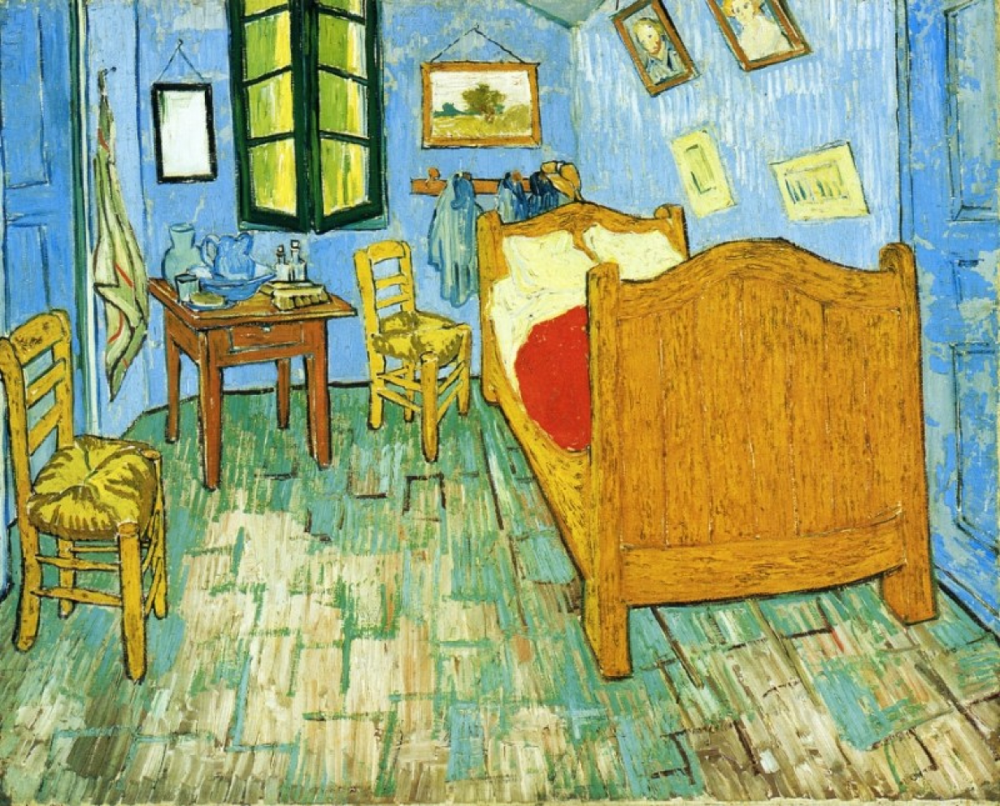
Bedroom in Arles depicts the room where Van Gogh lived during his time in Arles. This painting isn't interested in capturing accurate perspective or spatial depth — the bed is exaggeratedly large, and the wall on the right stretches out with a similarly distorted sense of space.
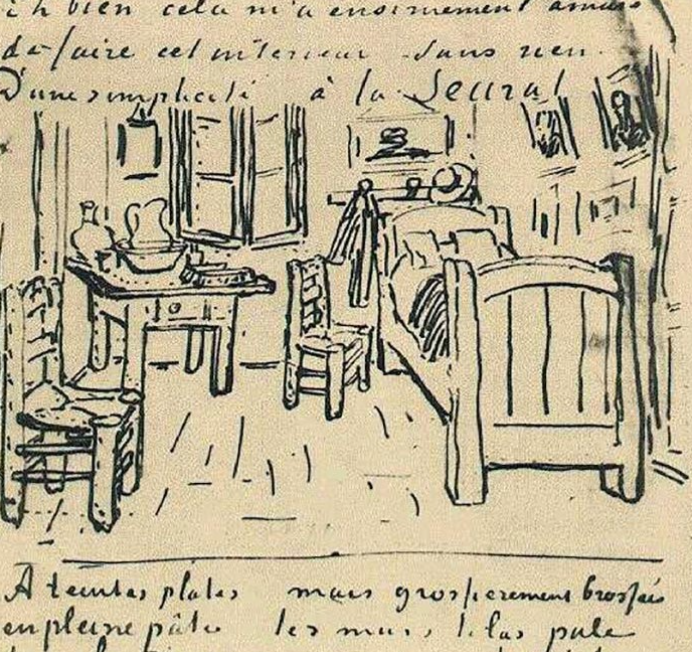
What Van Gogh wanted to convey here wasn't precision but color. Just as in The Starry Night, he again set directly opposing colors side by side: the walls in pale purple, the chair and bed in yellow, the washbasin in blue, letting complementary colors sharpen each other through contrast. In a letter to Theo, Van Gogh wrote that he wanted this painting to express "rest" or "repose." That letter included a sketch of the room along with a note explaining that he wanted the colors he used to convey the simplicity of his own room.
Like many Impressionist painters of his era, Van Gogh was deeply influenced by Japanese art and culture. Painting this scene, he drew inspiration from Japanese woodblock prints, boldly omitting shadows altogether — which is part of why the spatial angles here feel slightly off. One reason Van Gogh chose Arles as a refuge from his exhausting life in Paris was precisely that it reminded him of Japan. He had never actually visited Japan, but after arriving in Arles, he told Theo it felt just like it.
This is also a painting Van Gogh deliberately rendered bright and cheerful. He hoped to turn this house into a gathering place where painters could work and debate together, and with that dream in mind, he sent Gauguin a letter containing a sketch of this very room, inviting him to Arles. The letter included a detailed description of the painting along with a request that Gauguin come and assess his work in person. Gauguin did come to Arles and lived with Van Gogh for a time, but the two eventually parted ways over conflicting personalities.
Van Gogh painted three similar versions of Bedroom in Arles. The first now hangs at the Van Gogh Museum in Amsterdam; it was damaged by water while Van Gogh was briefly hospitalized, which prompted him to paint a second version after his release, now held at the Art Institute of Chicago. The third version is the one we're looking at here, painted somewhat smaller since it was intended as a gift for his mother and sister. The three versions differ slightly in tone but are otherwise quite similar overall — except that the face in the portrait hanging on the right-hand wall is painted differently in each one. Why he changed that face each time he repainted the scene remains unknown.