Paris · Painting
A Likeness Deeper Than a Photograph: Van Gogh's Self-Portrait
Musée d'Orsay · Paris, France
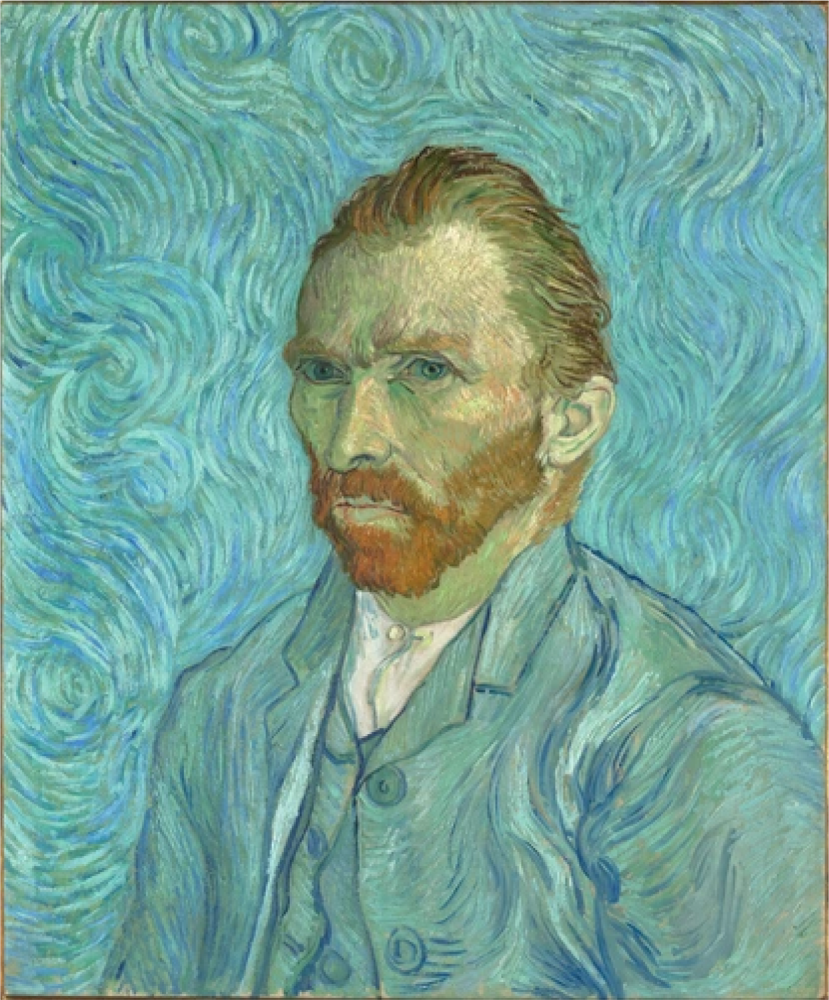
Van Gogh was unusually prolific when it came to self-portraits — he left behind more than 43 of them, and this is one.
The dominant color here is a pale turquoise. The background is turquoise, and the clothes Van Gogh wears lean slightly greener, just a shade darker. Painted in such closely related tones, the figure could easily have blurred into the background, but Van Gogh drew the outline of his clothing in a deep green to separate the two. Look closely and you'll notice turquoise worked into his skin as well, and into his eyes. With that turquoise and green laid down as a base, the orange of his beard and hair ends up shining through all the more vividly by contrast.
In a letter to his brother, Van Gogh once wrote: "I am looking for a deeper likeness than that obtained by a photographer." For him, a self-portrait was never just a matter of rendering his outward appearance. Nothing captures physical likeness more precisely than a photograph, so what Van Gogh was really after was an expression of inner life that no photograph could reach. He wanted to reveal his own emotional state rather than depict reality exactly as it was. Seen that way, his choice to paint even his own skin green starts to make a certain kind of sense.
Some of this may still be hard to fully grasp, and maybe that's exactly why Van Gogh was so poorly understood by the people around him in his own lifetime — he was simply too far ahead of his time. There's no single correct way to feel while looking at this self-portrait. Whatever you feel is the right answer.