Paris · Painting
A Painting Pawned for Rent: The Mold Behind Monet's Le Déjeuner sur l'herbe
Musée d'Orsay · Paris, France
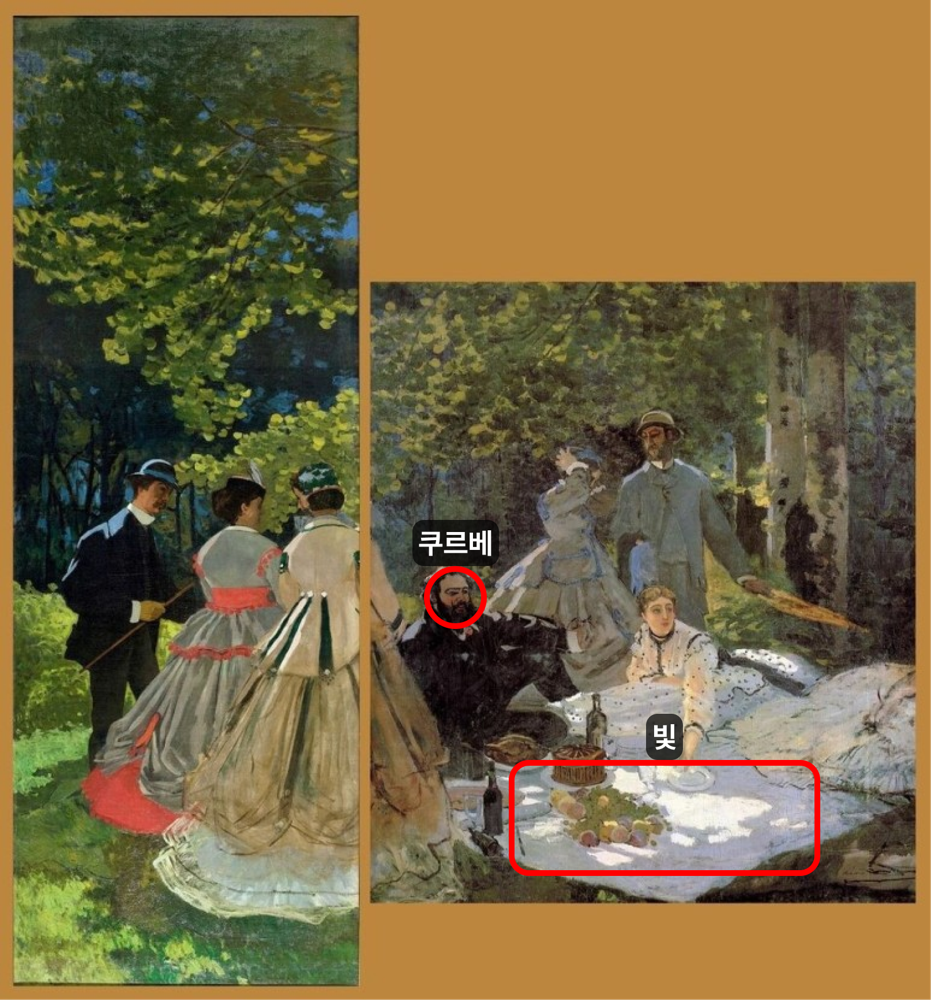
Monet's Le Déjeuner sur l'herbe was originally a single canvas, though it now hangs as two separate pieces. While working on this painting, Monet was so desperately poor that he gave it to his landlord in lieu of rent. By the time his circumstances improved enough for him to retrieve it, the painting had been stored carelessly and developed mold. Had the landlord known Monet would later become a celebrated painter, he might have taken better care of it — but at the time, there was no reason to. Monet ended up cutting away the moldy sections, salvaging only what remained intact, which is why the piece exists today in two fragments rather than one.
The canvas was enormous, which meant the cost of paint alone was substantial, and in the end Monet never finished the work. He'd originally set out to paint it for the Salon, but it never even made it to submission.
Most Impressionist painters at the time were too poor to hire professional models, so friends and acquaintances typically filled in instead. Every figure in this painting is someone from Monet's own circle, including one face you might recognize: the bearded man in the black suit at the center is Courbet, the Realist painter. Well aware of Monet's financial struggles, Courbet agreed without hesitation to pose for him.
In composing this work, Monet drew directly on Manet's own Le Déjeuner sur l'herbe, a painter he deeply admired. It might seem odd to deliberately echo a painting that had caused such controversy, but that's precisely a measure of how much Monet looked up to him. Still, since Monet was aiming for Salon acceptance, he avoided repeating the same scandal — unlike Manet's nude figure, every woman in Monet's version is fully clothed.
This is an early work in Monet's career, but it already shows glimpses of the style he'd become known for. Look closely at the picnic blanket, and you can make out light filtering delicately through the trees above — his understanding of light wasn't fully developed yet at this point, but the seeds of what was to come are unmistakably there.