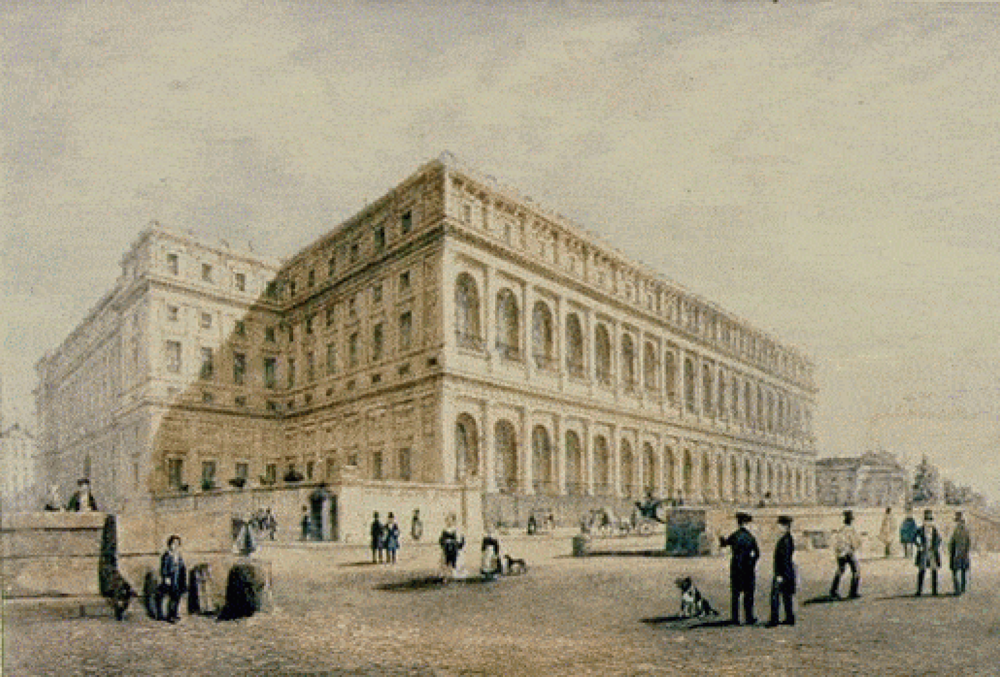
Paris · Painting
Bring Me an Angel and I'll Paint One: The Birth of Realism
Musée d'Orsay · Paris, France
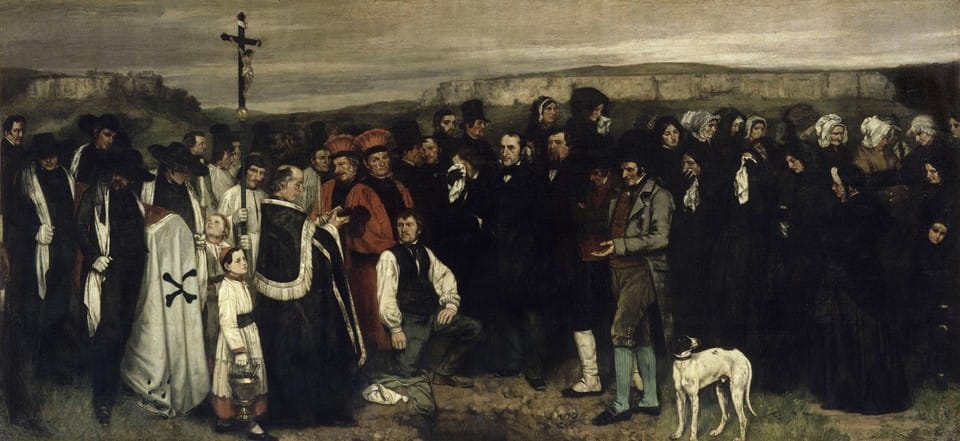
Looking back at the art movements covered so far, Neoclassicism dominated during the French Revolution and Napoleon's empire, while Romanticism took over during the Bourbon Restoration and the July Monarchy under Louis Philippe. Realism emerged in the wake of the February Revolution of 1848. The movement's governing idea is captured in a famous retort: when asked to paint an angel, the response was supposedly, "Bring me an angel and I'll paint one." Realism meant painting only what could actually be seen — nothing invented, nothing invisible.
Courbet was both the movement's defining painter and the person who coined the term "Realism" itself. The word carries a double meaning here: painting things exactly as they appear, but also exposing the true, unvarnished state of society at the time.
Courbet wasn't always this kind of painter. Born into a wealthy family and raised without want, his early work bore the clear influence of the Romantic style fashionable in his youth. What changed him was the February Revolution of 1848. The people he met during that upheaval forced him to confront the harsh realities of French society head-on, and from that point he developed a growing interest in social issues. Valuing liberty and equality, he found himself drawn naturally toward ideas of a society where everyone could thrive together.
It was from this point that Courbet began painting in the Realist style. In 1871, he even served as chairman of the arts commission under the Paris Commune, a self-governing body established by the working class. After the Commune's collapse, though, he was imprisoned for his role in tearing down a statue of Napoleon. He was eventually released on the promise that he'd personally fund its reconstruction, but unable to raise that kind of money, he fled into exile in Switzerland, where he lived out the rest of his life.
Throughout his career, Courbet kept painting the realities that society at the time preferred to keep hidden. Despite relentless criticism from critics, he never backed away from the kind of paintings he wanted to make — and that stubbornness went on to shape generations of artists who followed him.