Paris · Painting
The Thinker Looking Down into Dante's Inferno: Rodin's The Gates of Hell
Musée d'Orsay · Paris, France
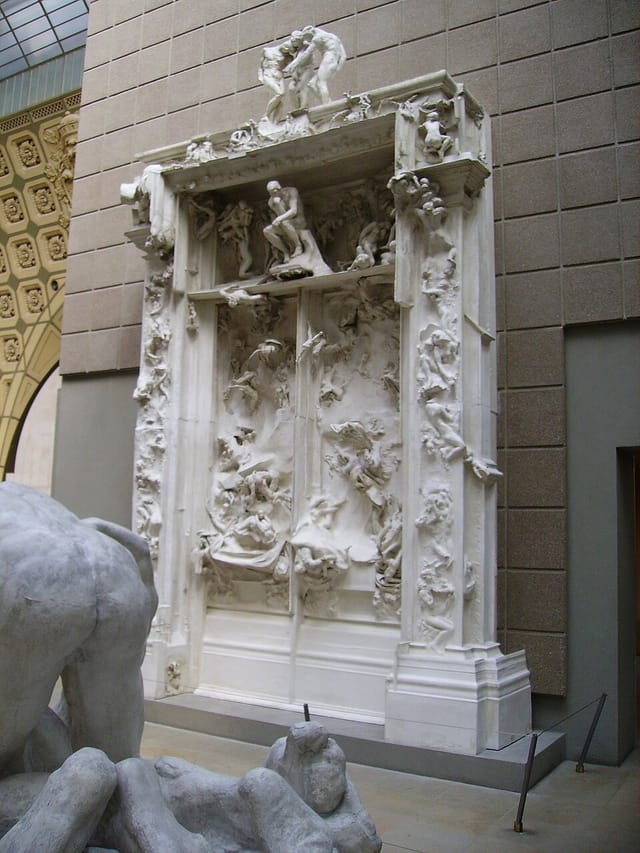
This work is the plaster study Rodin made as a trial run before casting the Gates of Hell in bronze. Since he died without ever finishing the bronze version, this plaster model is actually the only Gates of Hell that Rodin personally touched. Seven museums around the world today own bronze casts of the Gates of Hell, including the Musée Rodin in Paris, and all seven were cast from this plaster model after Rodin's death. For what it's worth, one of the seven belongs to the Hoam Museum in Korea, though it's currently kept in storage.
The Gates of Hell might be considered Rodin's single richest work, since nearly every figure carved into it represents one of his signature sculptures. Look at the top center of the door, and you'll find a figure resting his chin on one hand, deep in thought — none other than Rodin's most famous sculpture, The Thinker. He gazes down at the vision of hell below him, lost in contemplation.
Rodin drew his inspiration for the Gates of Hell from the Divine Comedy, the epic poem by the medieval Italian poet Dante, which journeys through Hell, Purgatory, and Paradise. Given that, the contemplative figure looking down into hell is Dante himself, reflecting on human life and its meaning as he surveys the scene below.
At the very top of the composition stand three figures drawn from the Divine Comedy, representing lust, pride, and greed. On the left is a sculpture of a falling man, and beneath him sits a work called Ugolino. At the far right, Rodin carved in another of his most celebrated pieces, The Kiss.
So why did Rodin never finish this work, overflowing as it is with his own masterpieces? He once exhibited this plaster model partway through the project, and the public reception was unfavorable. Deeply disheartened by the suggestion that further work would only make it worse, Rodin reportedly never touched the piece again.