Paris · Painting
Pain Passes, Beauty Remains: Renoir's Young Girls at the Piano
Musée d'Orsay · Paris, France
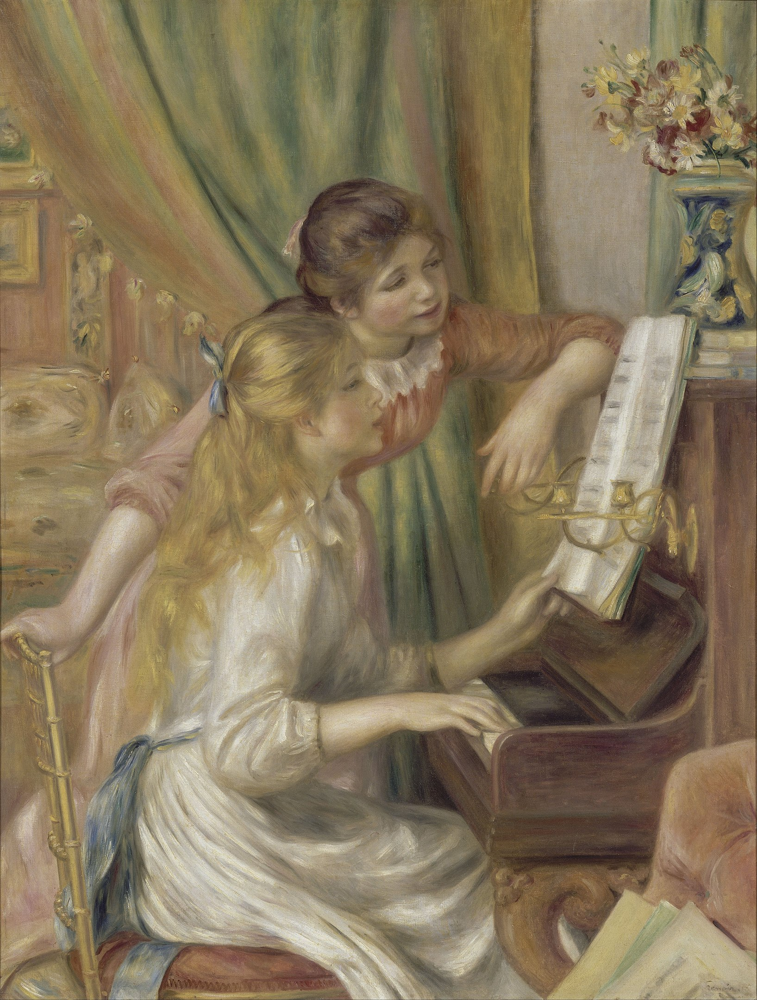
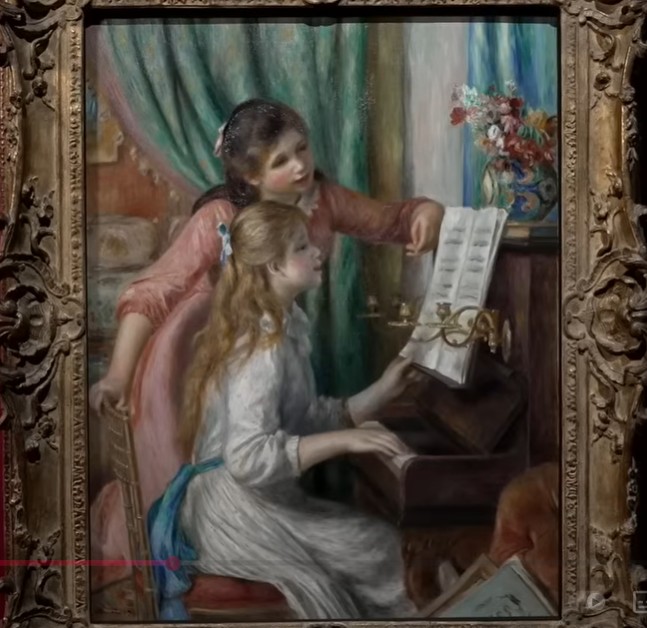
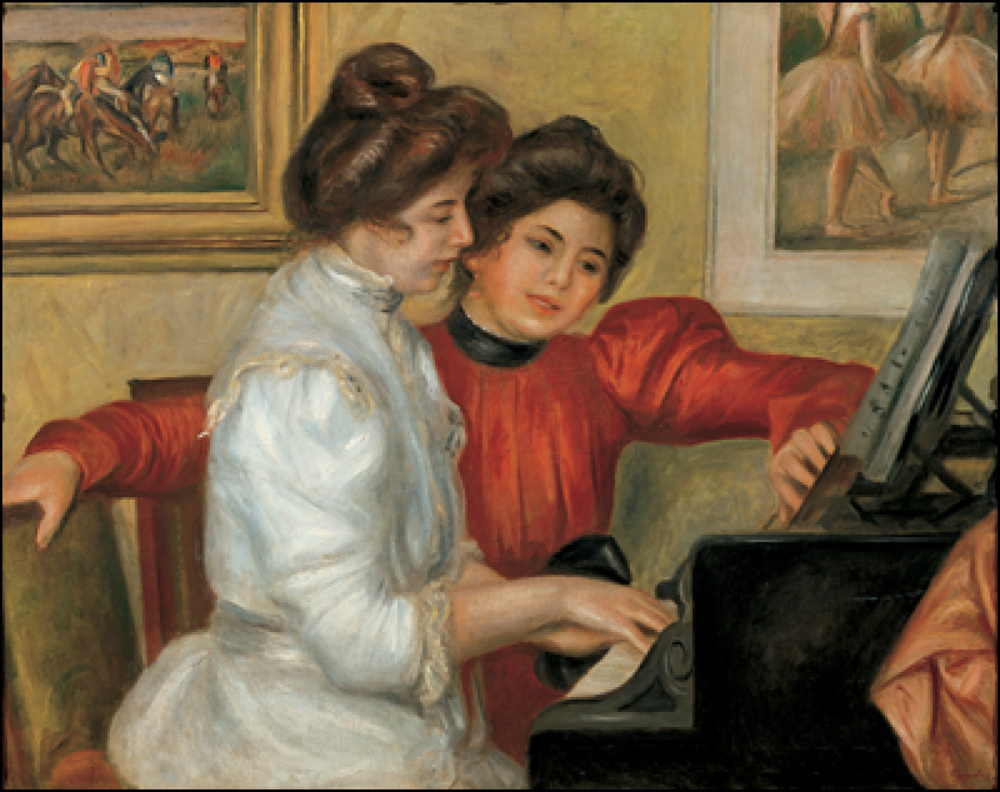
This late work by Renoir shows almost none of the traits found in his early Impressionist paintings. His style had shifted considerably after a trip to Rome left him deeply moved by classical art.
Two girls in the painting smile brightly as they play the piano together. A piano was a symbol of wealth at the time, which tells us this household was affluent. The house actually belonged to Henri Lerolle, a friend of Renoir's, and the girls are his daughters — the painting captures a scene of upper-class Parisian domestic life that Renoir observed while visiting his friend's home one weekend.
In striking contrast to the bright, pastel-toned beauty of this painting, Renoir was suffering badly from rheumatoid arthritis by this point — so badly that even gripping a brush caused him pain. He kept painting anyway, wedging the brush between his fingers and tying it in place with string. All of Renoir's late work was created by pushing through this kind of physical suffering. When a friend once asked why he kept painting despite such pain, Renoir reportedly gave his now-famous reply: "The pain passes, but the beauty remains."
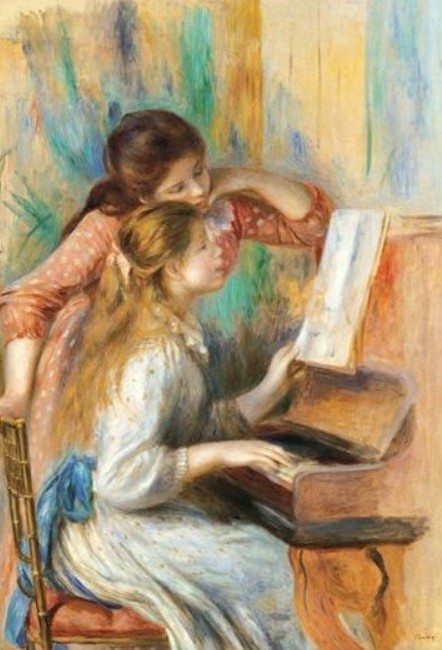
There's another notable story behind this particular painting. It was commissioned by the Musée du Luxembourg, France's first national museum of contemporary art. For Renoir — who had started out as a porcelain painter rather than a formally trained artist, and who had never been taken especially seriously by the Academy or the Salon — a commission from a national museum was an enormous milestone. He poured everything into the project, and not knowing which version would ultimately be chosen, he painted six nearly identical canvases, each with a slightly different mood. One was selected and sold to the Luxembourg Museum for 4,000 francs — the very painting in front of you now. Four thousand francs was a substantial sum at the time; Renoir used the money to buy a house in Essoyes, a town about two hours and forty minutes by car from Paris. Of the remaining canvases from that series, one now hangs at the Musée de l'Orangerie in Paris, another at the Metropolitan Museum in New York, and the rest remain in private collections.