Paris · Painting
The Painter Who Chose a Pension Over Lottery Riches: Guillaumin's Sunset at Ivry
Musée d'Orsay · Paris, France
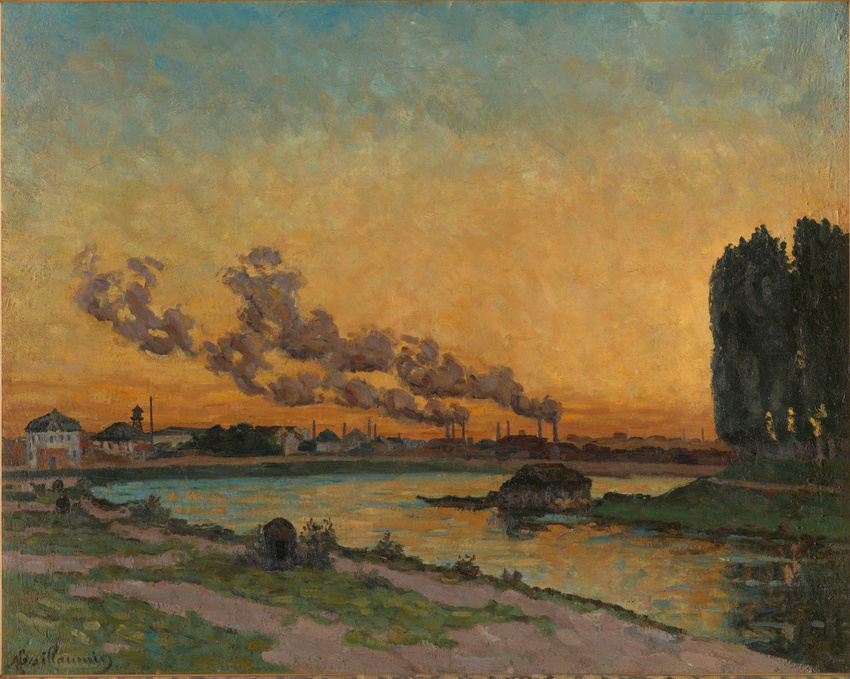
Guillaumin's Sunset at Ivry depicts an industrial district on the outskirts of Paris, where tall smokestacks stand in a row beneath the setting sun, black smoke stretching out above them. The sunset light fades steadily while the smoke keeps rising, leaving a quiet impression that plenty of workers are still laboring away somewhere inside those buildings.
What's striking is how calmly Guillaumin approached this industrial scene. While most Impressionist painters gravitated toward bright, peaceful natural landscapes, Guillaumin captured the changing face of the modern city and its industrial outskirts as well. The warmth of the sunset set against the cold, rough edges of the factory district quietly conveys the mood of Paris's periphery at the close of the 19th century.
Guillaumin is a relatively unfamiliar name today, but Van Gogh himself held him in deep regard as a fellow Impressionist. Van Gogh particularly admired Guillaumin's bold use of color and his vivid treatment of light, and Guillaumin is considered one of the most significant influences on the young Van Gogh after he arrived in Paris. He later earned recognition among his fellow Impressionists as well.
In his younger years, Guillaumin worked at a railway company to make ends meet, and he put the free railway pass the company gave employees to good use, traveling to the Paris suburbs and countryside most weekends to draw and sketch outdoors. For a long stretch of his life, he lived a double existence — a civil servant by day, a painter in every spare hour.
Then, in 1891, Guillaumin won 100,000 francs in the national lottery — a sum worth billions of won today. Remarkably, he didn't quit his job right away. By that point he'd worked 22 years at Paris City Hall, and a pension required a minimum of 23 years of service. So even with a fortune in hand, he stayed on for one more conscientious year before retiring — a choice that says a great deal about who he was. After retirement, he left Paris behind and traveled through small towns across France, painting the changing seasons, and his use of color grew noticeably freer and more intense during this period.