Paris · Painting
Bodies Painted Purely from Memory: Cézanne's Bathers
Musée d'Orsay · Paris, France
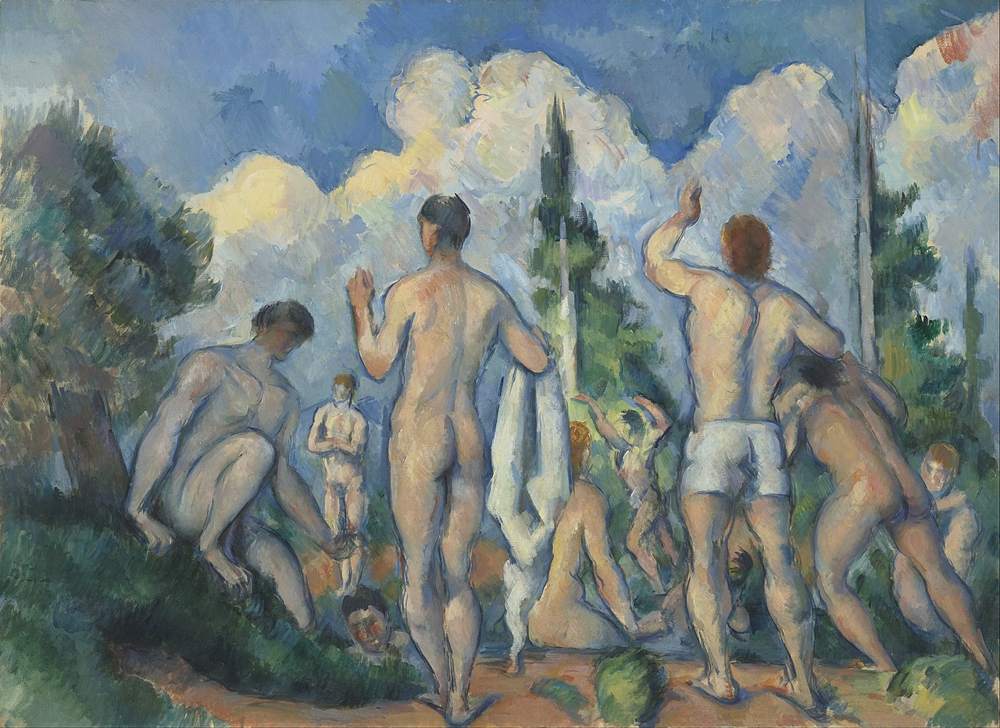
Bathers was a subject Cézanne returned to so often that he produced more than two hundred paintings on this theme alone. The setting is his hometown of Aix-en-Provence, where the unspoiled countryside meant people often bathed in the river — a common sight at the time.
Cézanne had been shy from childhood, struggling even to strike up conversation with other people. So when he painted this scene, he didn't observe actual bathers directly — instead, he worked from nude figure studies and memories of nude sculptures he'd seen in museums. It's an unusual way to paint a scene like this, but it was possible precisely because painting, for Cézanne, was never simply a matter of reproducing what the eye sees — it was an act of analyzing the subject itself.
Earlier painting had largely been concerned with depicting mythology and legend, or conveying religious meaning. From there, painters pursued ways to capture what the eye sees as faithfully as possible, which eventually gave rise to Impressionism and its fascination with fleeting moments shaped by changing light. Cézanne pushed a step further still, painting the underlying form of objects themselves. That's why his work is so full of geometric elements — cylinders, triangles — and this painting applies that same approach to the human body.
With Cézanne, painting stopped being purely something to admire and became something to understand. That shift is exactly why he's called the father of modern art — he was the first painter to fundamentally change what a painting was supposed to be.