Paris · Painting
The Venus That Won Over an Emperor: Cabanel's The Birth of Venus
Musée d'Orsay · Paris, France
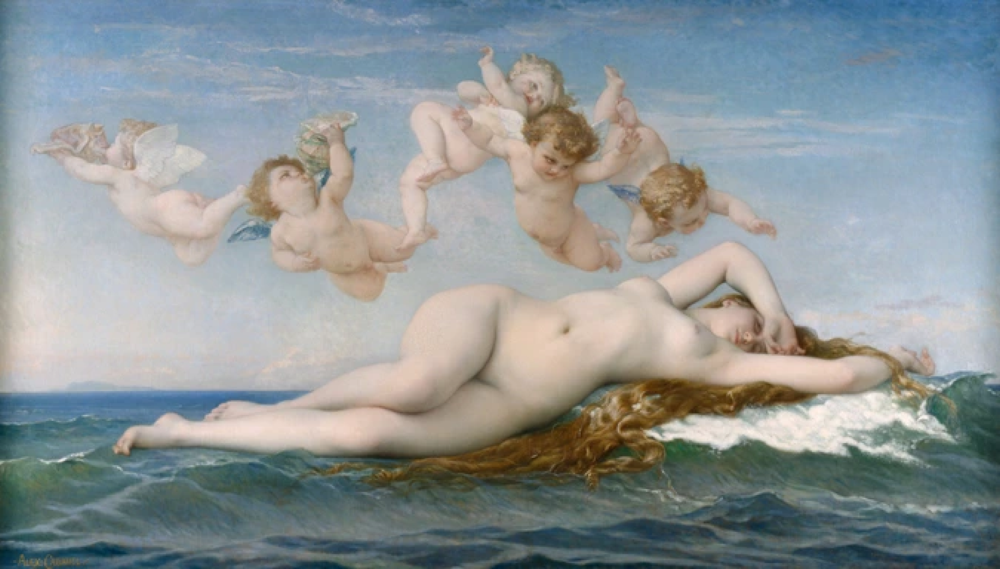
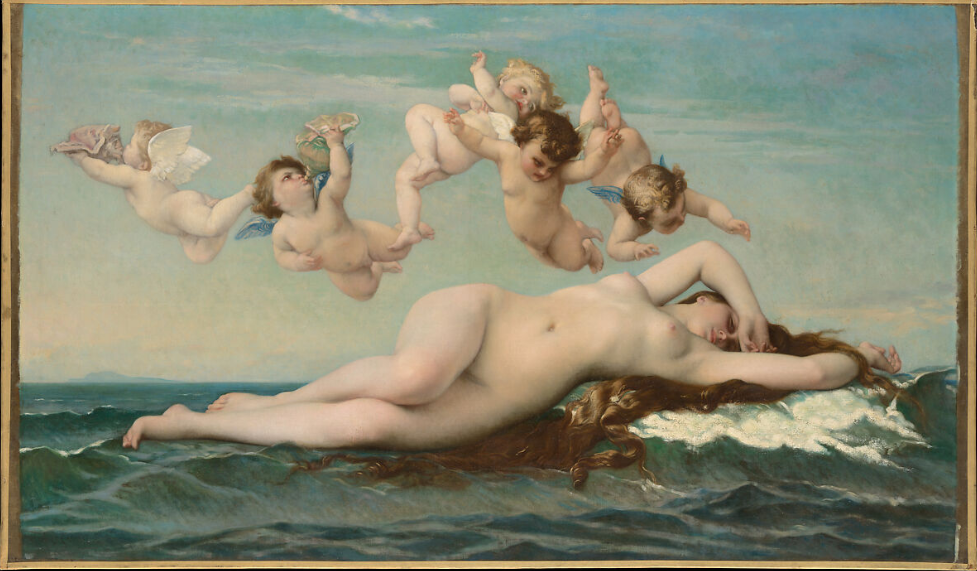
Cabanel's The Birth of Venus shows a beautiful woman reclining atop the waves, with small cherubs fluttering above her. The subject comes from Greek mythology: when Cronus severed his father Uranus's genitals and cast them into the sea, foam rose up from the waters, and from it emerged Venus, goddess of beauty.
This painting is often cited as a textbook example of Academic art — a style that renders historical, mythological, or religious subjects with strict attention to accurate human proportion and perspective, essentially the "correct" way of painting as taught at the art academies. The stable composition and precise anatomical proportions on display here reflect exactly that training.
Cabanel submitted the work to the Paris Salon of 1863. The Salon functioned as a kind of gateway for artists at the time, drawing nearly a million visitors annually — a figure close to the entire population of Paris, which says a great deal about how culturally dominant the city was and how passionately people engaged with art. For a painter, placing well at the Salon essentially guaranteed a successful career.
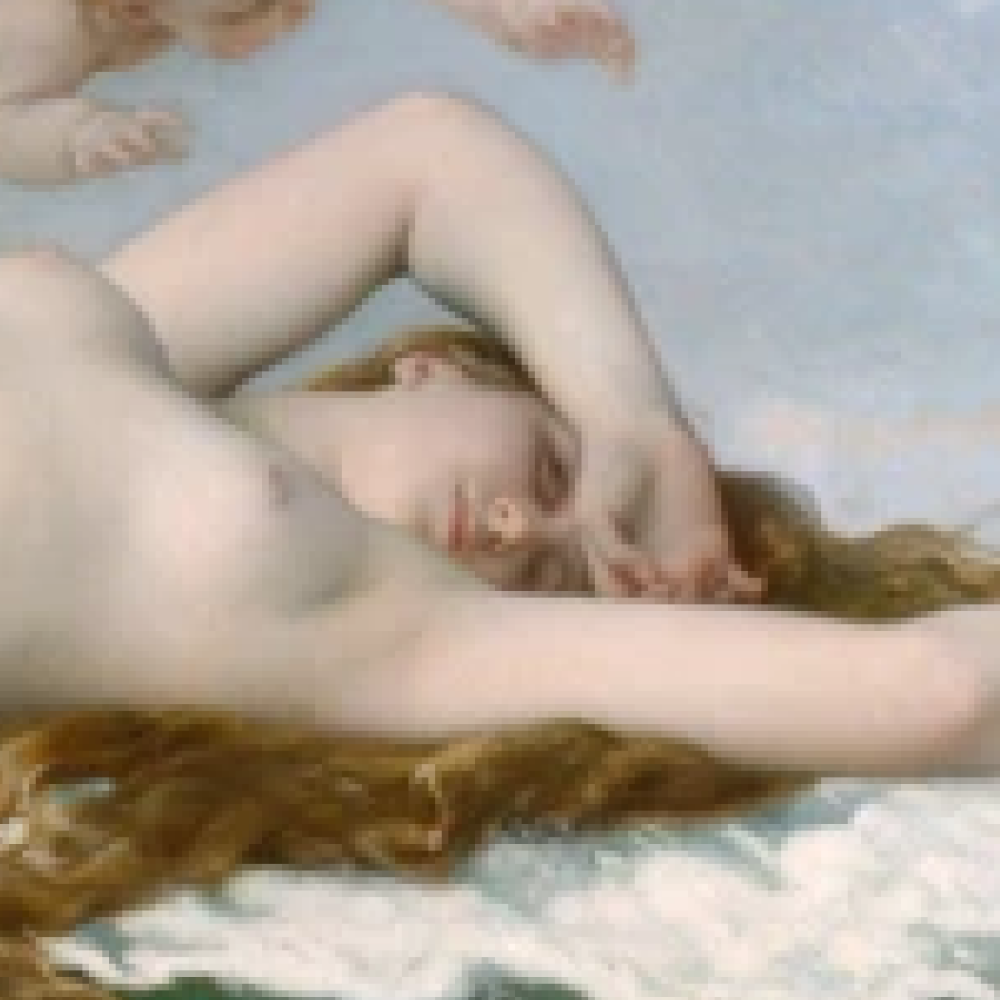
Look closely at Venus and you'll notice she's painted with an unmistakably sensual quality, her figure reflecting the body type French audiences of the time found appealing. Her eyes, if you look carefully, aren't fully closed — they're slightly open, in a half-lidded gaze — and this particular detail reportedly caused quite a stir among viewers at the time. By today's standards the painting might seem tame, but in 1863, with no film or television to speak of, paintings like this were practically the only visual medium capable of stirring that kind of reaction.
Overt nudity, however, tended to draw criticism. That same year, Manet submitted his own nude, Olympia, to the Salon — and it was met with harsh condemnation, a striking contrast to Cabanel's reception. Borrowing from Greek mythology gave Cabanel's painting a classical, socially acceptable framework within which he could still work in a strong current of eroticism without offending public morals, and he used that framing skillfully. The painting was showered with praise by critics and took first place at the Salon. Emperor Napoleon III himself saw it at the exhibition, fell in love with it, and bought it on the spot. Word that the emperor had purchased the piece sent Cabanel's reputation soaring.
Commissions poured in afterward, and Cabanel went on to paint two more versions of The Birth of Venus. One now hangs here at the Musée d'Orsay, while the other two are held by the Dahesh Museum and the Metropolitan Museum, both in New York. Enjoying Napoleon III's favor, Cabanel also built a reputation as a portraitist — wealthy Americans reportedly traveled all the way to Paris just to have him paint their portraits. He had an uncanny read on public taste, and it brought him both wealth and prestige, eventually carrying him to the directorship of the École des Beaux-Arts, France's premier art academy.