Paris · Architecture
Gothic Architecture: Reaching for the Sky
Notre-Dame de Paris · Paris, France
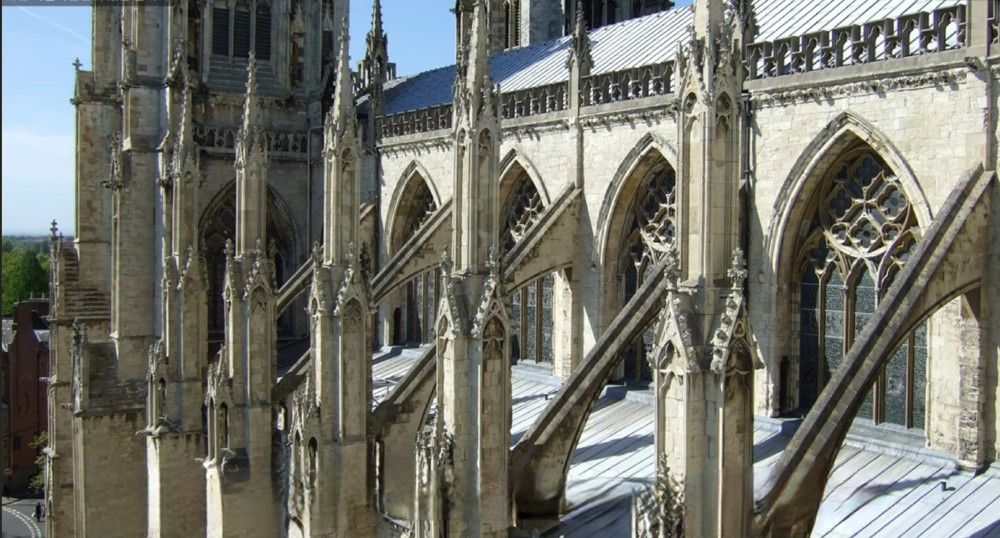
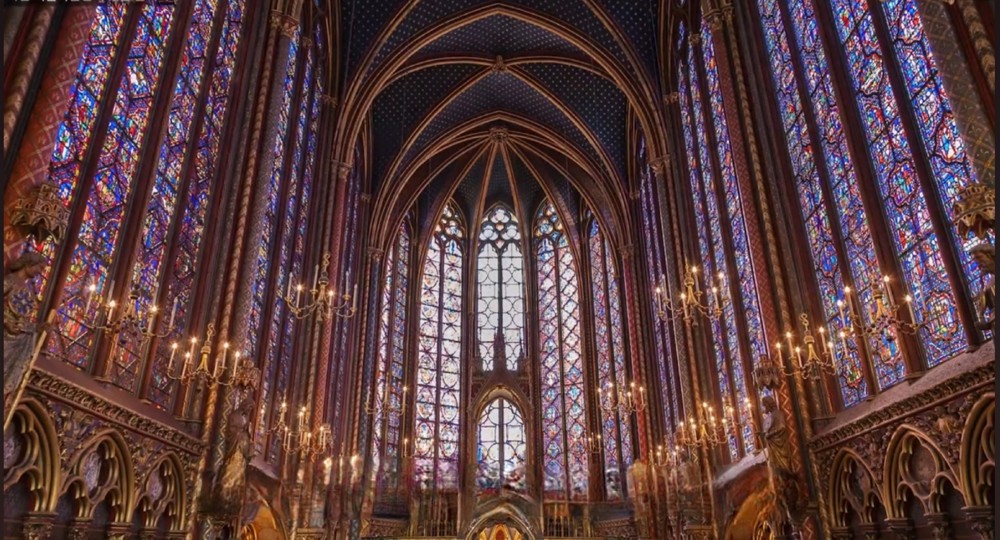


Looking at Notre-Dame's exterior, have you ever wondered how anyone in the 12th century managed to build something so grand and so tall? The key lies in the Gothic style. Before Notre-Dame, European churches had to carry heavy stone vaults, which meant thick, massive walls and very few windows. Doors, windows and galleries used the semicircular arch, just like ancient Rome, which is why the style is called Romanesque, meaning Roman-like. That doesn't mean the Romans built them; it means medieval Europeans built in the Roman manner. These churches felt heavy and dark. But people in the 12th century dreamed of a taller, brighter space filled with divine light, and that longing drove a revolution in building technology.
Remember three innovations. First, the round ceiling arch was replaced by the pointed arch, which soars toward the sky. It carried weight down into the columns more efficiently, so walls could be made lighter. Second, the ceiling itself became a rib vault, a skeleton of ribs like an animal's rib cage, which funneled the weight onto four columns instead of the walls. The last and most dramatic innovation is the wings reaching out from the building: flying buttresses. By gripping the walls firmly from outside, they freed the walls from the burden of carrying the weight. And what filled those freed-up walls? Enormous stained-glass windows to draw in the light. This was the great challenge of medieval builders: from darkness to light, from earth to heaven.