Paris · City Walks
Saint-Gervais-Saint-Protais: Modest Grandeur
Le Marais · Paris, France
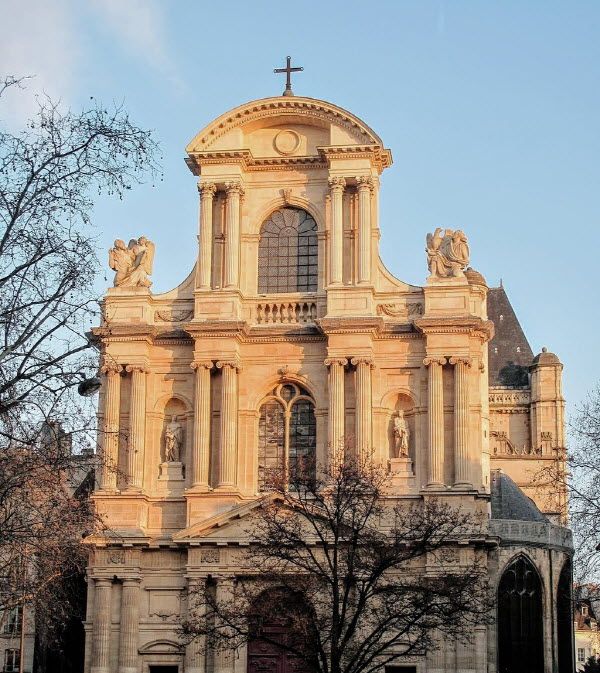

Past the Paris Tourist Office, cross the crosswalk and turn right, and you'll find a modest church with a red door behind City Hall. This is Saint-Gervais-Saint-Protais. A church has stood on this spot since the 4th century. In Le Marais, which the Seine often flooded, this plot sits slightly higher than its surroundings, which made it an ideal site for a religious building from early on. The present church was built in 1494 on the site of an older one and is dedicated to two saints, Gervasius and Protasius.
Why include such an old, unassuming church in a city full of showstoppers? The answer is its columns. The Doric, Ionic, and Corinthian orders are Greece's three great architectural styles, found in buildings all over Europe. The facade of this church has three levels, each using a different order: Doric on the ground floor, Ionic on the second, and Corinthian on the third. Combining all three on one facade is one of the church's signature features, and buildings that use Greek column styles are generally classified as Classical architecture. So when you spot Greek-style columns on your travels, you can tell yourself, "Ah, this is Classical."
The church took more than 150 years to complete, so it blends several architectural styles. The exterior is Classical, while the interior is Gothic. Gothic style emphasizes verticality, expressing a desire to reach toward the heavens, and you can't feel much of that from outside. Step in, though, and even though the church is not large, you'll sense space soaring upward. Gothic hallmarks like pointed arches and ribbed vaults stand out, and the interior is regarded by architectural historians as a classic example of the Gothic style. Its modest grandeur is the church's charm.
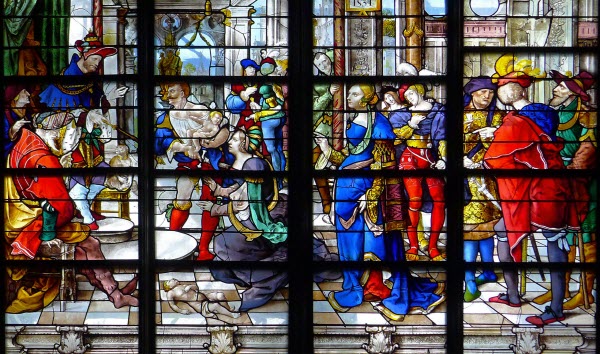
The church is also known for its organ and stained glass. The exterior is Classical, the interior Gothic, the organ Baroque, and the windows Renaissance, a real mix of styles. François Couperin, the 17th-century French composer and legendary organist, became organist here at the age of 17, which is why the instrument is famous as the "Couperin organ." The stained glass, which draws in outside light and softly fills the interior, is less lavish or delicate than what you'll find in Europe's great cathedrals, but its simplicity has a charm of its own. The windows on the south side are especially well known.
When you've had a good look around, walk toward the altar and exit through the leftmost door. As soon as you step outside, you'll see a sign with gold letters reading "MJE." The building behind it is one of the oldest houses in Paris.